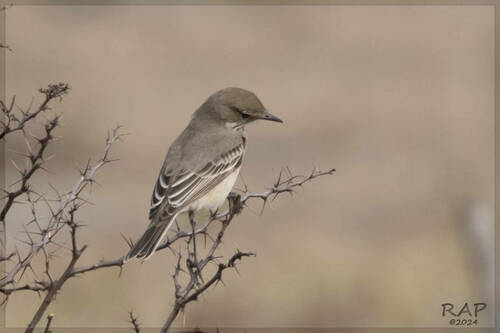
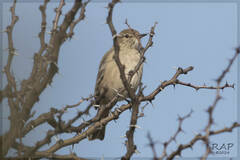
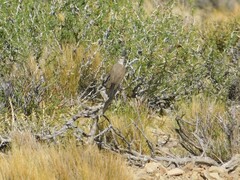

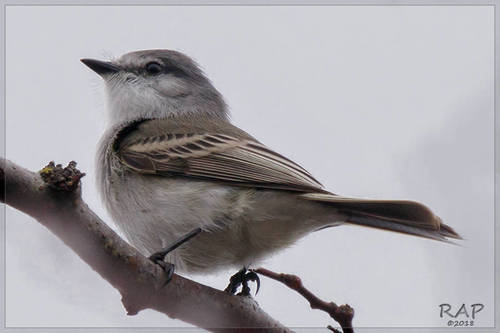
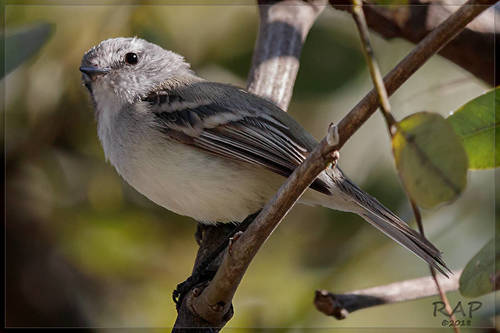
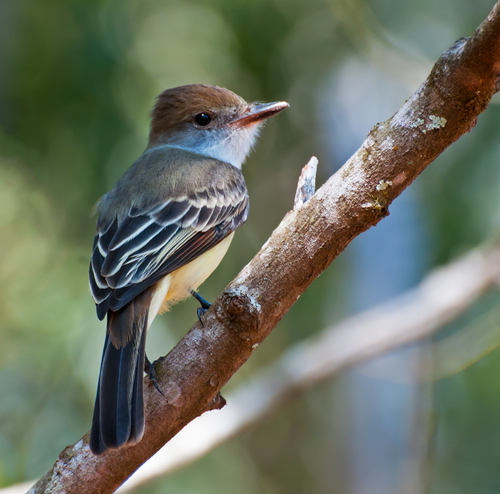
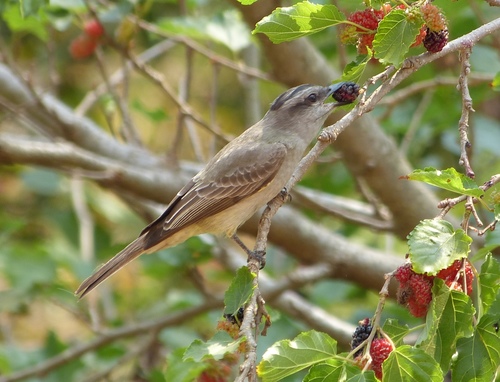
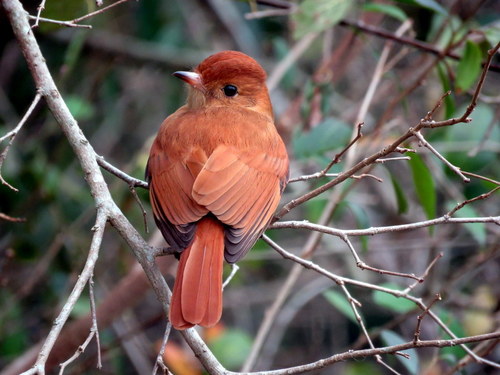
Lesser Shrike-Tyrant

Lesser Shrike-Tyrant

Agriornis murinus

Silhouette: Emily Willoughby · PhyloPic

LCLeast ConcernNTVUENCR
Daily sighting probability <5% · Rare
at El Impenetrable National Park

In 3 days ~10%

6 Verified sightings at El Impenetrable National Park From 2019 to 2026
71 In all 2 parks
July Best month
☀️ Diurnal When it's spotted

About the Lesser Shrike-Tyrant

The lesser shrike-tyrant (Agriornis murinus) is a species of bird in the family Tyrannidae, the tyrant flycatchers. It is found in Argentina, Bolivia and Paraguay and as a vagrant to Brazil, Chile, and Uruguay. The lesser shrike-tyrant was formally described in 1837 as Pepoazae murina. For much of the twentieth century it was placed in genus Xolmis but by the 1980s most authors had transferred to genus Agriornis that was erected in 1839.

The lesser shrike-tyrant is monotypic. The lesser shrike-tyrant is 16 to 18.5 cm (6.3 to 7.3 in) long. Adult males have a gray-brown crown, mottled blackish and white lores, and a whitish or buffy supercilium and eye-ring. Their upperparts are gray-brown. Their wings are mostly dusky with whitish tips on the coverts and whitish edges on the inner flight feathers. Their tail is mostly dusky with pale grayish to white outer webs on the outermost pair pair of feathers. Their throat is white with thin black streaks, their breast very pale grayish brown, their flanks pale grayish brown with a buff tinge, and their belly creamy whitish. Adult females have almost the same plumage but the streaks on their throat... Wikipedia →

Global Distribution

Parks Where Found

# Park Country Daily sighting probability
1 Península Valdés 🇦🇷 Argentina
~10%
2 El Impenetrable National Park 🇦🇷 Argentina
<5%

Cities Where Found

# City Country Daily sighting probability
1 Cordoba 🇦🇷 Argentina
<5%

Before you go

What are the chances of seeing a Lesser Shrike-Tyrant in El Impenetrable National Park?

Rare

Under 5% of wildlife watchers report a Lesser Shrike-Tyrant sighting in El Impenetrable National Park on a given day, based on 6 verified sightings from GBIF citizen-science data from 2019 to 2026. It is the 215th most-seen of the 219 birds we can rate there. Over three days the chance rises to about 10%, if each day is a fresh chance.

When is the best time to see a Lesser Shrike-Tyrant in El Impenetrable National Park?

July

In that month about 10% of wildlife watchers report a Lesser Shrike-Tyrant in El Impenetrable National Park on a given day, against under 5% in January–June and August–November, the lowest months. That is one of El Impenetrable National Park's driest months, with about 25 mm of rain against 120 mm in March. December has too few records to rate.

What time of day is best to see a Lesser Shrike-Tyrant?

Between 3 and 6 pm

Across all the parks we cover, that three-hour window holds the most Lesser Shrike-Tyrant sightings with a recorded time, and about 8 in 10 of them come between 6 am and 6 pm: it is a daytime animal.

Is El Impenetrable National Park the best place to see a Lesser Shrike-Tyrant?

2nd of 2

Of the 2 parks where we can rate Lesser Shrike-Tyrant sightings, El Impenetrable National Park ranks 2nd at under 5%. The best odds are in Península Valdés (Argentina, about 10%).

Which relatives of the Lesser Shrike-Tyrant live in El Impenetrable National Park?

Same family: Tyrannidae

The closest relatives of the Lesser Shrike-Tyrant that you can see in El Impenetrable National Park (family Tyrannidae, Tyrant Flycatchers) are Pearly-vented Tody-Tyrant (about 70%), Great Kiskadee (about 70%) and Cattle Tyrant (about 40%), with each one's daily chance of a sighting.

Where does the Lesser Shrike-Tyrant sighting chance come from?

GBIF citizen-science records

It is estimated from how often the Lesser Shrike-Tyrant is recorded against all the birds logged in El Impenetrable National Park (6 verified sightings from 2019 to 2026), calibrated against known sighting rates. Figures are rounded to the nearest 10% because citizen-science data supports honest approximations, not decimals, and months with records from fewer than five people show "—". How it works.

← Back to El Impenetrable National Park