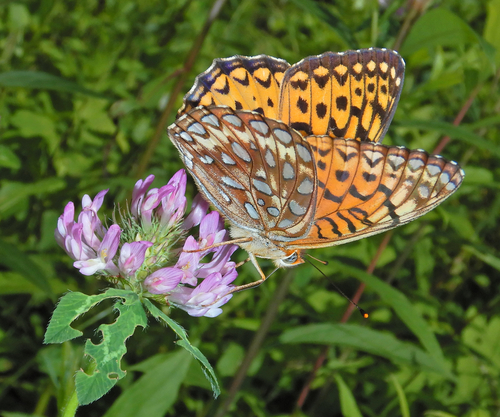
Red-Disked Alpine

Red-Disked Alpine

Erebia discoidalis

Daily sighting probability ~10% · With luck
at Elk Island National Park

In 3 days ~30% in a week ~60%

8 Verified sightings at Elk Island National Park From 2019 to 2026
8 In 1 park
May Best month
☀️ Diurnal When it's spotted

About the Red-Disked Alpine

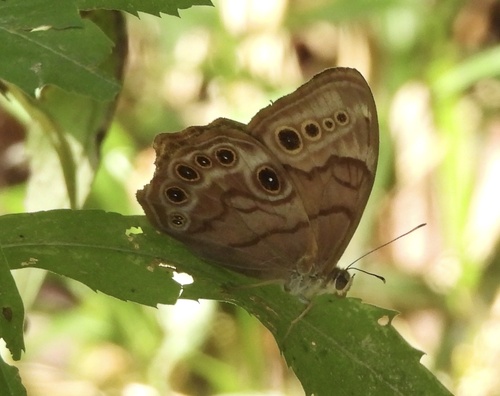
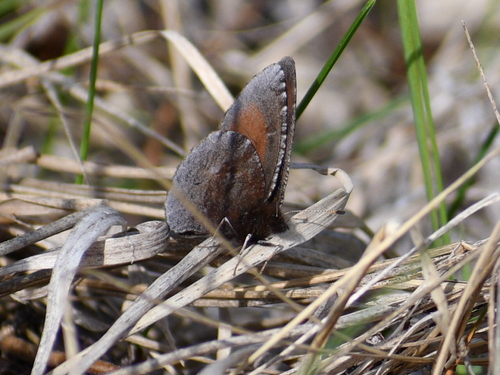
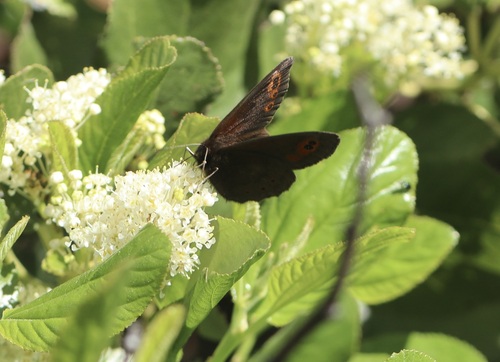
Erebia discoidalis, the red-disked alpine, is a member of the subfamily Satyrinae of family Nymphalidae. It is found in North America from eastern Quebec, through northern Ontario (south to Sudbury), and the northern Prairies to northern British Columbia, the Northwest Territories, Yukon, and Alaska. It reaches just into the northern U.S. between Michigan and Montana, and also occurs in Asia, where it has been recorded from the Chukot Peninsula to the eastern Sayan Mountains and Amur. The habitat consists of large, open, grassy bogs and other areas with acidic soils.

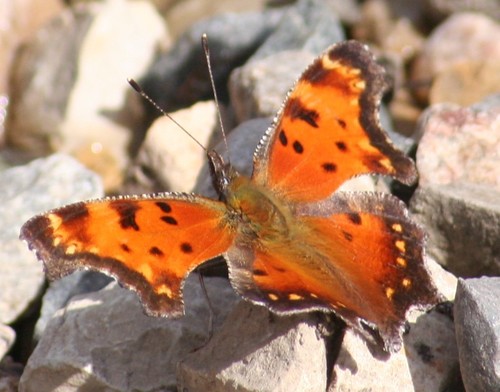
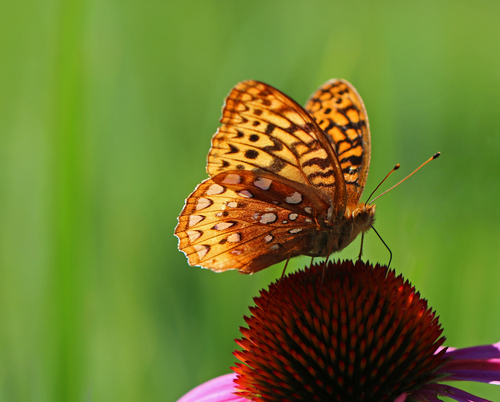
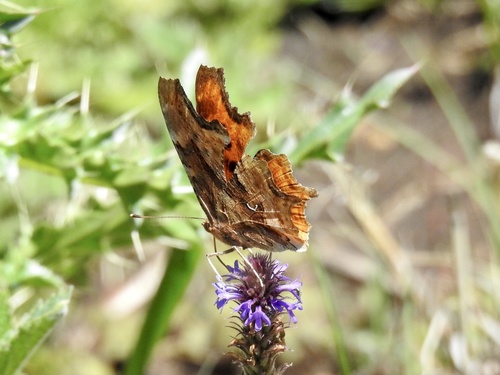
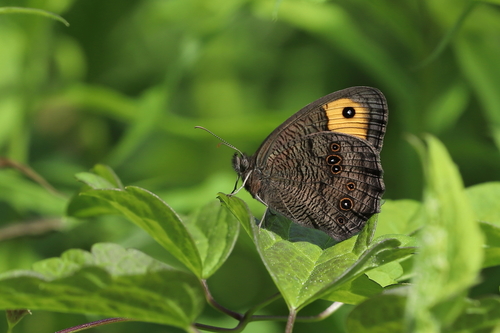
The wingspan is 35–44 mm. In Seitz it is described thus - E. discoidalis Krb. (= lena Christ.) (37 h). The forewing narrow, with the apex rounded, the costal margin being brownish grey and striated with whitish grey and brown. The dull brown disc broadly bordered with dark chocolate anteriorly and posteriorly, this border being narrow on the distal side, the dark apex of the wing feebly dusted with grey. The forewing beneath is marked as above, the border of the brown central area is somewhat broader, the apex and distal margin densely dusted with bluish grey. The hindwing beneath dark brown from the base to the middle and thinly dusted with whitish grey, the outer half being blue-grey with small dark brown striae. At the apex of the cell there is an oval whitish greyspot and at the costal margin 2—3 somewhat smaller ones. — Central and Eastern Siberia (Amurland); besides in Arctic America. Graeser found the species to be very rare at Podrofka in June; from the worn condition of the specimens obtained he concludes that the insect is possibly more plentiful earlier in the year.

Adults are on wing from May to late July depending on location. The larvae feed on Eriophorum species. Wikipedia →
Global Distribution

Parks Where Found

# Park Country Daily sighting probability
1 Elk Island National Park 🇨🇦 Canada
~10%

More parks will be added in future updates.

Cities Where Found

# City Country Daily sighting probability
1 Edmonton 🇨🇦 Canada
<5%
2 Calgary 🇨🇦 Canada
<5%

Before you go

What are the chances of seeing a Red-Disked Alpine in Elk Island National Park?

With luck

About 10% of wildlife watchers report a Red-Disked Alpine sighting in Elk Island National Park on a given day, based on 8 verified sightings from GBIF citizen-science data from 2019 to 2026. It is the 65th most-seen of the 112 insects we can rate there. Over three days the chance rises to about 30%, and over a week to about 60%, if each day is a fresh chance.

When is the best time to see a Red-Disked Alpine in Elk Island National Park?

May

In that month about 30% of wildlife watchers report a Red-Disked Alpine in Elk Island National Park on a given day, against under 5% in June to April, the lowest months.

What time of day is best to see a Red-Disked Alpine?

Between 10 am and 1 pm

Across all the parks we cover, that three-hour window holds the most Red-Disked Alpine sightings with a recorded time, and nearly all of them come between 6 am and 6 pm: it is a daytime animal.

Where else can you see a Red-Disked Alpine?

Only Elk Island National Park, in our data

Elk Island National Park is the only park on Wallace's Line with enough records to rate Red-Disked Alpine sightings: about 10% of wildlife watchers there report one on a given day.

Where does the Red-Disked Alpine sighting chance come from?

GBIF citizen-science records

It is estimated from how often the Red-Disked Alpine is recorded against all the insects logged in Elk Island National Park (8 verified sightings from 2019 to 2026), calibrated against known sighting rates. Figures are rounded to the nearest 10% because citizen-science data supports honest approximations, not decimals, and months with records from fewer than five people show "—". How it works.

← Back to Elk Island National Park