Atala
Daily sighting probability ~20% · Possible
at Everglades National Park

In 3 days ~40% in a week ~70%

95 Verified sightings at Everglades National Park From 2019 to 2026
152 In all 2 parks
November Best month
☀️ Diurnal When it's spotted

About the Atala

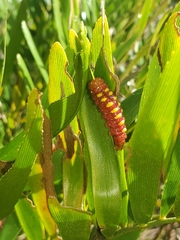
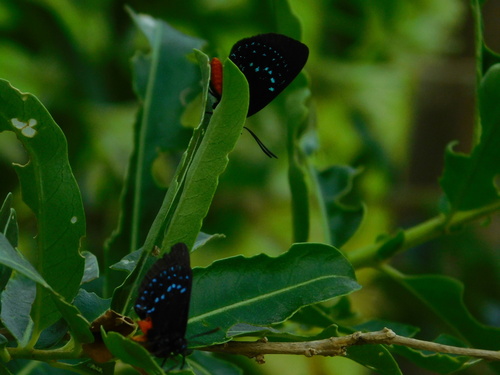
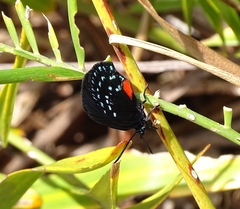
Eumaeus atala, also known as the Atala butterfly or coontie hairstreak, is a small colorful butterfly in the family Lycaenidae. It is found in southeastern Florida (including the Florida Keys) in the United States, Cuba, the Bahamas, and the Cayman Islands in the West Indies. Its coloration and habits are unique among butterflies within its range.

The species was first described by the Cuban zoologist Felipe Poey. He named the butterfly for Atala, the Native American heroine of an 1801 French novella (Atala, ou Les Amours de deux sauvages dans le desert or in English: "Atala, or the Loves of two Indian savages in the desert") of the same name that was written by Chateaubriand.

Throughout its range, the larvae feed on a native cycad, Zamia integrifolia (commonly called "coontie palm" or "arrowhead"), as well as Zamia pumila and other exotic ornamental cycads. In Cuba, the introduced cycad Cycas revoluta also is eaten by this species.

Adult butterflies take flower nectar and sometimes roost in trees. Adults fly through much of the year. The natural habitat is open brushy areas and tropical hammocks, often in pine woodlands. Many populations now exist in suburban... Wikipedia →
Global Distribution

Parks Where Found

# Park Country Daily sighting probability
1 Everglades National Park 🇺🇸 United States
~20%
2 Merritt Island National Wildlife Refuge 🇺🇸 United States
~20%

Cities Where Found

# City Country Daily sighting probability
1 Miami 🇺🇸 United States
~30%

Before you go

What are the chances of seeing an Atala in Everglades National Park?

Possible

About 20% of wildlife watchers report an Atala sighting in Everglades National Park on a given day, based on 95 verified sightings from GBIF citizen-science data from 2019 to 2026. It is the 41st most-seen of the 496 insects we can rate there. Over three days the chance rises to about 40%, and over a week to about 70%, if each day is a fresh chance.

When is the best time to see an Atala in Everglades National Park?

January and November

In those months about 30% of wildlife watchers report an Atala in Everglades National Park on a given day, against about 10% in February–April and July–September, the lowest months. Those are among Everglades National Park's driest months, with about 60 mm of rain a month against 240 mm in June.

What time of day is best to see an Atala?

Between 9 am and noon

Across all the parks we cover, that three-hour window holds the most Atala sightings with a recorded time, and nearly all of them come between 6 am and 6 pm: it is a daytime animal.

Is Everglades National Park the best place to see an Atala?

Yes

Of the 2 parks where we can rate Atala sightings, Everglades National Park has the highest daily chance: about 20%. Next come Merritt Island National Wildlife Refuge (United States, about 20%).

Which relatives of the Atala live in Everglades National Park?

Same family: Lycaenidae

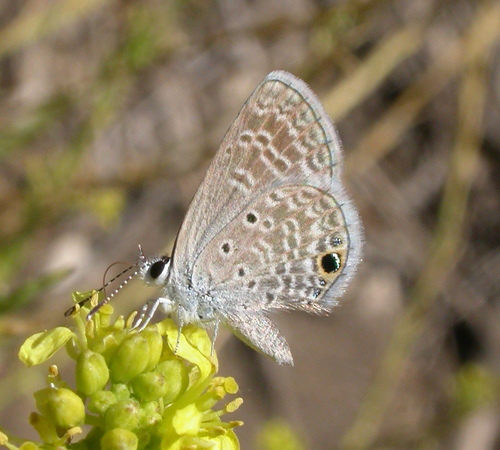
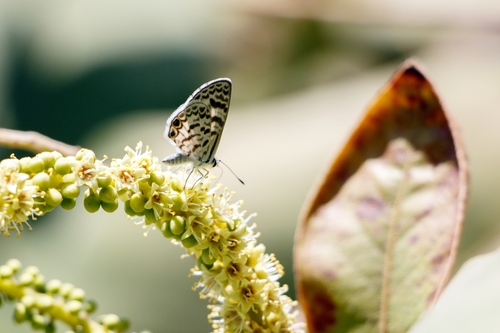
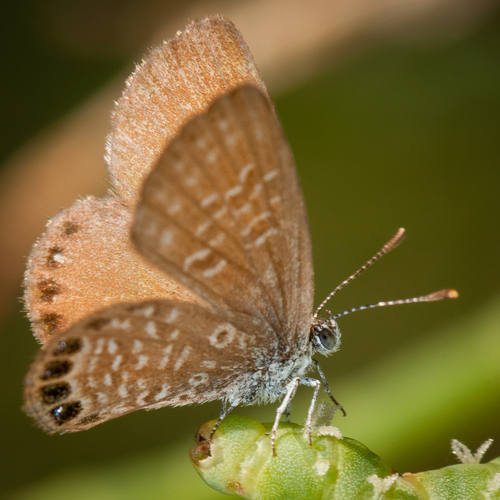
The closest relatives of the Atala that you can see in Everglades National Park (family Lycaenidae, Gossamer-winged Butterflies) are Ceraunus Blue (about 20%), Cassius Blue (about 20%) and Eastern Pygmy-Blue (about 10%), with each one's daily chance of a sighting.

Where does the Atala sighting chance come from?

GBIF citizen-science records

It is estimated from how often the Atala is recorded against all the insects logged in Everglades National Park (95 verified sightings from 2019 to 2026), calibrated against known sighting rates. Figures are rounded to the nearest 10% because citizen-science data supports honest approximations, not decimals, and months with records from fewer than five people show "—". How it works.

← Back to Everglades National Park