bee shrew

bee shrew

Cryptotis parva

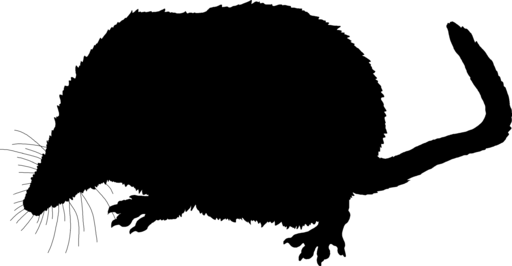
Silhouette: Becky Barnes · PhyloPic

LCLeast ConcernNTVUENCR
Daily sighting probability <5% · Rare
at Everglades National Park

In 3 days ~10% in a week ~20%

5 Verified sightings at Everglades National Park From 2019 to 2026
5 In 1 park
December Best month
☀️ Diurnal When it's spotted

About the bee shrew

The North American least shrew (Cryptotis parva) is one of the smallest mammals, growing to be only up to 3 inches long. It has a long pointed snout and a tail never more than twice the length of its hind foot. The dense fur coat is either grayish-brown or reddish-brown with a white belly. Its fur becomes lighter in the summer and darker in the winter. Although similar in appearance to several species of rodents, all shrews are members of the order Eulipotyphla and should not be mistaken for a member of the order Rodentia. The North American least shrew's eyes are small and its ears are completely concealed within its short fur, giving it very poor eyesight and hearing.

It is found from the grasslands of southern Canada through the eastern and central United States and Mexico. In Canada, only a small population of this animal has been found at Long Point in Ontario. The North American least shrew mostly dwells in mesic grasslands, marshes, and meadows. Most shrews prefer these wet habitats, but the least shrew will also inhabit dry upland regions. This species can be found in meadows, fields, and weedy areas, where the vegetation attracts its insect diet. Wikipedia →

Global Distribution

Parks Where Found

# Park Country Daily sighting probability
1 Everglades National Park 🇺🇸 United States
<5%

More parks will be added in future updates.

Closest Relatives at Everglades National Park

No species of the same family or order lives in Everglades National Park, so these are its closest relatives here: other mammals.

Before you go

What are the chances of seeing a bee shrew in Everglades National Park?

Rare

Under 5% of wildlife watchers report a bee shrew sighting in Everglades National Park on a given day, based on 5 verified sightings from GBIF citizen-science data from 2019 to 2026. It is the 16th most-seen of the 17 mammals we can rate there. Over three days the chance rises to about 10%, and over a week to about 20%, if each day is a fresh chance.

When is the best time to see a bee shrew in Everglades National Park?

November and December

In those months about 10% of wildlife watchers report a bee shrew in Everglades National Park on a given day, against under 5% in January to October, the lowest months. Those are among Everglades National Park's driest months, with about 60 mm of rain a month against 240 mm in June.

What time of day is best to see a bee shrew?

Between 10 am and 1 pm

Across all the parks we cover, that three-hour window holds the most bee shrew sightings with a recorded time, and about 8 in 10 of them come between 6 am and 6 pm: it is a daytime animal.

Where else can you see a bee shrew?

Only Everglades National Park, in our data

Everglades National Park is the only park on Wallace's Line with enough records to rate bee shrew sightings: under 5% of wildlife watchers there report one on a given day.

Where does the bee shrew sighting chance come from?

GBIF citizen-science records

It is estimated from how often the bee shrew is recorded against all the mammals logged in Everglades National Park (5 verified sightings from 2019 to 2026), calibrated against known sighting rates. Figures are rounded to the nearest 10% because citizen-science data supports honest approximations, not decimals, and months with records from fewer than five people show "—". How it works.

← Back to Everglades National Park