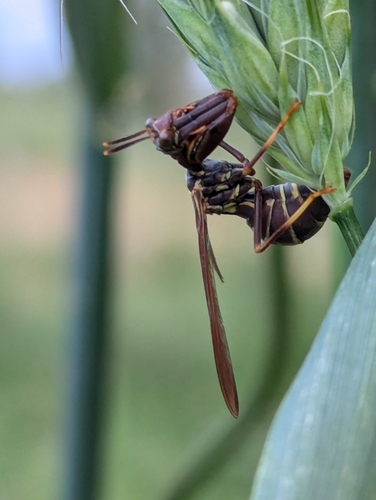
Brown Wasp Mantidfly

Brown Wasp Mantidfly

Climaciella brunnea

Daily sighting probability <5% · Rare
at Everglades National Park

In 3 days ~10% in a week ~30%

8 Verified sightings at Everglades National Park From 2019 to 2026
8 In 1 park
March Best month
☀️ Diurnal When it's spotted

About the Brown Wasp Mantidfly

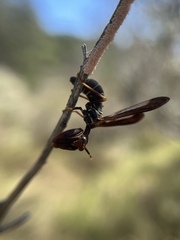
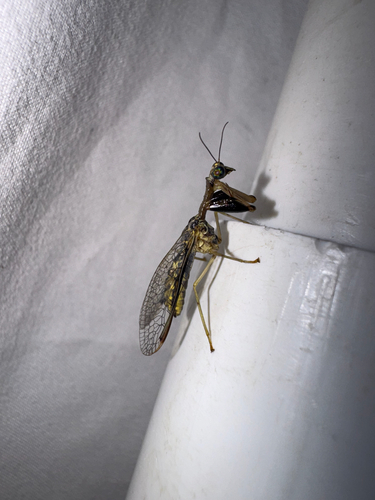
Climaciella brunnea, known sometimes by the common names wasp mantidfly, western mantidfly, and brown mantidfly, is a predatory neuropteran insect in the family Mantispidae. C. brunnea has a triangular head with large, compound eyes and a broad frons. It has straight antennae. Its raptorial forelegs are similar in shape and function to that of Mantodea; this adaptation has evolved independently in the two groups and is an example of convergent evolution. The wings of C. brunnea are distinctive in that they are often characterized by having thick brown edges and transparent inner edges. The species has a body length of 2 to 3 cm.

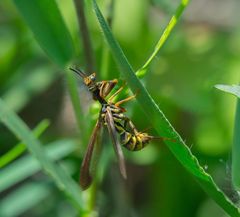
Its markings mimic those of wasp species within the Polistes genus. C. brunnea exhibits a large amount of color polymorphism as many groups will mimic the colorations of specific wasps found within their respective region.

Climaciella brunnea is a species in the genus Climaciella and the family Mantispidae. It is in the order Neuroptera, or the net-winged insects. Climaciella brunnea is found in Canada, the United States, and as far south as Nicaragua. While finding a single C. brunnea alone is difficult, the... Wikipedia →
Global Distribution

Parks Where Found

# Park Country Daily sighting probability
1 Everglades National Park 🇺🇸 United States
<5%

More parks will be added in future updates.

Cities Where Found

# City Country Daily sighting probability
1 Minneapolis [Saint Paul] 🇺🇸 United States
<5%

Before you go

What are the chances of seeing a Brown Wasp Mantidfly in Everglades National Park?

Rare

Under 5% of wildlife watchers report a Brown Wasp Mantidfly sighting in Everglades National Park on a given day, based on 8 verified sightings from GBIF citizen-science data from 2019 to 2026. It is the 354th most-seen of the 496 insects we can rate there. Over three days the chance rises to about 10%, and over a week to about 30%, if each day is a fresh chance.

When is the best time to see a Brown Wasp Mantidfly in Everglades National Park?

March and May

In those months about 10% of wildlife watchers report a Brown Wasp Mantidfly in Everglades National Park on a given day, against under 5% in April and June–February, the lowest months.

What time of day is best to see a Brown Wasp Mantidfly?

Between 9 am and noon

Across all the parks we cover, that three-hour window holds the most Brown Wasp Mantidfly sightings with a recorded time, and nearly all of them come between 6 am and 6 pm: it is a daytime animal.

Where else can you see a Brown Wasp Mantidfly?

Only Everglades National Park, in our data

Everglades National Park is the only park on Wallace's Line with enough records to rate Brown Wasp Mantidfly sightings: under 5% of wildlife watchers there report one on a given day.

Where does the Brown Wasp Mantidfly sighting chance come from?

GBIF citizen-science records

It is estimated from how often the Brown Wasp Mantidfly is recorded against all the insects logged in Everglades National Park (8 verified sightings from 2019 to 2026), calibrated against known sighting rates. Figures are rounded to the nearest 10% because citizen-science data supports honest approximations, not decimals, and months with records from fewer than five people show "—". How it works.

← Back to Everglades National Park