About the Florida Carpenter Ant
Camponotus floridanus, or Florida carpenter ant, is a species of ant in the genus Camponotus. First described as Formica floridana by Buckley in 1866, the species was moved to Camponotus by Mayr in 1886. The ant is widespread in Florida and occurs as far north as North Carolina and as far west as Mississippi.
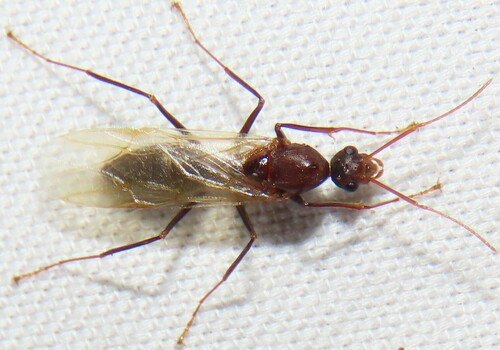
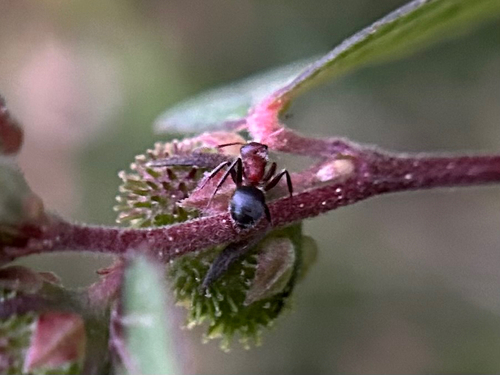
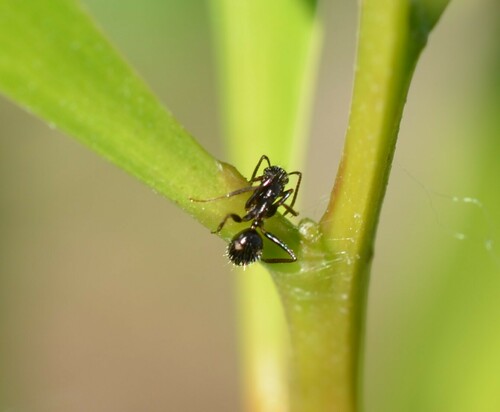
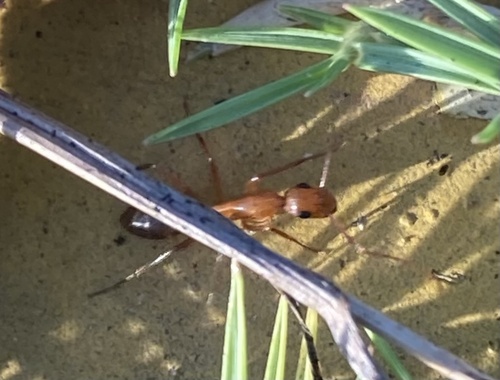
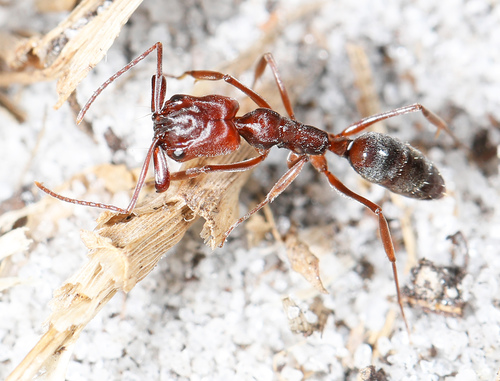
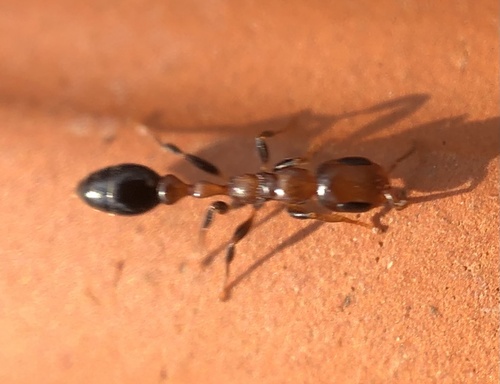
Camponotus floridanus is one of the most familiar ant species in Florida owing both to its large size and conspicuous coloration. Workers and queens are bicolored, having a reddish-orange head and a bright to dullish orange colored mesosoma and legs, contrasted sharply by a deep black gaster. Male alates of this species are more concolorous, primarily ranging in the rusty to cider oranges. Camponotus floridanus can be distinguished from its visually similar, but smaller relative Camponotus tortuganus by its wider than long head, smaller but stockier legs relative to the body, and overall stouter build.
Queens on average vary 14–16 mm in length, and the highly polymorphic workers can potentially attain similar lengths, with the largest majors reaching 11–13 mm. Minors and mediae are typically around 4–9 mm. Florida carpenter ants' native range... Wikipedia →