Longhorn Crazy Ant

Longhorn Crazy Ant

Paratrechina longicornis

Daily sighting probability ~10% · With luck
at Everglades National Park

In 3 days ~30% in a week ~60%

50 Verified sightings at Everglades National Park From 2019 to 2026
133 In all 7 parks
August Best month
☀️ Diurnal When it's spotted

About the Longhorn Crazy Ant

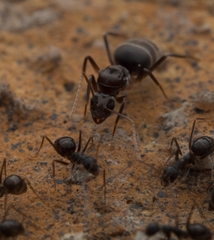
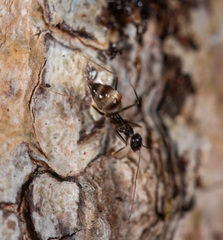
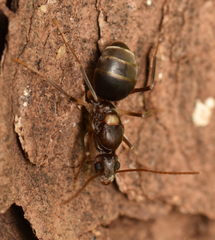
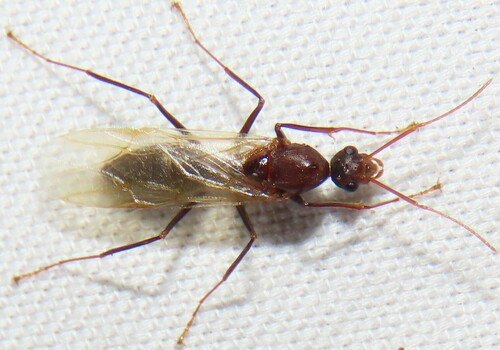
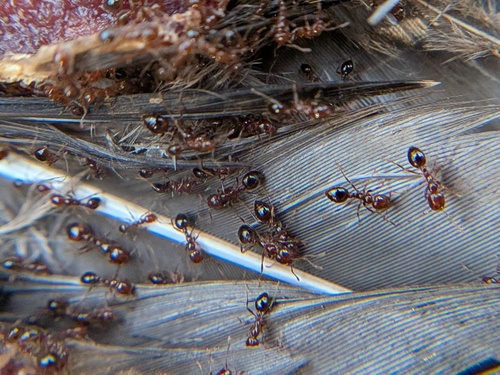
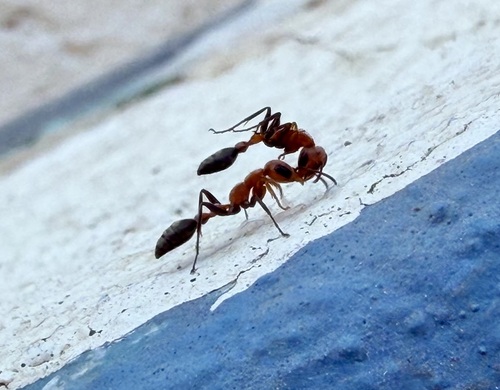
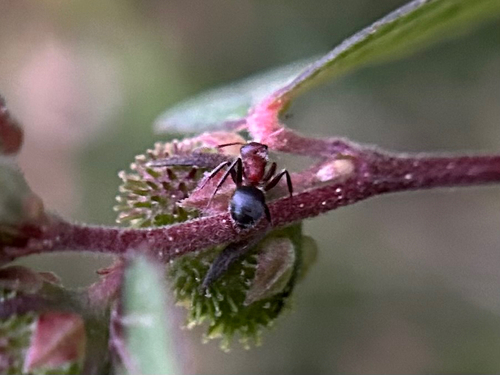
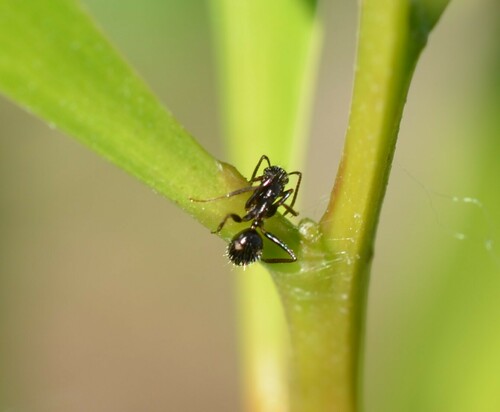
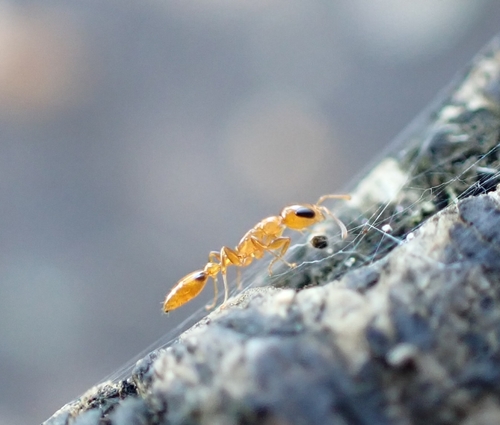
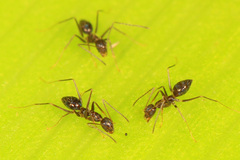
The longhorn crazy ant (Paratrechina longicornis), also known as the black crazy ant, is a species of small Formicine ant. These ants are commonly called "crazy ants" because instead of following straight lines, they dash around erratically. They have a broad distribution, including much of the tropics and subtropics, and are also found in buildings in more temperate regions, making them one of the most widespread ant species in the world. This species, as well as all others in the ant subfamily Formicinae, cannot sting. However, this species can fire/shoot a formic acid spray from its abdomen when under attack by other insects or attacking other insects. When the longhorn crazy ant (Paratrechina longicornis) bends its abdomen while aiming at an enemy insect, it is typically shooting its hard-to-see acid.

These ants can be touched safely, similar to the ghost ants. The worker longhorn crazy ant is about 2.3 to 3.0 mm (0.09 to 0.12 in) long with a brownish-black head, thorax, petiole, and gaster, often with a faint blue iridescence. The body has a few short, whitish bristles and the antennae and limbs are pale brown. Distinguishing this ant from other members of its... Wikipedia →

Global Distribution

Parks Where Found

# Park Country Daily sighting probability
1 Ría Lagartos Biosphere Reserve 🇲🇽 Mexico
~10%
2 Everglades National Park 🇺🇸 United States
~10%
3 Taroko National Park 🇹🇼 Taiwan
~10%
4 Braulio Carrillo National Park 🇨🇷 Costa Rica
~10%
5 Galápagos Islands 🇪🇨 Ecuador
~10%
6 Tijuca National Park 🇧🇷 Brazil
~10%
7 Cumbres de Monterrey National Park 🇲🇽 Mexico
<5%

Cities Where Found

# City Country Daily sighting probability
1 Zhuhai [Macau] 🇨🇳 China
~30%
2 Davao City 🇵🇭 Philippines
~20%
3 Hyderabad 🇮🇳 India
~20%
4 Tiruchirappalli 🇮🇳 India
~20%
5 Kochi 🇮🇳 India
~20%
6 Ho Chi Minh City 🇻🇳 Vietnam
~20%
7 Yogyakarta 🇮🇩 Indonesia
~20%
8 Thiruvananthapuram 🇮🇳 India
~20%
9 Kuwait City 🇰🇼 Kuwait
~20%
10 Chennai 🇮🇳 India
~20%

Before you go

What are the chances of seeing a Longhorn Crazy Ant in Everglades National Park?

With luck

About 10% of wildlife watchers report a Longhorn Crazy Ant sighting in Everglades National Park on a given day, based on 50 verified sightings from GBIF citizen-science data from 2019 to 2026. It is the 92nd most-seen of the 496 insects we can rate there. Over three days the chance rises to about 30%, and over a week to about 60%, if each day is a fresh chance.

When is the best time to see a Longhorn Crazy Ant in Everglades National Park?

August and September

In those months about 20% of wildlife watchers report a Longhorn Crazy Ant in Everglades National Park on a given day, against under 5% in October, the lowest month. Those are among Everglades National Park's wettest months, with about 200 mm of rain a month against 40 mm in March.

What time of day is best to see a Longhorn Crazy Ant?

Between 8 and 11 am

Across all the parks we cover, that three-hour window holds the most Longhorn Crazy Ant sightings with a recorded time, and about 9 in 10 of them come between 6 am and 6 pm: it is a daytime animal.

Is Everglades National Park the best place to see a Longhorn Crazy Ant?

Among the best

Of the 7 parks where we can rate Longhorn Crazy Ant sightings, Everglades National Park ranks 2nd at about 10%, level with the leaders once rounded. The best odds are in Ría Lagartos Biosphere Reserve (Mexico, about 10%).

Where does the Longhorn Crazy Ant sighting chance come from?

GBIF citizen-science records

It is estimated from how often the Longhorn Crazy Ant is recorded against all the insects logged in Everglades National Park (50 verified sightings from 2019 to 2026), calibrated against known sighting rates. Figures are rounded to the nearest 10% because citizen-science data supports honest approximations, not decimals, and months with records from fewer than five people show "—". How it works.

← Back to Everglades National Park