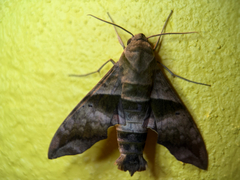
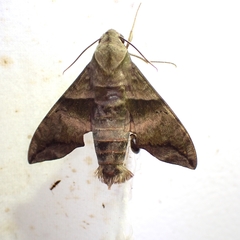
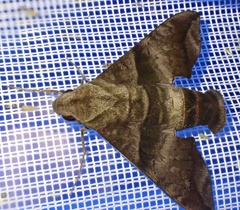
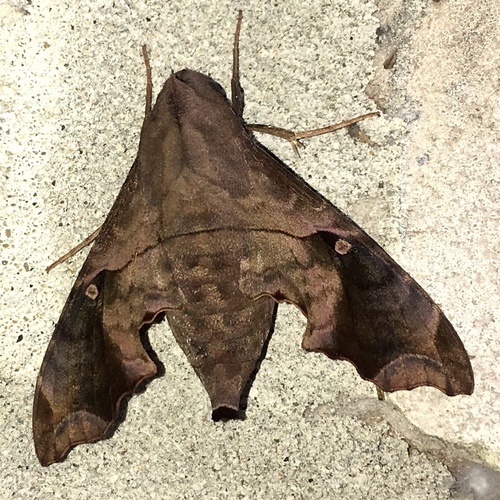
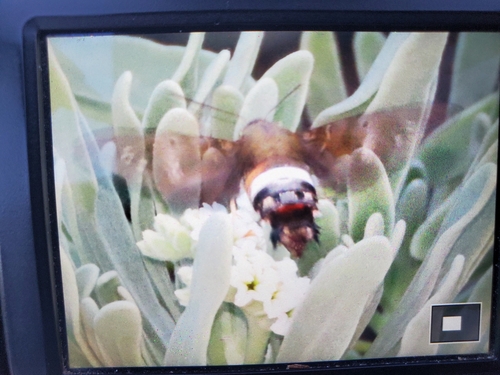
Half-Blind Sphinx

Half-Blind Sphinx

Perigonia lusca

Daily sighting probability <5% · Rare
at Everglades National Park

In 3 days ~10% in a week ~30%

12 Verified sightings at Everglades National Park From 2019 to 2026
22 In all 2 parks
April Best month
🌙 Nocturnal When it's spotted

About the Half-Blind Sphinx

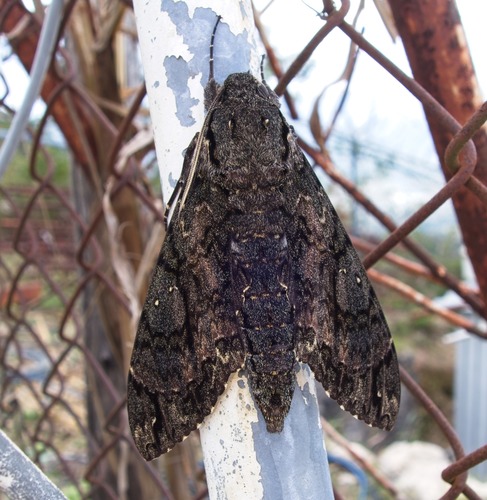
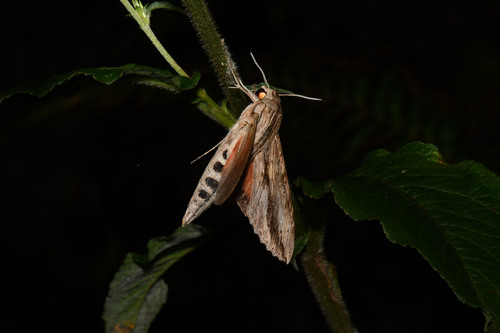
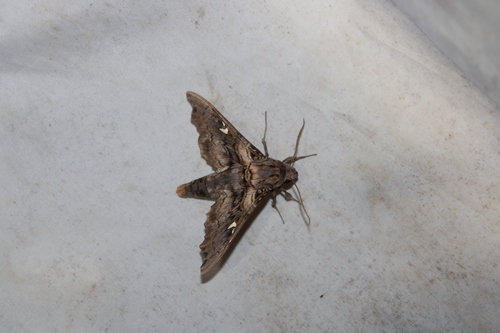
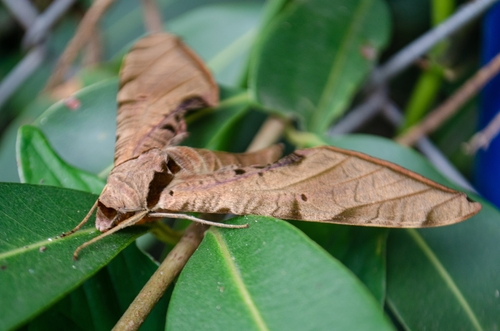
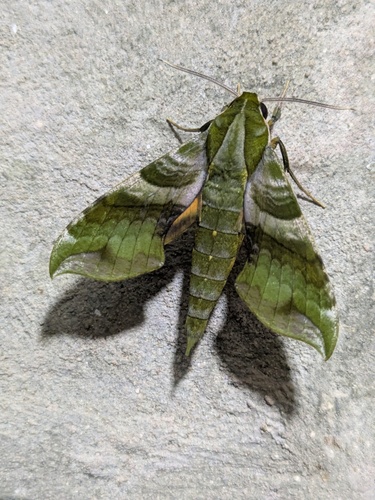
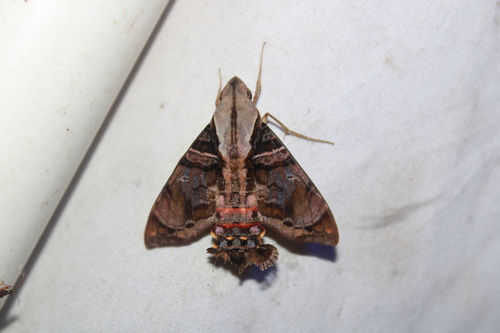
Perigonia lusca, the half-blind sphinx or coffee sphinx, is a moth of the family Sphingidae. It was first described by Johan Christian Fabricius in 1777. It is found from the northern tip of South America, through most of Central America, and northward to Florida in the United States.

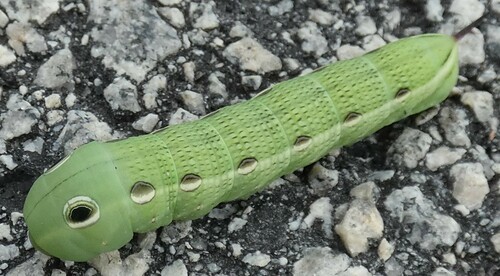
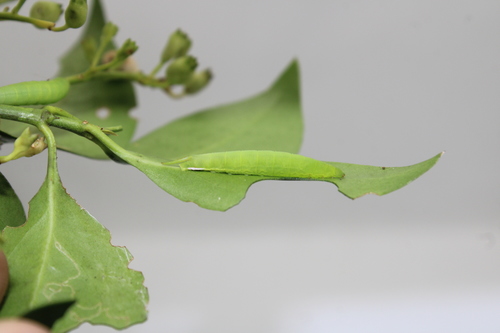
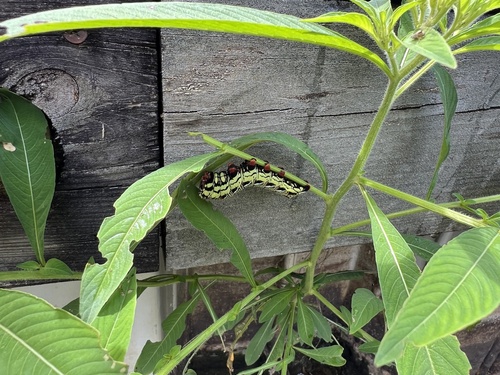
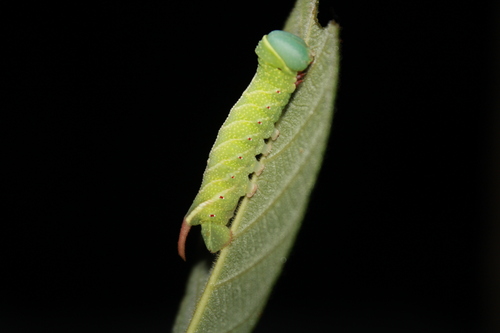
The wingspan is 55–65 mm. There are several generations per year in southern Florida. On the Galápagos Islands, adults are on wing in April and July. In the tropics, adults are probably on wing year round. The larvae have been recorded feeding on Guettarda macrosperma, Guettarda scabra, Coffea species (including Coffea arabica), Ilex krugiana, Ilex paraguariensis, Genipa americana, Rondeletia, Gonzalagunia species (including Gonzalagunia spicata) and Cinchona succirubra.

Perigonia lusca lusca (Mexico to Panama and Honduras, Venezuela, Paraguay, Argentina, Brazil, Bolivia, Bahamas, Cuba, Puerto Rico, St. Vincent, southern United States) Perigonia lusca continua Vázquez-G., 1959 (Revillagigedo Island and Soccoro Island in Mexico)

Perigonia lusca f. interrupta Walker, 1875 Lotts, Kelly & Naberhaus... Wikipedia →
Global Distribution

Parks Where Found

# Park Country Daily sighting probability
1 Corcovado National Park 🇨🇷 Costa Rica
~10%
2 Everglades National Park 🇺🇸 United States
<5%

Before you go

What are the chances of seeing a Half-Blind Sphinx in Everglades National Park?

Rare

Under 5% of wildlife watchers report a Half-Blind Sphinx sighting in Everglades National Park on a given day, based on 12 verified sightings from GBIF citizen-science data from 2019 to 2026. It is the 292nd most-seen of the 496 insects we can rate there. Over three days the chance rises to about 10%, and over a week to about 30%, if each day is a fresh chance.

When is the best time to see a Half-Blind Sphinx in Everglades National Park?

April and December–January

In those months about 10% of wildlife watchers report a Half-Blind Sphinx in Everglades National Park on a given day, against under 5% in February–March and May–November, the lowest months. Those are among Everglades National Park's driest months, with about 60 mm of rain a month against 240 mm in June.

What time of day is best to see a Half-Blind Sphinx?

Between 8 and 11 pm

Across all the parks we cover, that three-hour window holds the most Half-Blind Sphinx sightings with a recorded time, and about 9 in 10 of them come between 6 pm and 6 am: it is mostly seen at night.

Is Everglades National Park the best place to see a Half-Blind Sphinx?

2nd of 2

Of the 2 parks where we can rate Half-Blind Sphinx sightings, Everglades National Park ranks 2nd at under 5%. The best odds are in Corcovado National Park (Costa Rica, about 10%).

Which relatives of the Half-Blind Sphinx live in Everglades National Park?

Same family: Sphingidae

The closest relatives of the Half-Blind Sphinx that you can see in Everglades National Park (family Sphingidae, Sphinx Moths) are Tersa Sphinx (about 10%), Giant Sphinx (about 10%) and Grote's Sphinx (about 10%), with each one's daily chance of a sighting.

Where does the Half-Blind Sphinx sighting chance come from?

GBIF citizen-science records

It is estimated from how often the Half-Blind Sphinx is recorded against all the insects logged in Everglades National Park (12 verified sightings from 2019 to 2026), calibrated against known sighting rates. Figures are rounded to the nearest 10% because citizen-science data supports honest approximations, not decimals, and months with records from fewer than five people show "—". How it works.

← Back to Everglades National Park