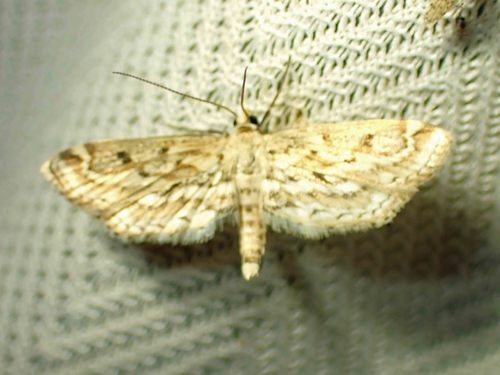
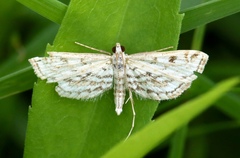
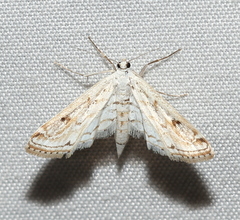
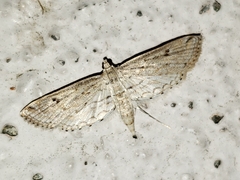
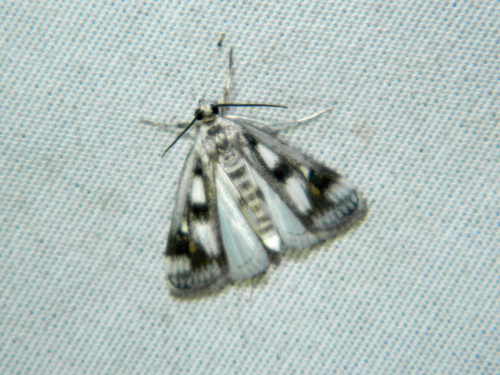
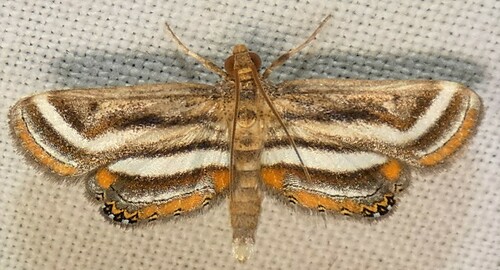
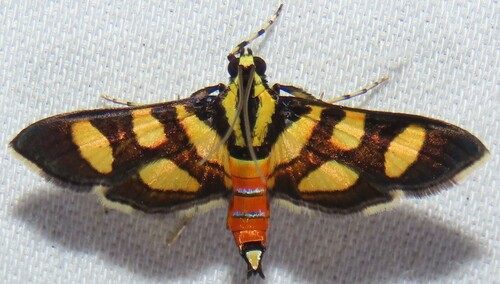
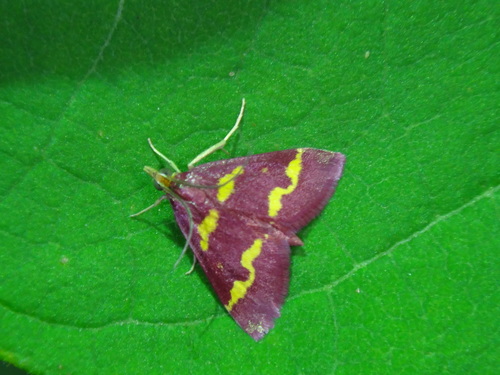
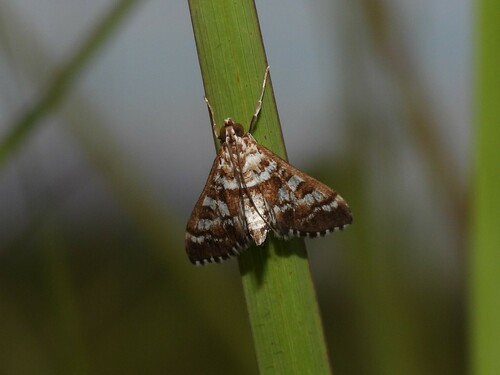
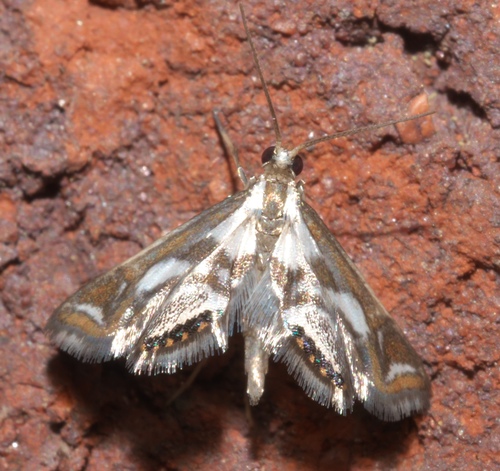
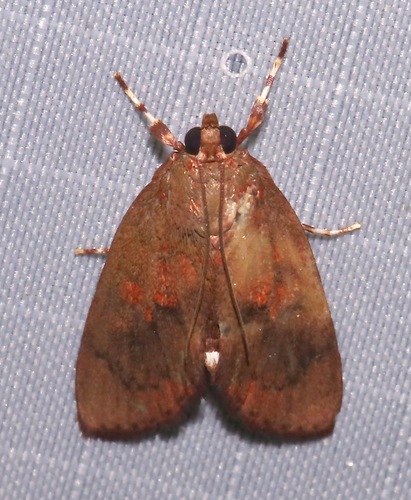
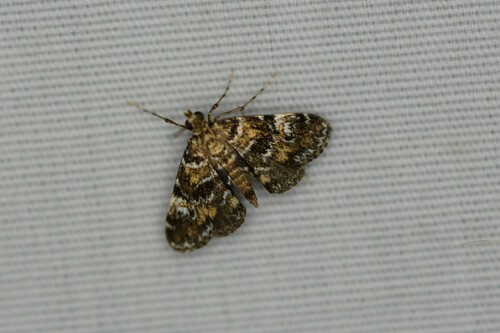
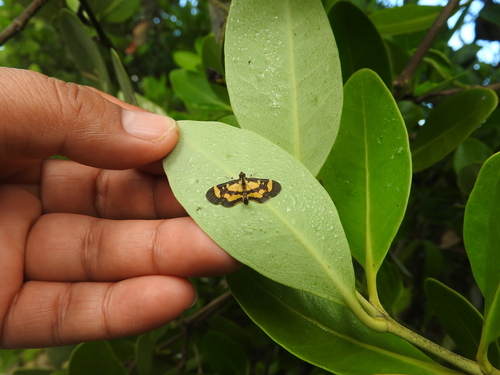
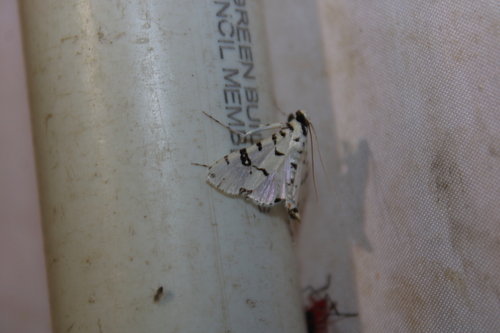
Watermilfoil Leafcutter Moth

Watermilfoil Leafcutter Moth

Parapoynx allionealis

Daily sighting probability ~10% · With luck
at Everglades National Park

In 3 days ~30% in a week ~60%

68 Verified sightings at Everglades National Park From 2019 to 2026
122 In all 4 parks
December Best month
🌙 Nocturnal When it's spotted

About the Watermilfoil Leafcutter Moth

Parapoynx allionealis, the watermilfoil leafcutter moth, is a moth in the family Crambidae. It was described by Francis Walker in 1859. It is found in North America, where it has been recorded from Alabama, Florida, Georgia, Indiana, Louisiana, Maine, Manitoba, Maryland, Massachusetts, Michigan, Minnesota, Mississippi, New Brunswick, New Hampshire, New Jersey, New York, North Carolina, Nova Scotia, Ohio, Oklahoma, Ontario, Quebec, South Carolina, Tennessee and Texas.

Adults have been recorded on wing year round in the southern part of the range. The larvae feed on various aquatic plants, including Nymphaea odorata, Potamogeton natans, Potamogeton pusillus, Myriophyllum spicatum, Myriophyllum heterophyllum, Hydrochtoa caroliniensis, Eleocharis vivipara, Utricularia inflata and Salvinia rotundifolia. They live in a portable case made of plant material. Wikipedia →

Global Distribution

Parks Where Found

# Park Country Daily sighting probability
1 Big Cypress National Preserve 🇺🇸 United States
~20%
2 Everglades National Park 🇺🇸 United States
~10%
3 Padre Island National Seashore 🇺🇸 United States
~10%
4 Acadia National Park 🇺🇸 United States
<5%

Cities Where Found

# City Country Daily sighting probability
1 Miami 🇺🇸 United States
<5%
2 Montreal 🇨🇦 Canada
<5%
3 Houston 🇺🇸 United States
<5%
4 Toronto 🇨🇦 Canada
<5%

Before you go

What are the chances of seeing a Watermilfoil Leafcutter Moth in Everglades National Park?

With luck

About 10% of wildlife watchers report a Watermilfoil Leafcutter Moth sighting in Everglades National Park on a given day, based on 68 verified sightings from GBIF citizen-science data from 2019 to 2026. It is the 81st most-seen of the 496 insects we can rate there. Over three days the chance rises to about 30%, and over a week to about 60%, if each day is a fresh chance.

When is the best time to see a Watermilfoil Leafcutter Moth in Everglades National Park?

July and November–December

In those months about 20% of wildlife watchers report a Watermilfoil Leafcutter Moth in Everglades National Park on a given day, against under 5% in February, the lowest month.

What time of day is best to see a Watermilfoil Leafcutter Moth?

Between 9 pm and midnight

Across all the parks we cover, that three-hour window holds the most Watermilfoil Leafcutter Moth sightings with a recorded time, and about 7 in 10 of them come between 6 pm and 6 am: it is mostly seen at night.

Is Everglades National Park the best place to see a Watermilfoil Leafcutter Moth?

2nd of 4

Of the 4 parks where we can rate Watermilfoil Leafcutter Moth sightings, Everglades National Park ranks 2nd at about 10%. The best odds are in Big Cypress National Preserve (United States, about 20%).

Where does the Watermilfoil Leafcutter Moth sighting chance come from?

GBIF citizen-science records

It is estimated from how often the Watermilfoil Leafcutter Moth is recorded against all the insects logged in Everglades National Park (68 verified sightings from 2019 to 2026), calibrated against known sighting rates. Figures are rounded to the nearest 10% because citizen-science data supports honest approximations, not decimals, and months with records from fewer than five people show "—". How it works.

← Back to Everglades National Park