Peale's Dolphin

Peale's Dolphin

Lagenorhynchus australis

LCLeast ConcernNTVUENCR
Daily sighting probability ~50% · Likely
at Falkland Islands

In 3 days ~90% in a week >90%

61 Verified sightings at Falkland Islands From 2019 to 2026
61 In 1 park
January Best month
☀️ Diurnal When it's spotted

About the Peale's Dolphin

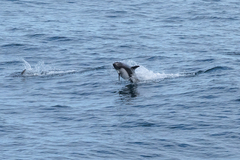
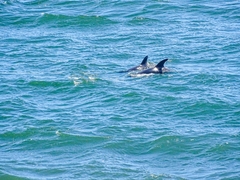
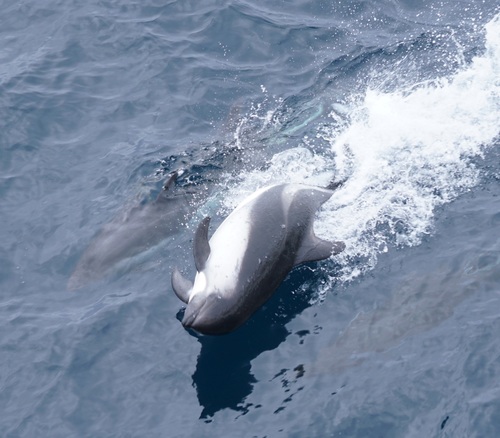
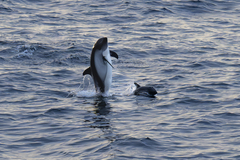
Peale's dolphin (Cephalorhynchus australis) is a small dolphin found in the waters around Tierra del Fuego at the foot of South America. It is also commonly known as the black-chinned dolphin or Peale's black-chinned dolphin. However, since Rice's work Peale's dolphin has been adopted as the standard common name.

Though it had traditionally been placed in the genus Lagenorhynchus, molecular analyses indicated Peale's dolphin is more closely related to the dolphins of the genus Cephalorhynchus. Some behavioral and morphological data supported moving Peale's dolphin to Cephalorhynchus. According to Schevill & Watkins 1971, Peale's dolphin and the Cephalorhynchus species are the only dolphins that do not whistle. Peale's dolphin also shares with several Cephalorhynchus species the possession of a distinct white "armpit" marking behind the pectoral fin. As a result, Peale's dolphin was reclassified as Cephalorhynchus australis in 2025.

Peale's dolphin is of typical size in its family — about 1 m (3 ft 3 in) in length at birth and 2.1 m (6 ft 11 in) when fully mature. Its adult weight is about 115 kg (254 lb). It has a dark-grey face and chin...
Wikipedia →

Global Distribution

Parks Where Found

# Park Country Daily sighting probability
1 Falkland Islands 🇫🇰 Falkland Islands
~50%

More parks will be added in future updates.

Before you go

What are the chances of seeing a Peale's Dolphin in Falkland Islands?

Likely

About 50% of wildlife watchers report a Peale's Dolphin sighting in Falkland Islands on a given day, based on 61 verified sightings from GBIF citizen-science data from 2019 to 2026. It is the 3rd most-seen of the 7 mammals we can rate there. Over three days the chance rises to about 90%, and over a week to over 90%, if each day is a fresh chance.

When is the best time to see a Peale's Dolphin in Falkland Islands?

January–April and September–November

In those months about 50% of wildlife watchers report a Peale's Dolphin in Falkland Islands on a given day, against about 10% in June, the lowest month. July and August have too few records to rate.

What time of day is best to see a Peale's Dolphin?

Between 3 and 6 pm

Across all the parks we cover, that three-hour window holds the most Peale's Dolphin sightings with a recorded time, and about 8 in 10 of them come between 6 am and 6 pm: it is a daytime animal.

Where else can you see a Peale's Dolphin?

Only Falkland Islands, in our data

Falkland Islands is the only park on Wallace's Line with enough records to rate Peale's Dolphin sightings: about 50% of wildlife watchers there report one on a given day.

Where does the Peale's Dolphin sighting chance come from?

GBIF citizen-science records

It is estimated from how often the Peale's Dolphin is recorded against all the mammals logged in Falkland Islands (61 verified sightings from 2019 to 2026), calibrated against known sighting rates. Figures are rounded to the nearest 10% because citizen-science data supports honest approximations, not decimals, and months with records from fewer than five people show "—". How it works.

← Back to Falkland Islands