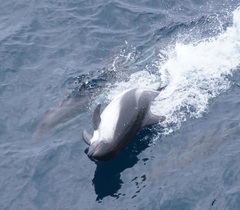
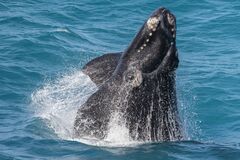
“We wanted to time our travels with the breeding cycle of the migratory penguins and we definitely succeeded - we saw so many fluffy, chubby baby penguins and were lucky enough to see albatross chicks and baby seals too!”
Falkland Islands
🇫🇰 Falkland Islands
The Falkland Islands, commonly referred to as the Falklands, is an archipelago in the South Atlantic Ocean on the Patagonian Shelf. The principal islands are about 300 mi east of South America's southern Patagonian coast and 752 mi from Cape Dubouzet at the northern tip of the Antarctic Peninsula, at a latitude of about 52°S. The archipelago, with an area of 4,700 sq mi, comprises East Falkland, West Falkland, and 776 smaller islands. As a British Overseas Territory, the Falklands have internal self-governance, while the United Kingdom takes responsibility for their defence and foreign affairs. The capital and largest settlement is Stanley on East Falkland.
The islands are believed to have been uninhabited prior to European discovery in the 17th century. Controversy exists over the Falklands' discovery and subsequent colonisation by Europeans. At various times, the islands have had French, British, Spanish, and Argentine settlements. Britain reasserted its rule in 1833, but Argentina maintains its claim to the islands. In April 1982, Argentine military forces invaded the islands. British administration was restored two months later at the end of the Falklands War. In a 2013 sovereignty referendum, almost all of the votes cast were in favour of remaining a UK overseas territory. The territory's sovereignty status is part of an ongoing dispute between Argentina and the UK.
The 2021 census recorded a population of 3,662 inhabitants, around 30% of which are temporary residents, on short-term work visas or working at the RAF Mount Pleasant military base. English is the official and predominant language. Under the British Nationality Act 1983, Falkland Islanders are British citizens.
The islands lie at the boundary of the subantarctic oceanic and tundra climate zones, and both major islands have mountain ranges reaching 2,300 ft. They are home to large bird populations, although many no longer breed on the main islands owing to predation by introduced species. Major economic activities include fishing, tourism, and sheep farming, with an emphasis on high-quality wool exports. Oil exploration, licensed by the Falkland Islands Government, remains controversial as a result of maritime disputes with Argentina.

-51.698° S 58.673° W
🦜 Nature
⭐ Iconic Species
📊 Most Spotted
⭐ Iconic Species
📊 Most Spotted
⭐ Iconic Species
📊 Most Spotted
📊 Most Spotted
📊 Most Spotted
📊 Most Spotted
Recent sightings in Falkland Islands
LIVEiNaturalistSighting Calendar
How many species you'd see in a dayavg 22 year-round
Sighting Zones
Warmer areas are where all species together are recorded most often.
-
The Neck
Daily sight. prob.vs avg -
Westpoint Cove
Daily sight. prob.vs avg -
Long Pond
Daily sight. prob.vs avg -
The Jetty Visitor Centre
Daily sight. prob.vs avg
Essentials
Climate
Wallace's Line Score
How good is this park for seeing wildlife?Biodiversity
GoodHow rich is the wildlife?
Sighting
Very goodHow likely to see animals?
Experience
GoodHow easy and pleasant is the visit?
What visitors say
Your review
“Join us on a Falkland Islands cruise and explore some of the 778 islands and islets that make up this bird-rich archipelago!”
“Almost as soon as we had embarked on the ship in Puerto Madryn, we had started the cruise down to the Falkland Islands.”
“Here we present a detailed yet handy guide on every detail of Falkland Islands so that you have fair know-how about the place when you visit it for your next vacation.”
Before you go
What animals can you see in Falkland Islands?
273 species
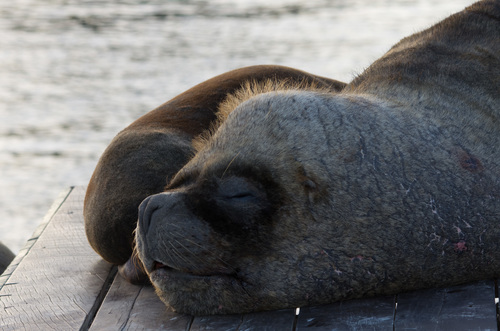
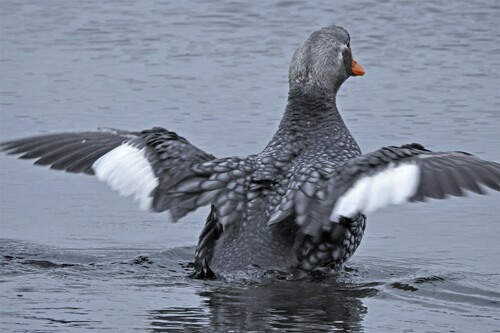
Falkland Islands has 273 recorded vertebrate species. The ones wildlife watchers report most often on a given day are Upland Goose (about 90%), Dominican Gull (about 80%), Falkland Steamer-Duck (about 80%), Forster's Caracara (about 80%) and Southern Giant Petrel (about 70%). Among mammals, the most-seen is Southern Sea Lion (about 60%).
When is the best time to visit Falkland Islands for wildlife?
March and June
In those months the park's 12 most-seen species average about 80% on a given day, against about 70% in April–May and July–February.
Can you see a Magellanic Penguin in Falkland Islands?
Yes
About 70% of wildlife watchers report a Magellanic Penguin sighting in Falkland Islands on a given day, based on 1,655 verified sightings from GBIF citizen-science data from 2019 to 2026. The best time is December to February (about 80%).
Can you see a Black-browed Albatross in Falkland Islands?
Yes
About 50% of wildlife watchers report a Black-browed Albatross sighting in Falkland Islands on a given day, based on 1,317 verified sightings from GBIF citizen-science data from 2019 to 2026. The best time is March (about 70%).
Can you see a Gentoo Penguin in Falkland Islands?
Yes
About 50% of wildlife watchers report a Gentoo Penguin sighting in Falkland Islands on a given day, based on 1,179 verified sightings from GBIF citizen-science data from 2019 to 2026. The best time is August and December–January (about 60%).
Can you see a Southern Sea Lion in Falkland Islands?
Yes
About 60% of wildlife watchers report a Southern Sea Lion sighting in Falkland Islands on a given day, based on 117 verified sightings from GBIF citizen-science data from 2019 to 2026. The best time is October and December (about 80%).
Where in Falkland Islands is wildlife easiest to see?
Around The Neck
The richest sighting zone is around The Neck, followed by Westpoint Cove and Long Pond, ranked by how many of the park's headline animals visitors can expect to see in each. See the zones on the map.
Is Falkland Islands good for wildlife watching?
3.0 out of 5
On the Wallace's Line Score, Falkland Islands rates 3.0/5: 302nd of 340 parks worldwide and 34th in South America. 32 of its species are reported by about 40% or more of wildlife watchers on a given day.