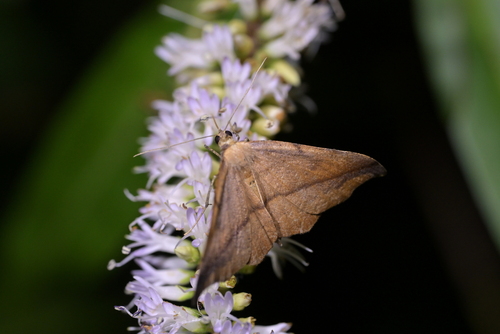
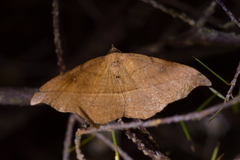
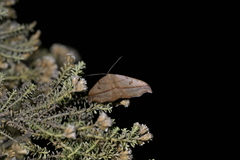
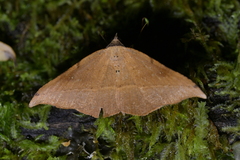
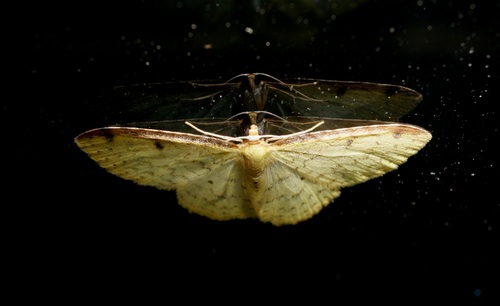
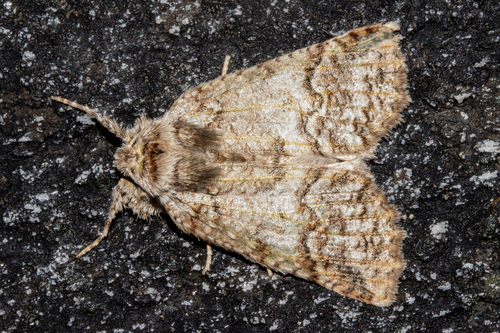
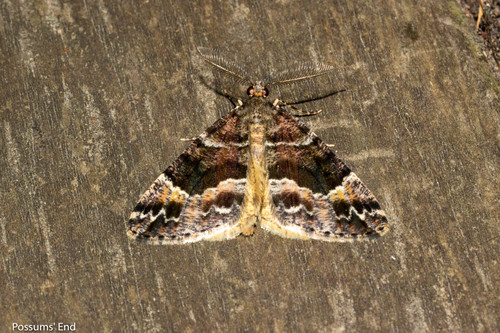
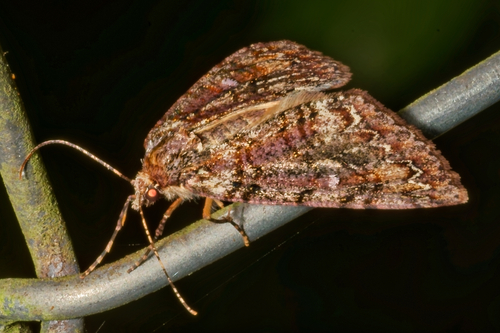
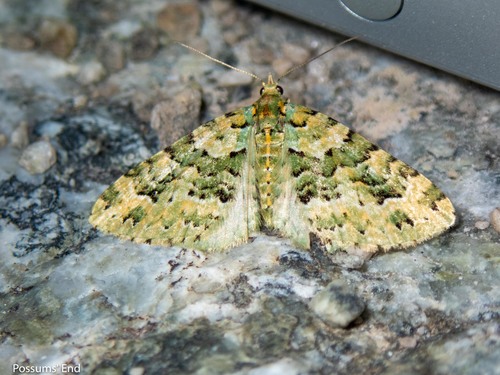
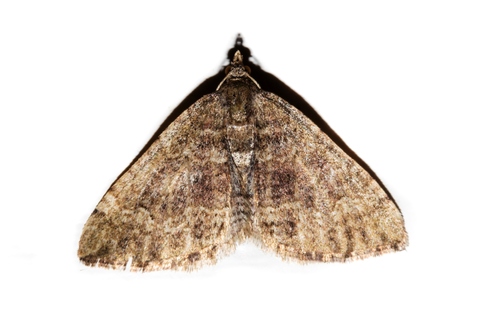
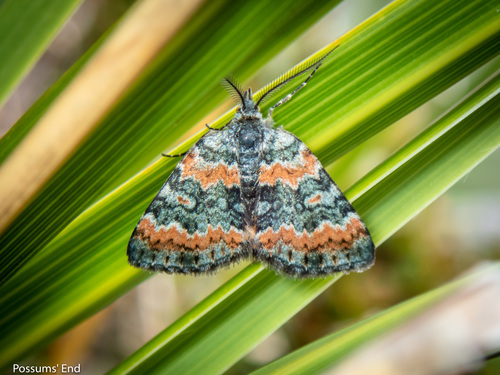
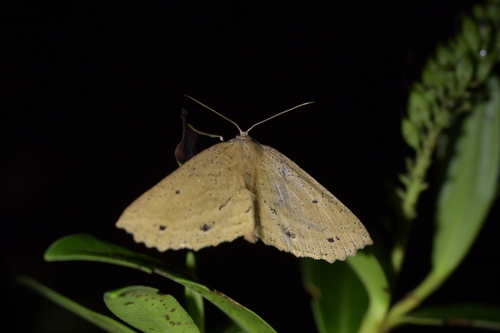
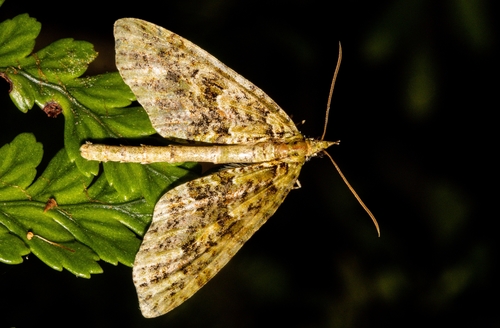
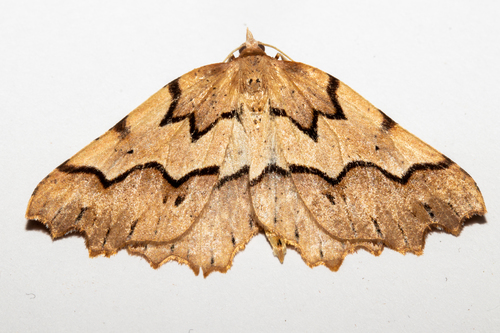
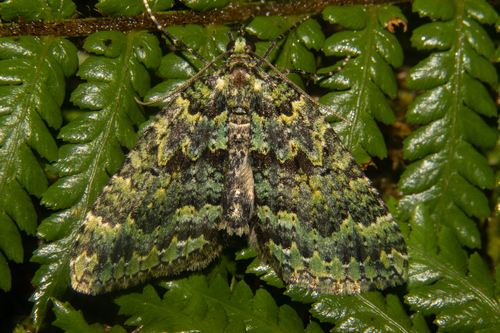
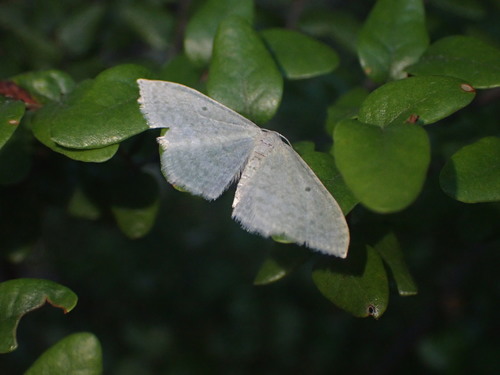
Hook-Tip Fern Looper

Hook-Tip Fern Looper

Sarisa muriferata

Endemic
Daily sighting probability ~10% · With luck
at Fiordland National Park

In 3 days ~20% in a week ~40%

6 Verified sightings at Fiordland National Park From 2019 to 2026
27 In all 3 parks
February Best month
☀️🌙 Day & Night When it's spotted

About the Hook-Tip Fern Looper

Sarisa is a monotypic moth genus in the family Geometridae and was first described by David Stephen Fletcher in 1979. The genus contains only one species, Sarisa muriferata, the hook-tip fern looper, which is endemic to New Zealand and surrounding islands. This species was described by Francis Walker in 1862. It is widespread in the North and South Islands, and has been recorded from Stewart Island, Big South Cape Island, the Chatham Islands and the Auckland Islands.

The genus Sarisa was first described by Fletcher in 1979. Sarisa is a replacement name for the genus Gargaphia, Walker 1863 which was preoccupied by Gargaphia, Stål, 1862. The only species in this genus, S. muriferata, was originally described by Francis Walker in 1863 and named Gargaphia muriferata. The female holotype is held at the Natural History Museum, London.

Full-grown larvae are approximately 30 mm long. Adults have functional mouthparts and are attracted to nectar sources. This species is endemic to New Zealand and its surrounding islands. The larvae are active in summer and autumn. They hide during the day in leaf litter and are active at night... Wikipedia →

Global Distribution

Parks Where Found

# Park Country Daily sighting probability
1 Rakiura National Park 🇳🇿 New Zealand
~20%
2 Egmont National Park 🇳🇿 New Zealand
~10%
3 Fiordland National Park 🇳🇿 New Zealand
~10%

Cities Where Found

# City Country Daily sighting probability
1 Auckland 🇳🇿 New Zealand
<5%

Before you go

What are the chances of seeing a Hook-Tip Fern Looper in Fiordland National Park?

With luck

About 10% of wildlife watchers report a Hook-Tip Fern Looper sighting in Fiordland National Park on a given day, based on 6 verified sightings from GBIF citizen-science data from 2019 to 2026. It is the 147th most-seen of the 201 insects we can rate there. Over three days the chance rises to about 20%, and over a week to about 40%, if each day is a fresh chance.

When is the best time to see a Hook-Tip Fern Looper in Fiordland National Park?

December to March

In those months about 10% of wildlife watchers report a Hook-Tip Fern Looper in Fiordland National Park on a given day, against under 5% in April to November, the lowest months.

What time of day is best to see a Hook-Tip Fern Looper?

Between 9 pm and midnight

Across all the parks we cover, that three-hour window holds the most Hook-Tip Fern Looper sightings with a recorded time, and about 7 in 10 of them come between 6 pm and 6 am: it is seen both by day and at night.

Is Fiordland National Park the best place to see a Hook-Tip Fern Looper?

3rd of 3

Of the 3 parks where we can rate Hook-Tip Fern Looper sightings, Fiordland National Park ranks 3rd at about 10%. The best odds are in Rakiura National Park (New Zealand, about 20%) and Egmont National Park (New Zealand, about 10%).

Which relatives of the Hook-Tip Fern Looper live in Fiordland National Park?

Same family: Geometridae

The closest relatives of the Hook-Tip Fern Looper that you can see in Fiordland National Park (family Geometridae, Geometer Moths) are Lacebark Looper (about 20%), Forest Semilooper (about 20%) and Brown Forest Flash (about 20%), with each one's daily chance of a sighting.

Where does the Hook-Tip Fern Looper sighting chance come from?

GBIF citizen-science records

It is estimated from how often the Hook-Tip Fern Looper is recorded against all the insects logged in Fiordland National Park (6 verified sightings from 2019 to 2026), calibrated against known sighting rates. Figures are rounded to the nearest 10% because citizen-science data supports honest approximations, not decimals, and months with records from fewer than five people show "—". How it works.

← Back to Fiordland National Park