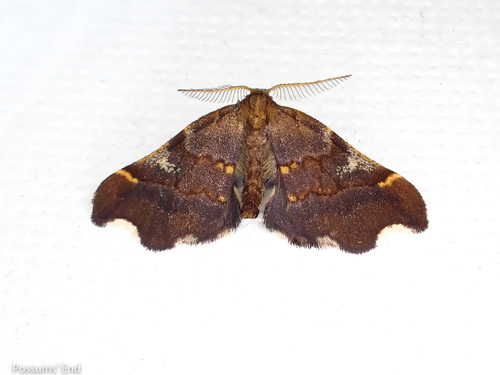
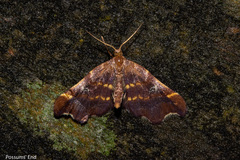
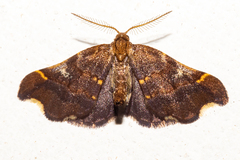
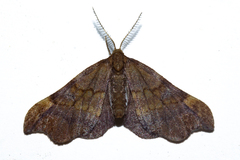
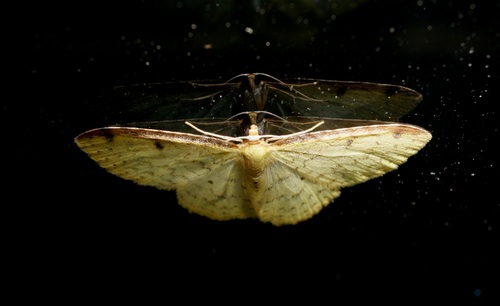
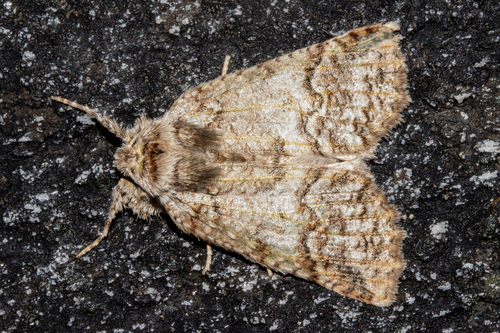
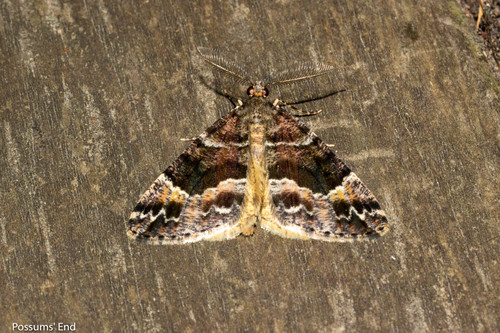
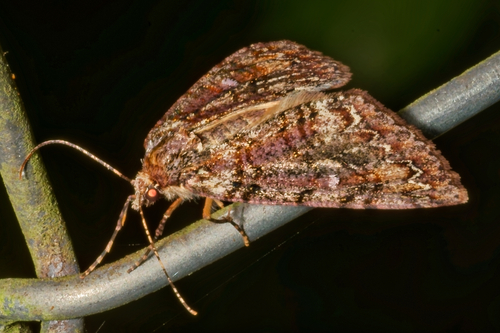
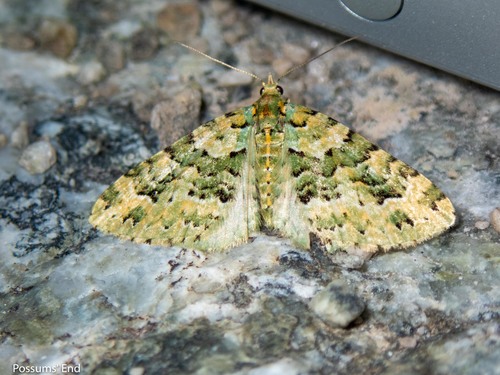
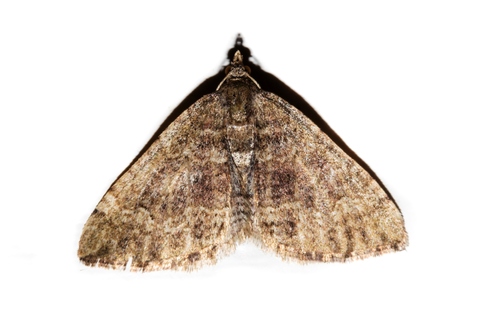
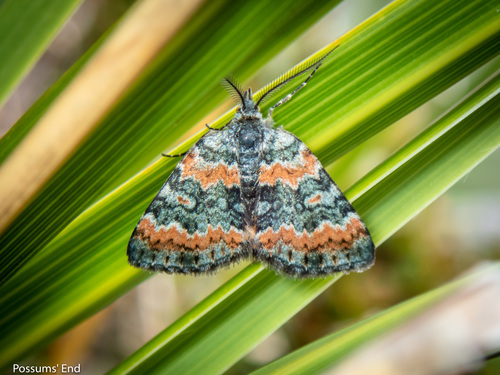
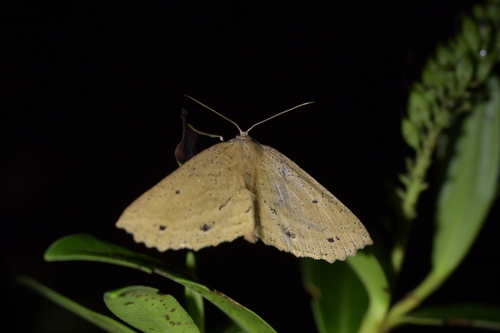
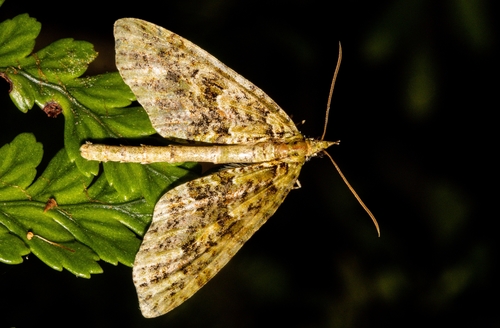
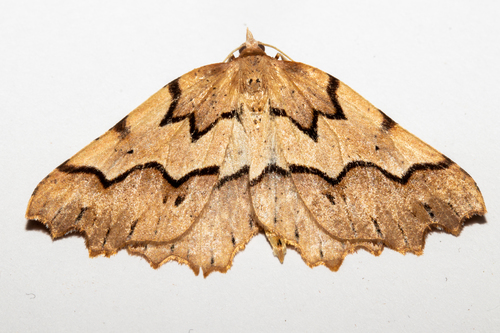
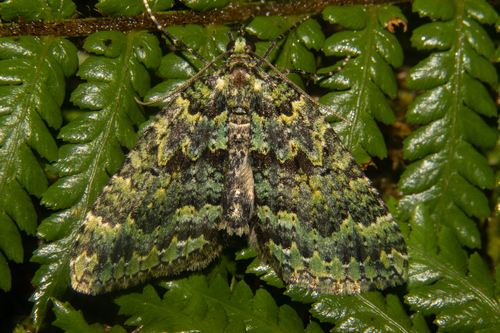
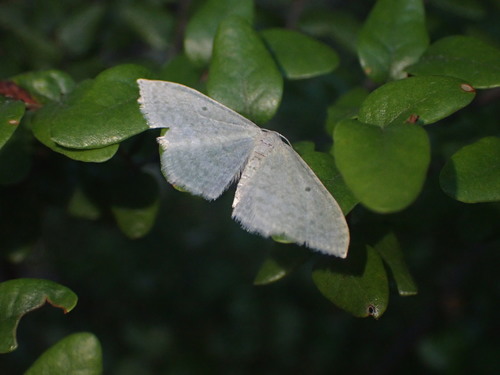
Orange & Purple Fern Looper

Orange & Purple Fern Looper

Paradetis porphyrias

Endemic
Daily sighting probability ~10% · With luck
at Fiordland National Park

In 3 days ~20% in a week ~40%

8 Verified sightings at Fiordland National Park From 2019 to 2026
8 In 1 park
January Best month
☀️🌙 Day & Night When it's spotted

About the Orange & Purple Fern Looper

Paradetis is a monotypic moth genus in the family Geometridae. Its only species, Paradetis porphyrias, also known as the orange and purple fern looper, is endemic to New Zealand. The genus and species were first described by Edward Meyrick, the genus in 1885 and the species in 1883. It is found in both the North and South Islands. This species frequents the ferny glens and the banks of mountain streams. It is thought to be widespread in native forests with high rainfall. The larvae likely feeds on the fern Hypolepis millefolium. Adults are commonly on the wing from December to February and fly by the day close to the ground. When at rest the adult has its fore-wings placed slightly backwards, the antennae extended forwards and the end of the abdomen turned upwards. Adults have been trapped via a Mercury-vapour lamp.

This genus was originally named Parysatis by Meyrick in 1883. However in 1885 Meyrick renamed this genus Paradetis as the former name was preoccupied. This species was first described by Meyrick in 1883 under the name Parysatis porphyrias. Meyrick went on to give a more detailed description of the species in 1884. In 1885 Meyrick renamed the genus of this... Wikipedia →

Global Distribution

Parks Where Found

# Park Country Daily sighting probability
1 Fiordland National Park 🇳🇿 New Zealand
~10%

More parks will be added in future updates.

Before you go

What are the chances of seeing an Orange & Purple Fern Looper in Fiordland National Park?

With luck

About 10% of wildlife watchers report an Orange & Purple Fern Looper sighting in Fiordland National Park on a given day, based on 8 verified sightings from GBIF citizen-science data from 2019 to 2026. It is the 108th most-seen of the 201 insects we can rate there. Over three days the chance rises to about 20%, and over a week to about 40%, if each day is a fresh chance.

When is the best time to see an Orange & Purple Fern Looper in Fiordland National Park?

December to February

In those months about 10% of wildlife watchers report an Orange & Purple Fern Looper in Fiordland National Park on a given day, against under 5% in March to November, the lowest months.

What time of day is best to see an Orange & Purple Fern Looper?

Between 11 am and 2 pm

Across all the parks we cover, that three-hour window holds the most Orange & Purple Fern Looper sightings with a recorded time, and about half of them come between 6 am and 6 pm: it is seen both by day and at night.

Where else can you see an Orange & Purple Fern Looper?

Only Fiordland National Park, in our data

Fiordland National Park is the only park on Wallace's Line with enough records to rate Orange & Purple Fern Looper sightings: about 10% of wildlife watchers there report one on a given day.

Which relatives of the Orange & Purple Fern Looper live in Fiordland National Park?

Same family: Geometridae

The closest relatives of the Orange & Purple Fern Looper that you can see in Fiordland National Park (family Geometridae, Geometer Moths) are Lacebark Looper (about 20%), Forest Semilooper (about 20%) and Brown Forest Flash (about 20%), with each one's daily chance of a sighting.

Where does the Orange & Purple Fern Looper sighting chance come from?

GBIF citizen-science records

It is estimated from how often the Orange & Purple Fern Looper is recorded against all the insects logged in Fiordland National Park (8 verified sightings from 2019 to 2026), calibrated against known sighting rates. Figures are rounded to the nearest 10% because citizen-science data supports honest approximations, not decimals, and months with records from fewer than five people show "—". How it works.

← Back to Fiordland National Park