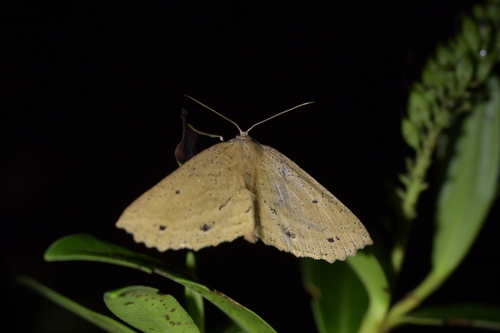
Pseudocoremia terrena

Pseudocoremia terrena

Pseudocoremia terrena

Daily sighting probability ~10% · With luck
at Fiordland National Park

In 3 days ~30% in a week ~50%

16 Verified sightings at Fiordland National Park From 2019 to 2026
16 In 1 park
December Best month
☀️🌙 Day & Night When it's spotted

About the Pseudocoremia terrena

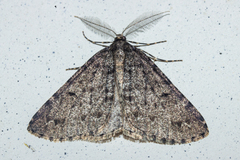
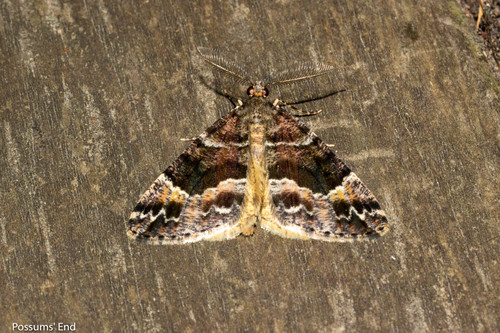
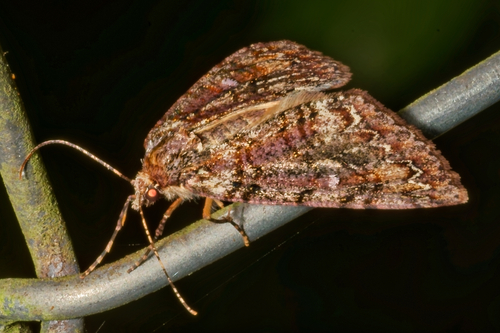
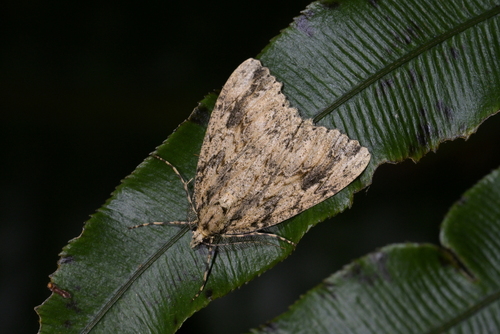
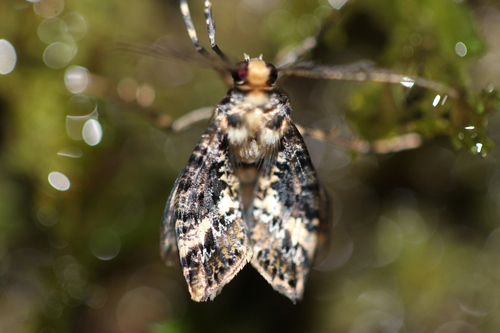
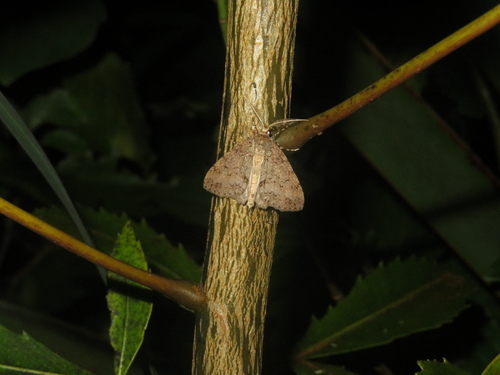
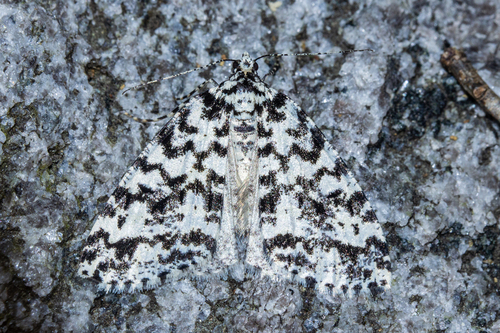
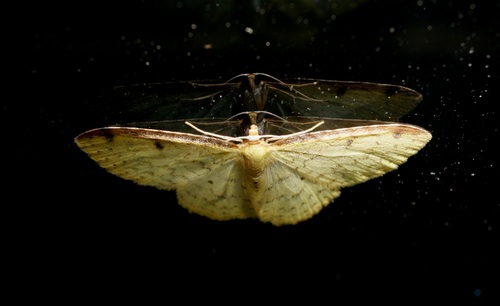
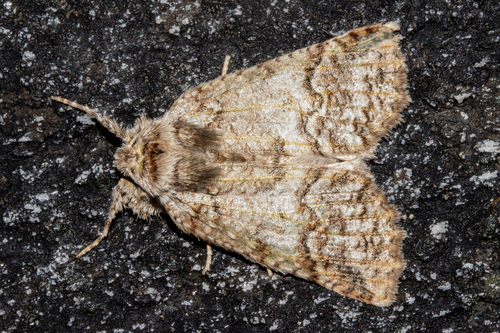
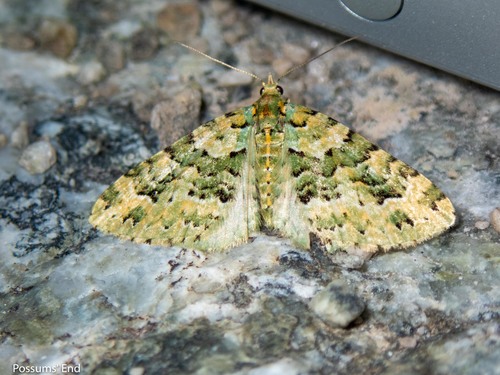
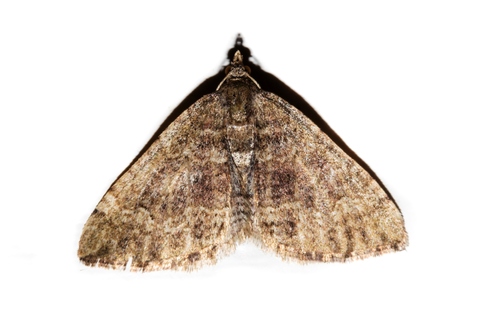
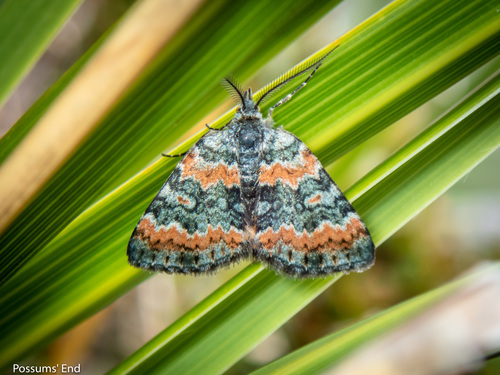
Pseudocoremia terrena is a species of moth in the family Geometridae. This species was first described by Alfred Philpott in 1915. It is endemic to New Zealand and is found in the southern parts of the South Island. This species inhabits the upper edge of subalpine native forests. Larvae feed on species in the genus Veronica. Adults are on the wing from November until March.

This species was first described by Alfred Philpott in 1915 and originally named Selidosema terrena. George Hudson, discussed and illustrated this species in his 1928 book The butterflies and moths of New Zealand under that name. In 1988 John S. Dugdale assigned the species to the genus Pseudocoremia. The male holotype specimen, collected by Harold Hamilton at Bold Peak of the Humboldt Mountains, is held at Te Papa.

Philpott described this species as follows: ♂. 49 mm. Head grey mixed with brown. Antennae dull brown, ciliations long. Thorax brown mixed with grey. Abdomen grey. Legs grey, sprinkled and annulated with fuscous-brown. Forewings triangular, costa straight, termen evenly rounded, oblique; whitish-grey, densely irrorated with, brownish-fuscous which forms indistinct... Wikipedia →
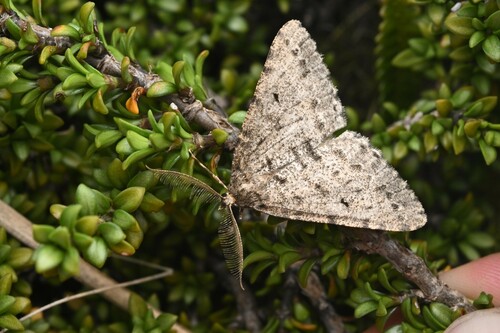
Global Distribution

Parks Where Found

# Park Country Daily sighting probability
1 Fiordland National Park 🇳🇿 New Zealand
~10%

More parks will be added in future updates.

Before you go

What are the chances of seeing a Pseudocoremia terrena in Fiordland National Park?

With luck

About 10% of wildlife watchers report a Pseudocoremia terrena sighting in Fiordland National Park on a given day, based on 16 verified sightings from GBIF citizen-science data from 2019 to 2026. It is the 64th most-seen of the 201 insects we can rate there. Over three days the chance rises to about 30%, and over a week to about 50%, if each day is a fresh chance.

When is the best time to see a Pseudocoremia terrena in Fiordland National Park?

December and January

In those months about 20% of wildlife watchers report a Pseudocoremia terrena in Fiordland National Park on a given day, against under 5% in February and April–October, the lowest months.

What time of day is best to see a Pseudocoremia terrena?

Between 10 pm and 1 am

Across all the parks we cover, that three-hour window holds the most Pseudocoremia terrena sightings with a recorded time, and about 6 in 10 of them come between 6 pm and 6 am: it is seen both by day and at night.

Where else can you see a Pseudocoremia terrena?

Only Fiordland National Park, in our data

Fiordland National Park is the only park on Wallace's Line with enough records to rate Pseudocoremia terrena sightings: about 10% of wildlife watchers there report one on a given day.

Which relatives of the Pseudocoremia terrena live in Fiordland National Park?

Same genus: Pseudocoremia

The closest relatives of the Pseudocoremia terrena that you can see in Fiordland National Park (genus Pseudocoremia) are Brown Forest Flash (about 20%), Common Forest Looper (about 20%) and Pseudocoremia rudisata (about 10%), with each one's daily chance of a sighting.

Where does the Pseudocoremia terrena sighting chance come from?

GBIF citizen-science records

It is estimated from how often the Pseudocoremia terrena is recorded against all the insects logged in Fiordland National Park (16 verified sightings from 2019 to 2026), calibrated against known sighting rates. Figures are rounded to the nearest 10% because citizen-science data supports honest approximations, not decimals, and months with records from fewer than five people show "—". How it works.

← Back to Fiordland National Park