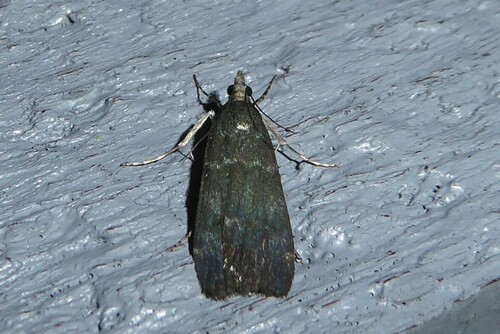
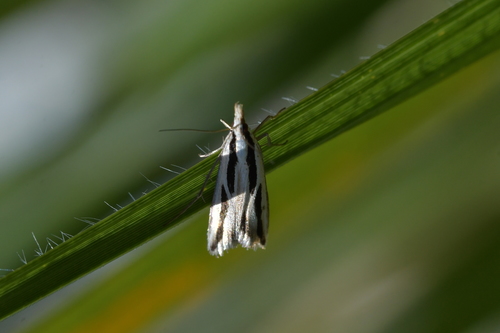
Scoparia rotuellus silhouette

Silhouette: Andy Wilson · PhyloPic

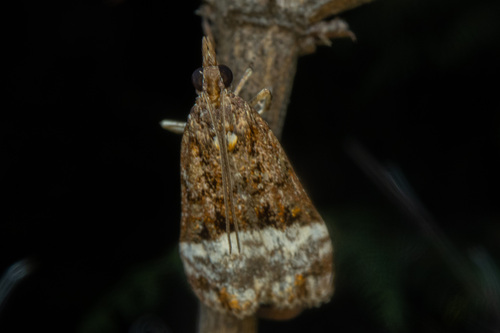
Scoparia rotuellus

Scoparia rotuellus

Daily sighting probability ~10% · With luck
at Fiordland National Park

In 3 days ~20% in a week ~50%

10 Verified sightings at Fiordland National Park From 2019 to 2026
29 In all 2 parks
December Best month
🌙 Nocturnal When it's spotted

About the Scoparia rotuellus

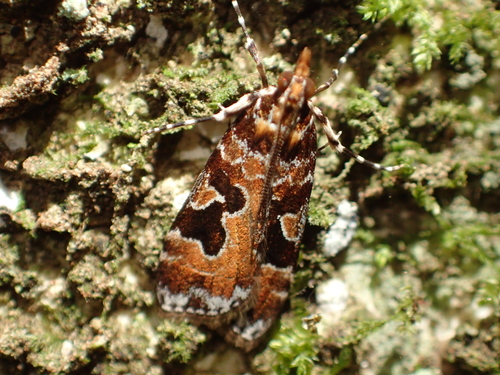
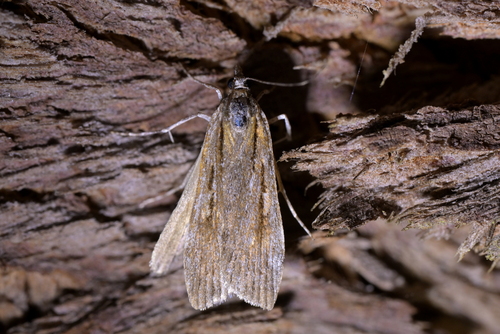
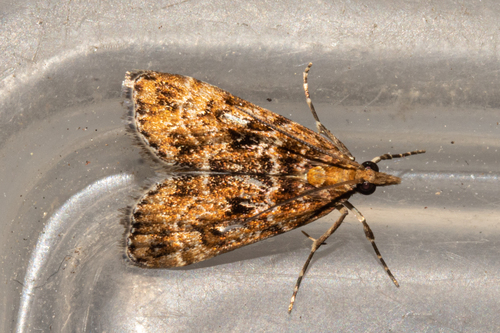
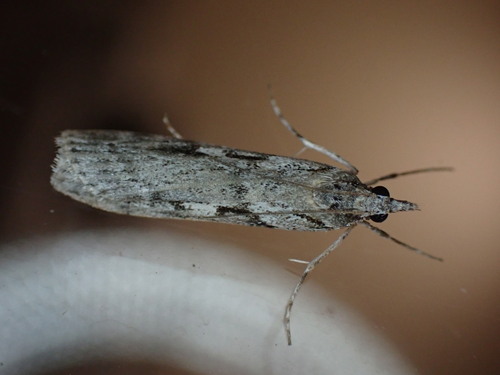
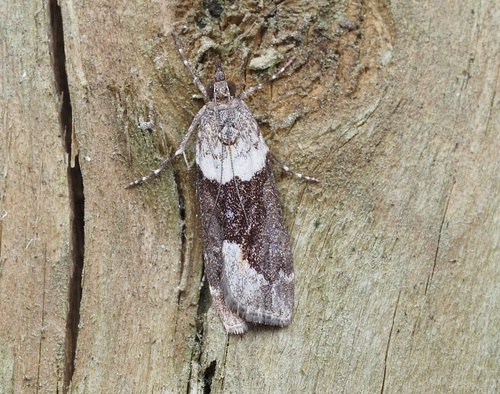
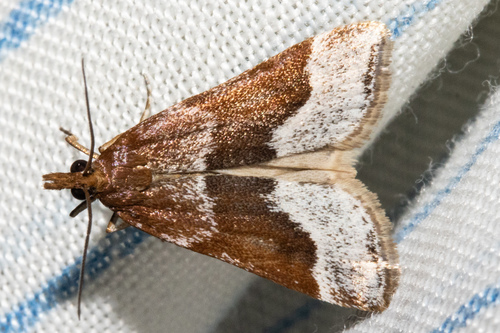
Scoparia rotuella is a species of moth in the family Crambidae. It was first described by Cajetan Felder, Rudolf Felder and Alois Friedrich Rogenhofer in 1875. It is endemic to New Zealand and, although considered localised, is found throughout the country. As of 2022, the life history of this species is largely unknown, but it has been hypothesised that this species may have two broods a year. Adults are on the wing all year round and are attracted to light.

It was described by Cajetan Felder, Rudolf Felder and Alois Friedrich Rogenhofer in 1875 under the name Crambus rotuellus. In 1885 Edward Meyrick placed this species in the genus Xeroscopa and amended the epithet to rotuella. In 1913 Meyrick again revised the taxonomy of the species and placed it within the genus Scopaira. George Hudson discussed and illustrated this species under the name Scoparia rotuella in his 1928 book The butterflies and moths of New Zealand. The male lectotype, collected in Nelson by T. R. Oxley, is held at the Natural History Museum, London.

The wingspan is 28–29 mm. The forewings are light greyish ochreous, irrorated (speckled) with white beneath the costa. There is a... Wikipedia →

Global Distribution

Parks Where Found

# Park Country Daily sighting probability
1 Rakiura National Park 🇳🇿 New Zealand
~20%
2 Fiordland National Park 🇳🇿 New Zealand
~10%

Before you go

What are the chances of seeing a Scoparia rotuellus in Fiordland National Park?

With luck

About 10% of wildlife watchers report a Scoparia rotuellus sighting in Fiordland National Park on a given day, based on 10 verified sightings from GBIF citizen-science data from 2019 to 2026. It is the 96th most-seen of the 201 insects we can rate there. Over three days the chance rises to about 20%, and over a week to about 50%, if each day is a fresh chance.

When is the best time to see a Scoparia rotuellus in Fiordland National Park?

March–April and November–January

In those months about 10% of wildlife watchers report a Scoparia rotuellus in Fiordland National Park on a given day, against under 5% in February and May–October, the lowest months.

What time of day is best to see a Scoparia rotuellus?

Between 10 pm and 1 am

Across all the parks we cover, that three-hour window holds the most Scoparia rotuellus sightings with a recorded time, and about 8 in 10 of them come between 6 pm and 6 am: it is mostly seen at night.

Is Fiordland National Park the best place to see a Scoparia rotuellus?

2nd of 2

Of the 2 parks where we can rate Scoparia rotuellus sightings, Fiordland National Park ranks 2nd at about 10%. The best odds are in Rakiura National Park (New Zealand, about 20%).

Which relatives of the Scoparia rotuellus live in Fiordland National Park?

Same genus: Scoparia

The closest relatives of the Scoparia rotuellus that you can see in Fiordland National Park (genus Scoparia) are Scoparia minusculalis (about 10%), Boot Scoparia (about 10%) and Scoparia subitus (about 10%), with each one's daily chance of a sighting.

Where does the Scoparia rotuellus sighting chance come from?

GBIF citizen-science records

It is estimated from how often the Scoparia rotuellus is recorded against all the insects logged in Fiordland National Park (10 verified sightings from 2019 to 2026), calibrated against known sighting rates. Figures are rounded to the nearest 10% because citizen-science data supports honest approximations, not decimals, and months with records from fewer than five people show "—". How it works.

← Back to Fiordland National Park