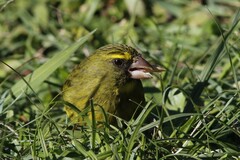
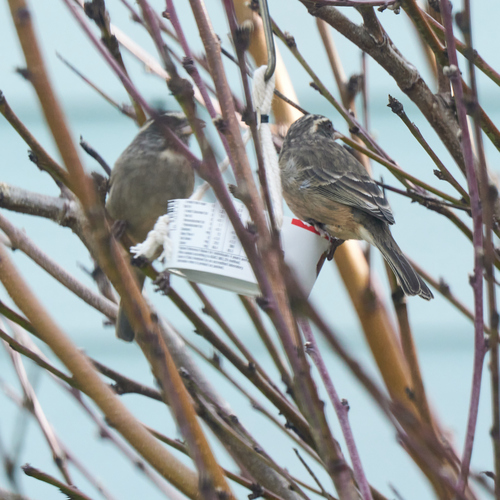
Forest Canary

Forest Canary

Crithagra scotops

Silhouette: Sheatherius · PhyloPic

LCLeast ConcernNTVUENCR
Daily sighting probability ~30% · Possible
at Garden Route National Park

In 3 days ~60% in a week ~90%

419 Verified sightings at Garden Route National Park From 2019 to 2026
1,875 In all 4 parks
October Best month
☀️ Diurnal When it's spotted

About the Forest Canary

The forest canary (Crithagra scotops) is a species of finch in the family Fringillidae. It is found in South Africa and Eswatini. Its natural habitats are subtropical or tropical moist lowland forest and subtropical or tropical moist montane forest.

The forest canary was formerly placed in the genus Serinus but phylogenetic analysis using mitochondrial and nuclear DNA sequences found that the genus was polyphyletic. The genus was therefore split and a number of species including the forest canary were moved to the resurrected genus Crithagra.

The forest canary's main diet consists of seeds, fruits, and figs. Seeds like Panicum (Guinea grasses), Alyssum, and Passerina corymbosa (gonna) are commonly found in their diet. Forest canaries enjoy Penaea cneorum and Penaeaceae flowers. These birds enjoy Senecio (creeping groundsel) and Ptaeroxylon obliquum (Sneezewood) leaves. In addition to these, the forest canary will also eat insects. However, insects are usually consumed during the breeding season as a source of more protein. When searching for food, they will forage in small groups or pairs. They tend to forage in low areas, such as the ground or near bushes and... Wikipedia →

Sounds

Call1:15

South Africa · 2019

© Frank Lambert · XC509755 · CC BY-NC-ND 4.0

Song0:34

South Africa · 2018

© Tristan Spurway · XC500264 · CC BY-NC-SA 4.0

Call0:26

South Africa · 2019

© Tim Cockcroft · XC489103 · CC BY-NC-SA 4.0

Global Distribution

Parks Where Found

# Park Country Daily sighting probability
1 Garden Route National Park 🇿🇦 South Africa
~30%
2 Table Mountain National Park 🇿🇦 South Africa
~20%
3 Addo Elephant National Park 🇿🇦 South Africa
<5%
4 De Hoop Nature Reserve 🇿🇦 South Africa
<5%

Cities Where Found

# City Country Daily sighting probability
1 Cape Town 🇿🇦 South Africa
<5%

Before you go

What are the chances of seeing a Forest Canary in Garden Route National Park?

Possible

About 30% of wildlife watchers report a Forest Canary sighting in Garden Route National Park on a given day, based on 419 verified sightings from GBIF citizen-science data from 2019 to 2026. It is the 39th most-seen of the 222 birds we can rate there. Over three days the chance rises to about 60%, and over a week to about 90%, if each day is a fresh chance.

When is the best time to see a Forest Canary in Garden Route National Park?

May and October

In those months about 50% of wildlife watchers report a Forest Canary in Garden Route National Park on a given day, against about 10% in June and November, the lowest months.

What time of day is best to see a Forest Canary?

Between 7 and 10 am

Across all the parks we cover, that three-hour window holds the most Forest Canary sightings with a recorded time, and nearly all of them come between 6 am and 6 pm: it is a daytime animal.

Is Garden Route National Park the best place to see a Forest Canary?

Yes

Of the 4 parks where we can rate Forest Canary sightings, Garden Route National Park has the highest daily chance: about 30%. Next come Table Mountain National Park (South Africa, about 20%) and Addo Elephant National Park (South Africa, under 5%).

Which relatives of the Forest Canary live in Garden Route National Park?

Same genus: Crithagra

The closest relatives of the Forest Canary that you can see in Garden Route National Park (genus Crithagra, African Seedeaters, Serins, Canaries, and Citrils) are Streaky-headed Seedeater (about 20%) and Brimstone Canary (about 20%), with each one's daily chance of a sighting.

Where does the Forest Canary sighting chance come from?

GBIF citizen-science records

It is estimated from how often the Forest Canary is recorded against all the birds logged in Garden Route National Park (419 verified sightings from 2019 to 2026), calibrated against known sighting rates. Figures are rounded to the nearest 10% because citizen-science data supports honest approximations, not decimals, and months with records from fewer than five people show "—". How it works.

← Back to Garden Route National Park