Persius Duskywing

Persius Duskywing

Erynnis persius

Daily sighting probability ~10% · With luck
at Glacier National Park

In 3 days ~20% in a week ~30%

10 Verified sightings at Glacier National Park From 2019 to 2026
108 In all 6 parks
July Best month
☀️ Diurnal When it's spotted

About the Persius Duskywing

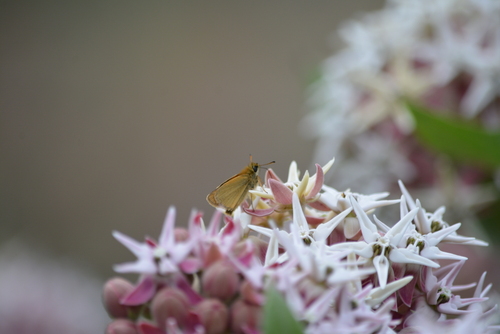
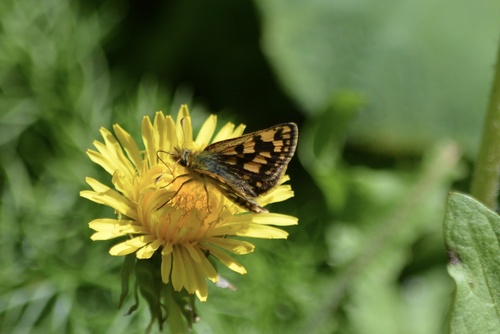
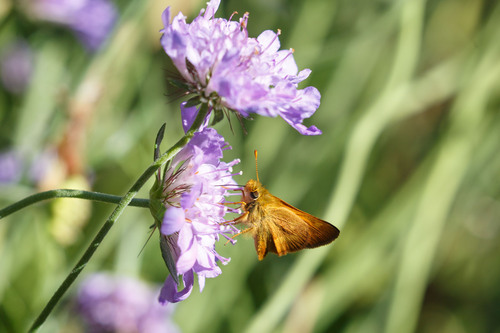
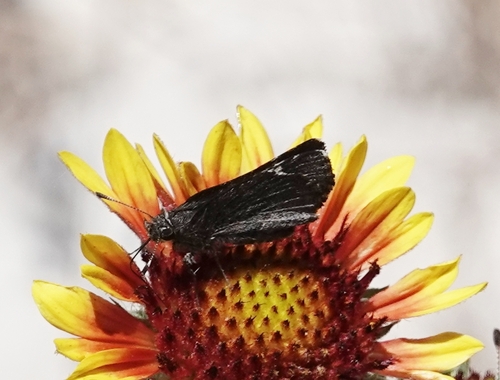
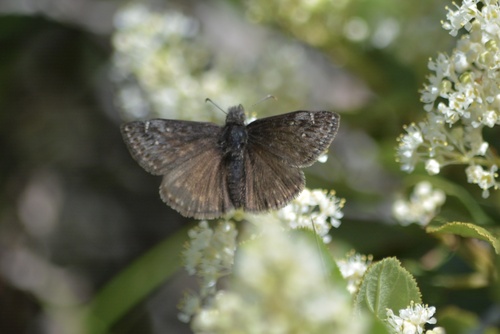
Erynnis persius, commonly known as Persius duskywing, is a species of butterfly in the family Hesperiidae that occurs in North America. The eastern subspecies Erynnis persius persius is rarer and protected by law in some regions.

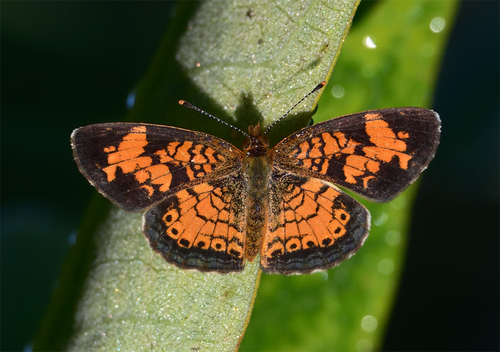
The upperside of both the forewings and hindwings are a dark brown color. The forewing has clear spots with other dim markings and the patch at the end of the cell is gray. Males have raised white hairs on their forewings. The hindwings are fringed with darker brown to black and have another fringe that is creamy white. Females have a scent scale patch on their 7th abdominal segment. The species may be difficult to distinguish from other duskywing skippers.

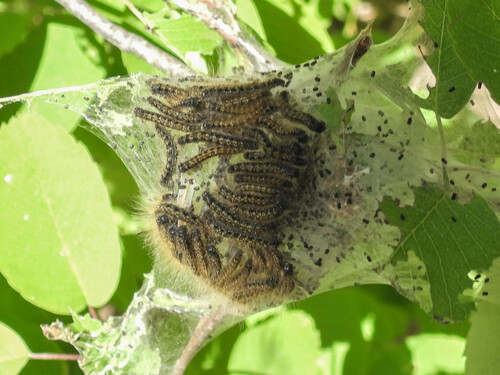
Caterpillars of this species are light green with a reddish cast and covered with fine, short hairs. Their head is all brownish black. The Persius Duskywing has a wide range across North America from Alaska to southeastern Manitoba, covering much of the western United States down to Arizona and New Mexico. The eastern population ranges from New England west to Wisconsin, and south to Virginia.

The Persius Duskywing has a single annual generation. The mature... Wikipedia →
Global Distribution

Parks Where Found

# Park Country Daily sighting probability
1 Kluane National Park 🇨🇦 Canada
~30%
2 Denali National Park 🇺🇸 United States
~10%
3 Banff National Park 🇨🇦 Canada
~10%
4 Jasper National Park 🇨🇦 Canada
~10%
5 Rocky Mountain National Park 🇺🇸 United States
~10%
6 Glacier National Park 🇺🇸 United States
~10%

Cities Where Found

# City Country Daily sighting probability
1 Calgary 🇨🇦 Canada
<5%

Before you go

What are the chances of seeing a Persius Duskywing in Glacier National Park?

With luck

About 10% of wildlife watchers report a Persius Duskywing sighting in Glacier National Park on a given day, based on 10 verified sightings from GBIF citizen-science data from 2019 to 2026. It is the 107th most-seen of the 147 insects we can rate there. Over three days the chance rises to about 20%, and over a week to about 30%, if each day is a fresh chance.

When is the best time to see a Persius Duskywing in Glacier National Park?

June and July

In those months about 10% of wildlife watchers report a Persius Duskywing in Glacier National Park on a given day, against under 5% in August to May, the lowest months.

What time of day is best to see a Persius Duskywing?

Between 10 am and 1 pm

Across all the parks we cover, that three-hour window holds the most Persius Duskywing sightings with a recorded time, and about 9 in 10 of them come between 6 am and 6 pm: it is a daytime animal.

Is Glacier National Park the best place to see a Persius Duskywing?

6th of 6

Of the 6 parks where we can rate Persius Duskywing sightings, Glacier National Park ranks 6th at about 10%. The best odds are in Kluane National Park (Canada, about 30%), Denali National Park (United States, about 10%) and Banff National Park (Canada, about 10%).

Which relatives of the Persius Duskywing live in Glacier National Park?

Same family: Hesperiidae

The closest relatives of the Persius Duskywing that you can see in Glacier National Park (family Hesperiidae, Skippers) are Essex Skipper (about 10%), Western Arctic Skipper (about 10%) and Woodland Skipper (about 10%), with each one's daily chance of a sighting.

Where does the Persius Duskywing sighting chance come from?

GBIF citizen-science records

It is estimated from how often the Persius Duskywing is recorded against all the insects logged in Glacier National Park (10 verified sightings from 2019 to 2026), calibrated against known sighting rates. Figures are rounded to the nearest 10% because citizen-science data supports honest approximations, not decimals, and months with records from fewer than five people show "—". How it works.

← Back to Glacier National Park