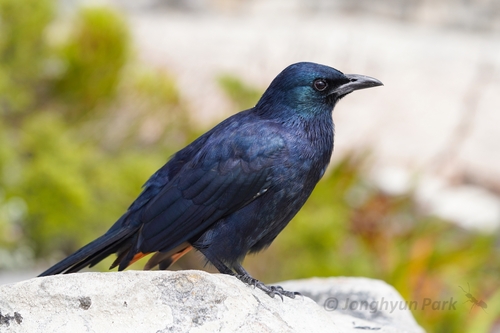
Barratt's Warbler

Barratt's Warbler

Bradypterus barratti

Silhouette: Sheatherius · PhyloPic

LCLeast ConcernNTVUENCR
Daily sighting probability ~10% · With luck
at Golden Gate Highlands National Park

In 3 days ~20% in a week ~40%

7 Verified sightings at Golden Gate Highlands National Park From 2019 to 2026
12 In all 2 parks
January Best month
☀️ Diurnal When it's spotted

About the Barratt's Warbler

Barratt's warbler (Bradypterus barratti), or the African scrub warbler, is a species of Old World warbler in the family Locustellidae. It is found in eastern South Africa, Lesotho, eastern Zimbabwe, and adjacent western Mozambique. Its natural habitat is subtropical or tropical moist montane forests.

Bradypterus barratti was described by Sharpe in 1876 from the Mac Mac goldfields, Mashishing, Mpumalanga. Barratt's Warbler has been regarded as conspecific with the Evergreen Forest Warbler (Bradypterus lopezi); however, they differ in voice and morphology.

The bird is 15 cm in size, and its average weight is 15 g. Males and females are alike. In adults, the underparts of these birds are chocolate-brown; their crown-to-tail, rump, and tail are washed rufous. They have dark brown lores, cheeks, and ears coverts, and their supercilium is greyish buff. Their upper wings coverts are rufous-brown and, and the marginal part of the upper wing is buffy. Their primaries are rufous-brown... Wikipedia →

Sounds

Call0:17

Zimbabwe · 2024

© Dries Van de Loock · XC963062 · CC BY-NC-ND 4.0

Song0:43

Zimbabwe · 2019

© Lynette Rudman · XC522623 · CC BY-NC-SA 4.0

Alarm call0:29

South Africa · 2017

© Tim Cockcroft · XC374559 · CC BY-NC-SA 4.0

Global Distribution

Parks Where Found

# Park Country Daily sighting probability
1 Golden Gate Highlands National Park 🇿🇦 South Africa
~10%
2 Gorongosa National Park 🇲🇿 Mozambique
<5%

Before you go

What are the chances of seeing a Barratt's Warbler in Golden Gate Highlands National Park?

With luck

About 10% of wildlife watchers report a Barratt's Warbler sighting in Golden Gate Highlands National Park on a given day, based on 7 verified sightings from GBIF citizen-science data from 2019 to 2026. It is the 89th most-seen of the 108 birds we can rate there. Over three days the chance rises to about 20%, and over a week to about 40%, if each day is a fresh chance.

When is the best time to see a Barratt's Warbler in Golden Gate Highlands National Park?

January

In that month about 20% of wildlife watchers report a Barratt's Warbler in Golden Gate Highlands National Park on a given day, against under 5% in February, April, June–September and December, the lowest months. That is one of Golden Gate Highlands National Park's wettest months, with about 130 mm of rain against 15 mm in June. March has too few records to rate.

What time of day is best to see a Barratt's Warbler?

Between 7 and 10 am

Across all the parks we cover, that three-hour window holds the most Barratt's Warbler sightings with a recorded time, and nearly all of them come between 6 am and 6 pm: it is a daytime animal.

Is Golden Gate Highlands National Park the best place to see a Barratt's Warbler?

Yes

Of the 2 parks where we can rate Barratt's Warbler sightings, Golden Gate Highlands National Park has the highest daily chance: about 10%. Next come Gorongosa National Park (Mozambique, under 5%).

Which relatives of the Barratt's Warbler live in Golden Gate Highlands National Park?

Same order: Passeriformes

The closest relatives of the Barratt's Warbler that you can see in Golden Gate Highlands National Park (order Passeriformes, Perching Birds) are Pied Starling (about 70%), Red-winged Starling (about 70%) and African Stonechat (about 70%), with each one's daily chance of a sighting.

Where does the Barratt's Warbler sighting chance come from?

GBIF citizen-science records

It is estimated from how often the Barratt's Warbler is recorded against all the birds logged in Golden Gate Highlands National Park (7 verified sightings from 2019 to 2026), calibrated against known sighting rates. Figures are rounded to the nearest 10% because citizen-science data supports honest approximations, not decimals, and months with records from fewer than five people show "—". How it works.

← Back to Golden Gate Highlands National Park