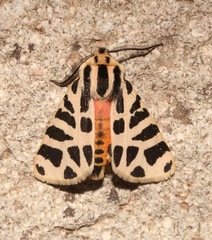
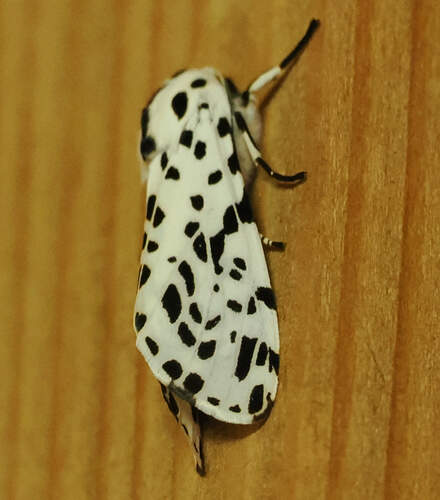
Immaculate Tiger Moth

Immaculate Tiger Moth

Apantesis incorrupta

Daily sighting probability ~10% · With luck
at Grand Canyon National Park

In 3 days ~20% in a week ~40%

7 Verified sightings at Grand Canyon National Park From 2019 to 2026
7 In 1 park
September Best month
☀️ Diurnal When it's spotted

About the Immaculate Tiger Moth

Apantesis incorrupta is an arctiine moth in the family Erebidae, described by Henry Edwards in 1881. It is found from southern Colorado and south-eastern Kansas south through Arizona, New Mexico and western Texas into Mexico and west to south-eastern California. The habitat consists of grasslands and open woodlands.

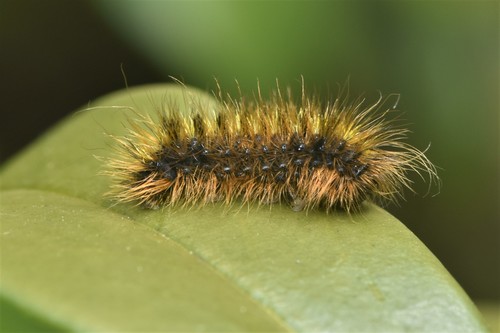
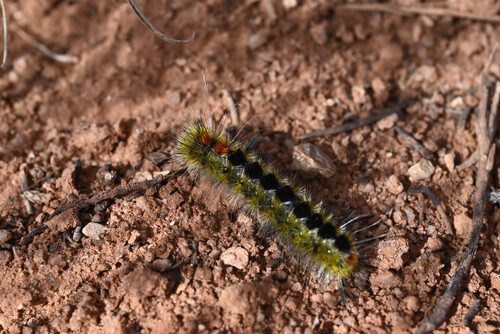
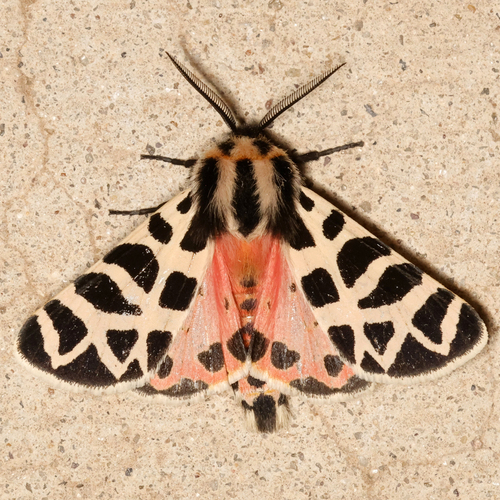
The length of the forewings is about 18.6 mm. The hindwings are pink to yellowish pink. There are two generations per year with adults on wing from late April to early October. The larvae feed on a wide range of herbaceous, flowering plants, including Fallugia paradoxa.

Recent research has shown that the larvae of Apantesis incorrupta consume alkaloid-laden leaves that help fight off internal parasitic fly larvae. This phenomenon is said to be "the first clear demonstration of self-medication among insects".

This species was formerly a member of the genus Grammia, but was moved to Apantesis along with the other species of the genera Grammia, Holarctia, and Notarctia. Pitkin, Brian & Jenkins, Paul. "Search results Family: Arctiidae". Butterflies and Moths of the World. Natural History Museum, London. Wikipedia →
Global Distribution

Parks Where Found

# Park Country Daily sighting probability
1 Grand Canyon National Park 🇺🇸 United States
~10%

More parks will be added in future updates.

Before you go

What are the chances of seeing an Immaculate Tiger Moth in Grand Canyon National Park?

With luck

About 10% of wildlife watchers report an Immaculate Tiger Moth sighting in Grand Canyon National Park on a given day, based on 7 verified sightings from GBIF citizen-science data from 2019 to 2026. It is the 95th most-seen of the 143 insects we can rate there. Over three days the chance rises to about 20%, and over a week to about 40%, if each day is a fresh chance.

When is the best time to see an Immaculate Tiger Moth in Grand Canyon National Park?

September

In that month about 20% of wildlife watchers report an Immaculate Tiger Moth in Grand Canyon National Park on a given day, against under 5% in November to August, the lowest months.

What time of day is best to see an Immaculate Tiger Moth?

Between 10 am and 1 pm

Across all the parks we cover, that three-hour window holds the most Immaculate Tiger Moth sightings with a recorded time, and about 7 in 10 of them come between 6 am and 6 pm: it is a daytime animal.

Where else can you see an Immaculate Tiger Moth?

Only Grand Canyon National Park, in our data

Grand Canyon National Park is the only park on Wallace's Line with enough records to rate Immaculate Tiger Moth sightings: about 10% of wildlife watchers there report one on a given day.

Which relatives of the Immaculate Tiger Moth live in Grand Canyon National Park?

Same family: Erebidae

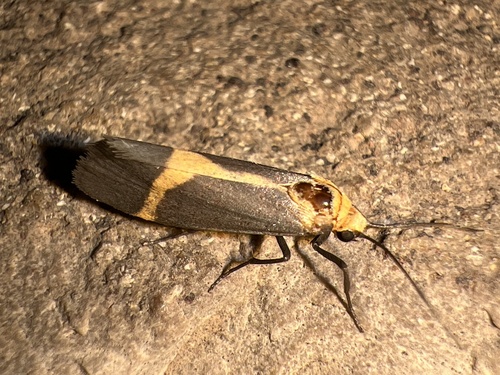
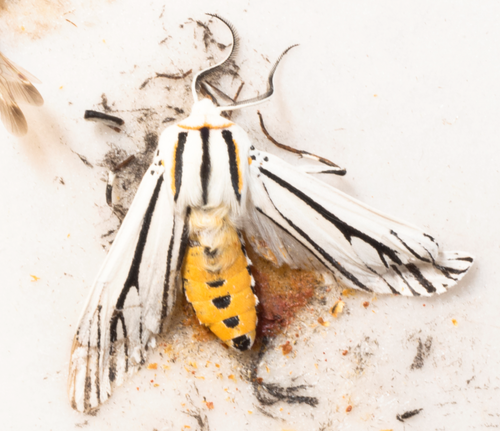
The closest relatives of the Immaculate Tiger Moth that you can see in Grand Canyon National Park (family Erebidae, Underwing, Tiger, Tussock, and Allied Moths) are Silver-Spotted Tiger Moth (about 20%), Angel Lichen Moth (about 10%) and Clio Tiger Moth (about 10%), with each one's daily chance of a sighting.

Where does the Immaculate Tiger Moth sighting chance come from?

GBIF citizen-science records

It is estimated from how often the Immaculate Tiger Moth is recorded against all the insects logged in Grand Canyon National Park (7 verified sightings from 2019 to 2026), calibrated against known sighting rates. Figures are rounded to the nearest 10% because citizen-science data supports honest approximations, not decimals, and months with records from fewer than five people show "—". How it works.

← Back to Grand Canyon National Park