About the Black-Footed Drone Fly
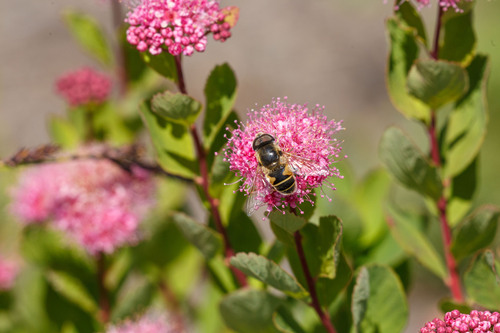
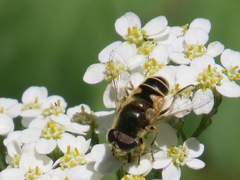
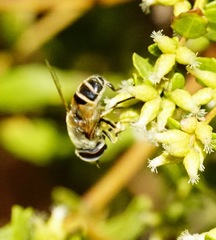
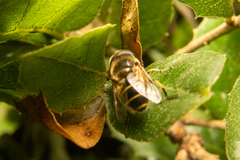
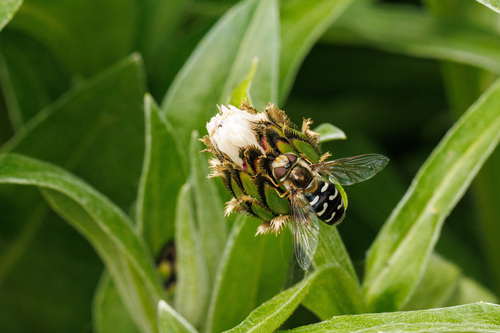
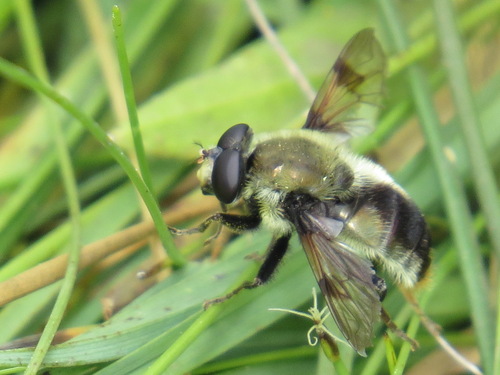
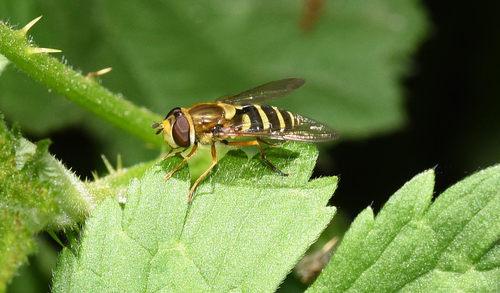
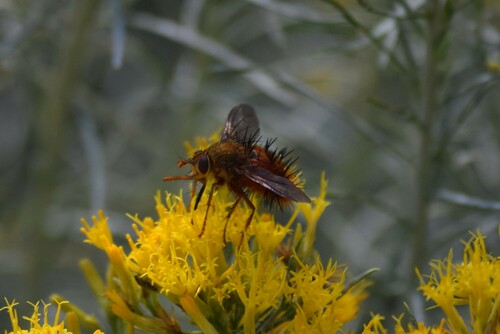
Eristalis hirta, the black-footed drone fly, is a common Western North American species of syrphid fly, first officially described by Loew in 1866. Hoverflies get their names from the ability to remain nearly motionless while in flight. The adults are also known as flower flies as they are commonly found on and around flowers, from which they get both energy-giving nectar and protein-rich pollen. The larvae are aquatic filter-feeders of the rat-tailed type.
This species is found in Western North America and Northern Europe in raised bogs, ditches and temporary pools. For terms see Morphology of Diptera Size Length: 10–15 mm (0.39–0.59 in) Head The frons are a shiny black with light brownish yellow pile. The face and frons of female is unusually broad. The pile of the face is light brownish yellow except the facial stripe (tubercle) and the cheeks which are a shiny black. The antennae are very dark brownish black. The arista is slightly plumose basally. The eyes are contiguous only in males.
Thorax The thorax is dark, shiny, brownish black with yellowish pile. The scutellum is lighter Brownish and shiny. The pleurae are covered with pale yellow... Wikipedia →