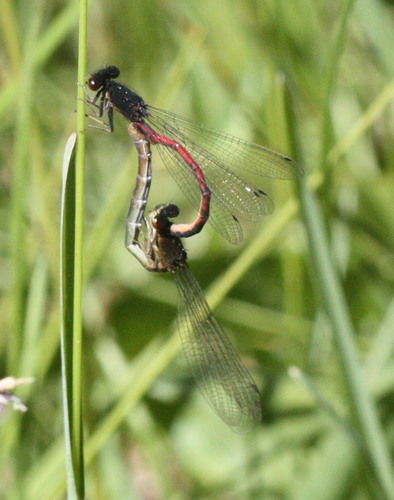
Western Red Damsel

Western Red Damsel

Amphiagrion abbreviatum

Daily sighting probability ~10% · With luck
at Grand Teton National Park

In 3 days ~20% in a week ~30%

6 Verified sightings at Grand Teton National Park From 2019 to 2026
31 In all 2 parks
June Best month
☀️ Diurnal When it's spotted

About the Western Red Damsel

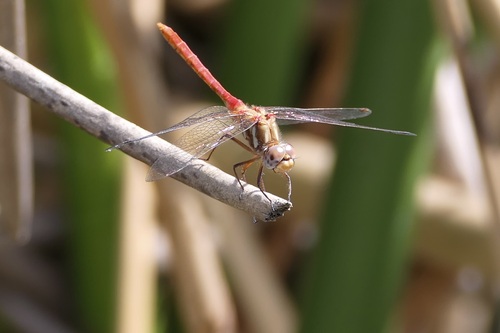
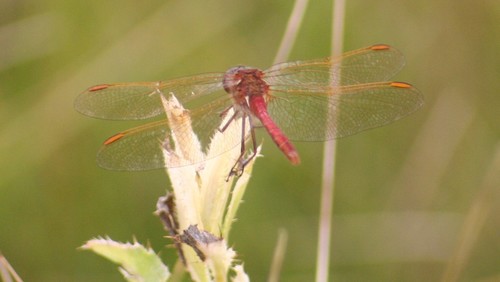
Amphiagrion abbreviatum, the western red damsel, is a species of narrow-winged damselfly in the family Coenagrionidae. It is found in Central America and North America. The IUCN conservation status of Amphiagrion abbreviatum is "LC", least concern, with no immediate threat to the species' survival. The population is stable. The IUCN status was reviewed in 2017.

The western red damsel is primarily distributed across western North America, with records spanning four Canadian provinces, 23 U.S. states, and one state in Mexico. Its range extends from British Columbia and the northern prairies to the southwestern United States and Baja California.

Amphiagrion abbreviatum has long been considered a lentic species, typically found in marshes fed by springs and seepage areas in arid regions, as well as along the vegetated edges of ponds, lakes, and slow-moving streams. These calm, stable waters provide the perfect setting for larval development among submerged vegetation and allow adults to perch and oviposit without risk of being swept away. However, recent fieldwork in southern Alberta has revealed something unexpected: thriving, reproducing populations of... Wikipedia →
Global Distribution

Parks Where Found

# Park Country Daily sighting probability
1 Yellowstone National Park 🇺🇸 United States
~10%
2 Grand Teton National Park 🇺🇸 United States
~10%

Cities Where Found

# City Country Daily sighting probability
1 Denver 🇺🇸 United States
<5%

Before you go

What are the chances of seeing a Western Red Damsel in Grand Teton National Park?

With luck

About 10% of wildlife watchers report a Western Red Damsel sighting in Grand Teton National Park on a given day, based on 6 verified sightings from GBIF citizen-science data from 2019 to 2026. It is the 119th most-seen of the 140 insects we can rate there. Over three days the chance rises to about 20%, and over a week to about 30%, if each day is a fresh chance.

When is the best time to see a Western Red Damsel in Grand Teton National Park?

June and July

In those months about 10% of wildlife watchers report a Western Red Damsel in Grand Teton National Park on a given day, against under 5% in August to May, the lowest months. Those are among Grand Teton National Park's driest months, with about 35 mm of rain a month against 85 mm in December.

What time of day is best to see a Western Red Damsel?

Between 1 and 4 pm

Across all the parks we cover, that three-hour window holds the most Western Red Damsel sightings with a recorded time, and about 9 in 10 of them come between 6 am and 6 pm: it is a daytime animal.

Is Grand Teton National Park the best place to see a Western Red Damsel?

Among the best

Of the 2 parks where we can rate Western Red Damsel sightings, Grand Teton National Park ranks 2nd at about 10%, level with the leaders once rounded. The best odds are in Yellowstone National Park (United States, about 10%).

Which relatives of the Western Red Damsel live in Grand Teton National Park?

Same order: Odonata

The closest relatives of the Western Red Damsel that you can see in Grand Teton National Park (order Odonata, Dragonflies and Damselflies) are Black Meadowhawk (about 10%), Pale Snaketail (about 10%) and Paddle-Tailed Darner (about 10%), with each one's daily chance of a sighting.

Where does the Western Red Damsel sighting chance come from?

GBIF citizen-science records

It is estimated from how often the Western Red Damsel is recorded against all the insects logged in Grand Teton National Park (6 verified sightings from 2019 to 2026), calibrated against known sighting rates. Figures are rounded to the nearest 10% because citizen-science data supports honest approximations, not decimals, and months with records from fewer than five people show "—". How it works.

← Back to Grand Teton National Park