
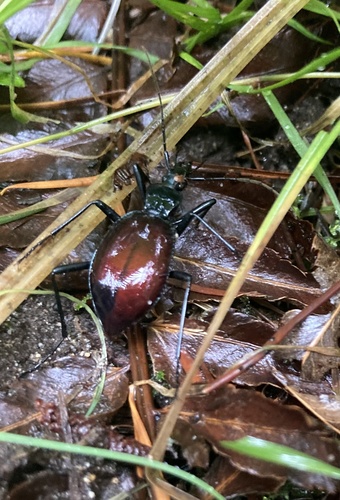

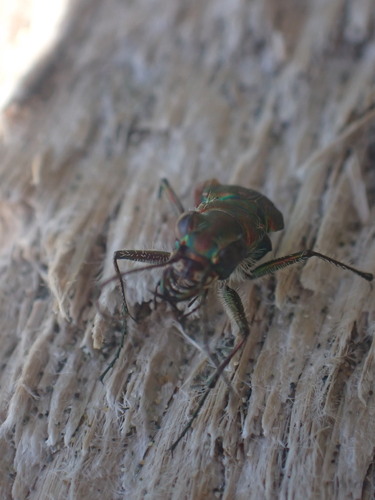

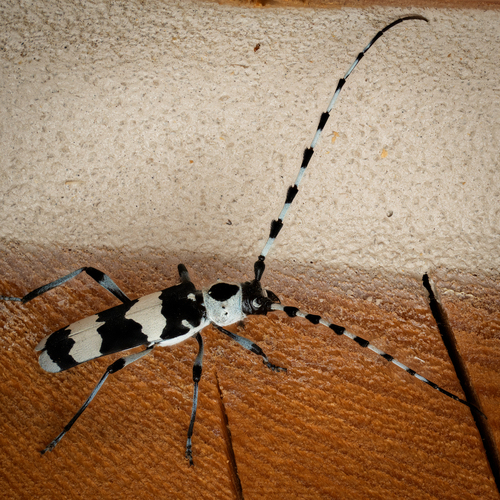
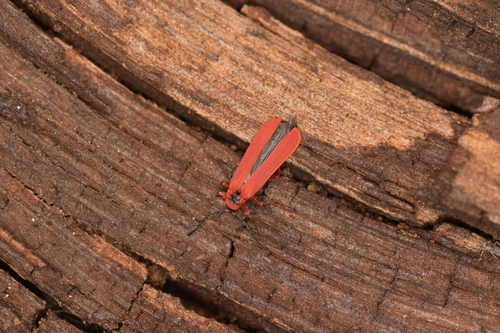
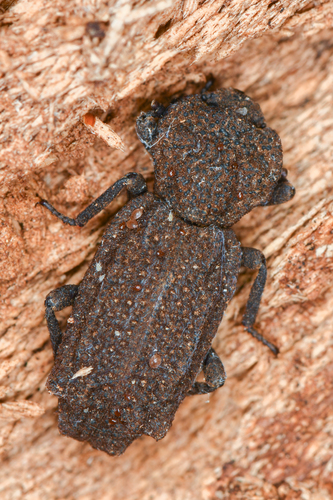
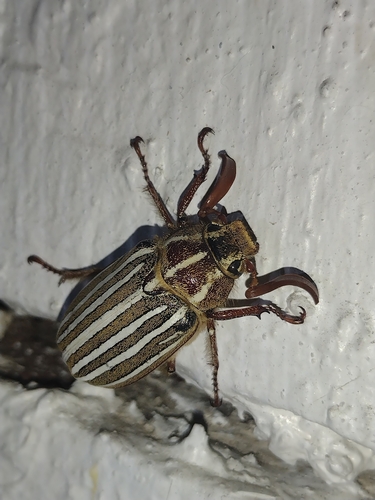
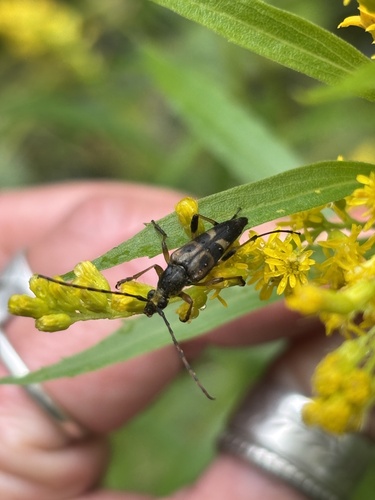
Pictured Rove Beetle

Pictured Rove Beetle

Thinopinus pictus

Silhouette: PhyloPic

Daily sighting probability ~10% · With luck
at Great Bear Rainforest

In 3 days ~20% in a week ~40%

16 Verified sightings at Great Bear Rainforest From 2019 to 2026
58 In all 4 parks
June Best month
☀️ Diurnal When it's spotted

About the Pictured Rove Beetle

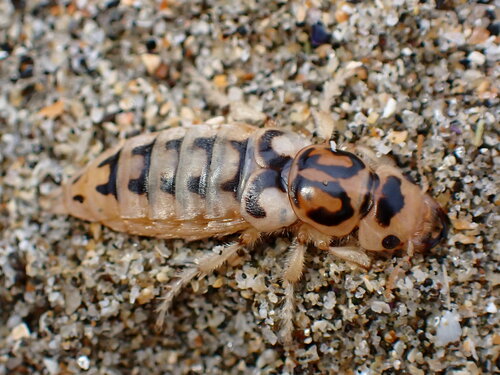
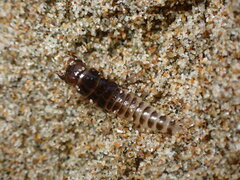
The pictured rove beetle (Thinopinus pictus) is a wingless rove beetle which lives on the sandy beaches of the West Coast of the United States from southern Alaska to Baja California. It is nocturnal, emerging at night from temporary sand burrows to feed on beach hoppers (Orchestoidea). It is the only species in the genus Thinopinus.

Like other rove beetles, T. pictus has shortened elytra, so that most of its abdomen is exposed. Males average 17 millimetres (0.67 in), females average 18 mm (0.71 in). Males possess a cleft in the last abdominal sternite, which makes them readily discernible from females. Their cryptic coloration varies geographically in response to lighter colored sand in the southern part of their range. Populations north of central California tend to be darker in response to the dark volcanic sand, while those in the southern range are quite pale. Because of this variation, T. pictus was once thought to be made up of two subspecies.

Thinopinus pictus inhabits the sandy intertidal zone; during the day, they hide in temporary sand burrows or under kelp and beach debris with a preference to inhabit the wettest and softest sand available... Wikipedia →

Global Distribution

Parks Where Found

# Park Country Daily sighting probability
1 Pacific Rim National Park Reserve 🇨🇦 Canada
~10%
2 Channel Islands National Park 🇺🇸 United States
~10%
3 Great Bear Rainforest 🇨🇦 Canada
~10%
4 Olympic National Park 🇺🇸 United States
<5%

Cities Where Found

# City Country Daily sighting probability
1 San Diego 🇺🇸 United States
<5%

Before you go

What are the chances of seeing a Pictured Rove Beetle in Great Bear Rainforest?

With luck

About 10% of wildlife watchers report a Pictured Rove Beetle sighting in Great Bear Rainforest on a given day, based on 16 verified sightings from GBIF citizen-science data from 2019 to 2026. It is the 74th most-seen of the 235 insects we can rate there. Over three days the chance rises to about 20%, and over a week to about 40%, if each day is a fresh chance.

When is the best time to see a Pictured Rove Beetle in Great Bear Rainforest?

April to September

In those months about 10% of wildlife watchers report a Pictured Rove Beetle in Great Bear Rainforest on a given day, against under 5% in October to March, the lowest months.

What time of day is best to see a Pictured Rove Beetle?

Between 4 and 7 pm

Across all the parks we cover, that three-hour window holds the most Pictured Rove Beetle sightings with a recorded time, and about 8 in 10 of them come between 6 am and 6 pm: it is a daytime animal.

Is Great Bear Rainforest the best place to see a Pictured Rove Beetle?

Among the best

Of the 4 parks where we can rate Pictured Rove Beetle sightings, Great Bear Rainforest ranks 3rd at about 10%, level with the leaders once rounded. The best odds are in Pacific Rim National Park Reserve (Canada, about 10%) and Channel Islands National Park (United States, about 10%).

Which relatives of the Pictured Rove Beetle live in Great Bear Rainforest?

Same family: Staphylinidae

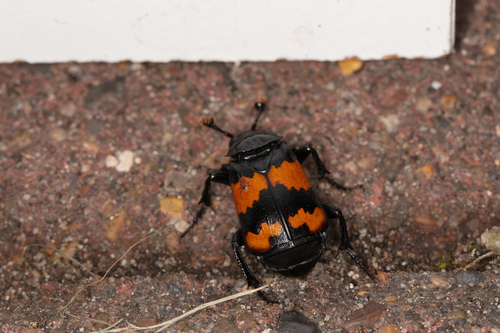
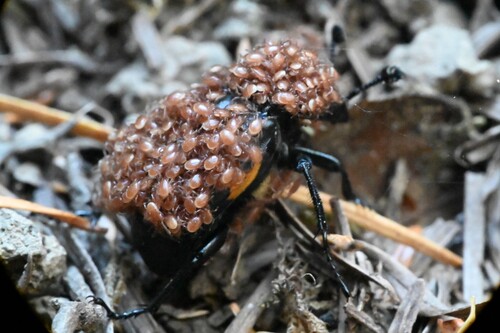
The closest relatives of the Pictured Rove Beetle that you can see in Great Bear Rainforest (family Staphylinidae, Rove Beetles) are Banded Sexton Beetle (about 10%) and Boreal Burying Beetle (about 10%), with each one's daily chance of a sighting.

Where does the Pictured Rove Beetle sighting chance come from?

GBIF citizen-science records

It is estimated from how often the Pictured Rove Beetle is recorded against all the insects logged in Great Bear Rainforest (16 verified sightings from 2019 to 2026), calibrated against known sighting rates. Figures are rounded to the nearest 10% because citizen-science data supports honest approximations, not decimals, and months with records from fewer than five people show "—". How it works.

← Back to Great Bear Rainforest