Tricolored Bat

Tricolored Bat

Perimyotis subflavus

Silhouette: Margot Michaud · PhyloPic

LCNTVUVulnerableENCR
Daily sighting probability ~10% · With luck
at Great Smoky Mountains National Park

In 3 days ~10% in a week ~30%

19 Verified sightings at Great Smoky Mountains National Park From 2019 to 2026
62 In all 2 parks
November Best month
☀️ Diurnal When it's spotted

About the Tricolored Bat

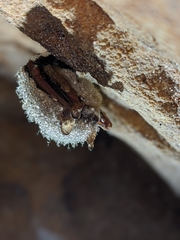
The tricolored bat (Perimyotis subflavus) or American perimyotis is a species of microbat native to eastern North America. Formerly known as the eastern pipistrelle, based on the incorrect belief that it was closely related to European Pipistrellus species, the closest known relative of the tricolored bat is now recognized as the canyon bat. Its common name "tricolored bat" derives from the coloration of the hairs on its back, which have three distinct color bands. It is the smallest bat species in the eastern and midwestern US, with individuals weighing only 4.6–7.9 g (0.16–0.28 oz). This species mates in the fall before hibernation, though due to sperm storage, females do not become pregnant until the spring. Young are born helpless, though rapidly develop, flying and foraging for themselves by four weeks old. It has a relatively long lifespan, and can live nearly fifteen years.

In the summer, females roost in small groups and males roost solitarily in tree foliage or beard lichen. It eats a diverse array of insects, foraging with a slow, erratic flight and navigating via echolocation. Though once considered one of the most common bat species in its range, its populations have declined rapidly since 2006 with the introduction of the fungal disease white-nose syndrome. It was listed as an endangered species in 2012 in Canada, and has been petitioned for inclusion on the US endangered species list. Along with the silver-haired bat, the tricolored bat is one of two bat species whose rabies variants have most frequently been implicated in human rabies deaths in the US, with sixteen deaths from 1958–2000. Wikipedia →
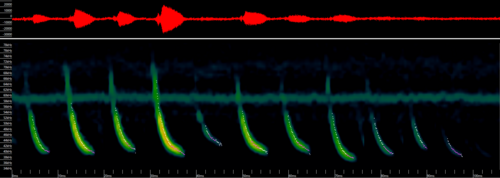
Sounds

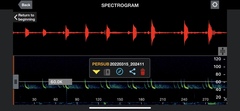
Recording0:08

United States · 2021

© Ty Smith · iNaturalist · CC BY-NC 4.0

Global Distribution

Parks Where Found

# Park Country Daily sighting probability
1 Point Pelee National Park 🇨🇦 Canada
~10%
2 Great Smoky Mountains National Park 🇺🇸 United States
~10%

Zoos & Centres Where Found

# Zoo / Centre Country
1 Montreal Aquarium 🇨🇦 Canada In captivity

Before you go

What are the chances of seeing a Tricolored Bat in Great Smoky Mountains National Park?

With luck

About 10% of wildlife watchers report a Tricolored Bat sighting in Great Smoky Mountains National Park on a given day, based on 19 verified sightings from GBIF citizen-science data from 2019 to 2026. It is the 23rd most-seen of the 27 mammals we can rate there. Over three days the chance rises to about 10%, and over a week to about 30%, if each day is a fresh chance.

When is the best time to see a Tricolored Bat in Great Smoky Mountains National Park?

January–April and November

In those months about 10% of wildlife watchers report a Tricolored Bat in Great Smoky Mountains National Park on a given day, against under 5% in May–October and December, the lowest months.

What time of day is best to see a Tricolored Bat?

Between 1 and 4 pm

Across all the parks we cover, that three-hour window holds the most Tricolored Bat sightings with a recorded time, and about 8 in 10 of them come between 6 am and 6 pm: it is a daytime animal.

Is Great Smoky Mountains National Park the best place to see a Tricolored Bat?

Among the best

Of the 2 parks where we can rate Tricolored Bat sightings, Great Smoky Mountains National Park ranks 2nd at about 10%, level with the leaders once rounded. The best odds are in Point Pelee National Park (Canada, about 10%).

Which relatives of the Tricolored Bat live in Great Smoky Mountains National Park?

Same family: Vespertilionidae

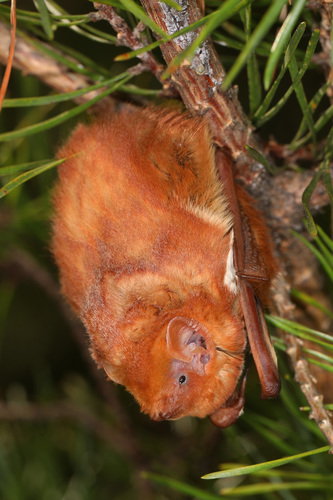
The closest relatives of the Tricolored Bat that you can see in Great Smoky Mountains National Park (family Vespertilionidae, Evening Bats) are Eastern Red Bat (about 10%) and Big Brown Bat (about 10%), with each one's daily chance of a sighting.

Where does the Tricolored Bat sighting chance come from?

GBIF citizen-science records

It is estimated from how often the Tricolored Bat is recorded against all the mammals logged in Great Smoky Mountains National Park (19 verified sightings from 2019 to 2026), calibrated against known sighting rates. Figures are rounded to the nearest 10% because citizen-science data supports honest approximations, not decimals, and months with records from fewer than five people show "—". How it works.

← Back to Great Smoky Mountains National Park