Variable Antepione Moth

Variable Antepione Moth

Antepione thisoaria

Daily sighting probability ~10% · With luck
at Great Smoky Mountains National Park

In 3 days ~20% in a week ~40%

25 Verified sightings at Great Smoky Mountains National Park From 2019 to 2026
25 In 1 park
July Best month
🌙 Nocturnal When it's spotted

About the Variable Antepione Moth

Antepione thisoaria, the variable antepione, is a moth of the family Geometridae. In Canada it is found from Nova Scotia to Manitoba, south into the United States south and west to the Gulf states (including Alabama, Arkansas, Connecticut, Georgia, Illinois, Indiana, Iowa, Kansas, Kentucky, Louisiana, Maryland, Massachusetts, Michigan, Minnesota, Mississippi, Missouri, Nebraska, New Jersey, New Hampshire, New York, North Carolina, Ohio, Oklahoma, Pennsylvania, Rhode Island, South Carolina, Tennessee, Virginia, West Virginia), as well as Michoacan in Mexico and further south to Costa Rica and Guatemala.

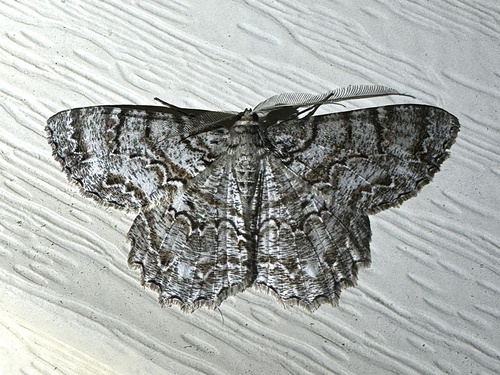
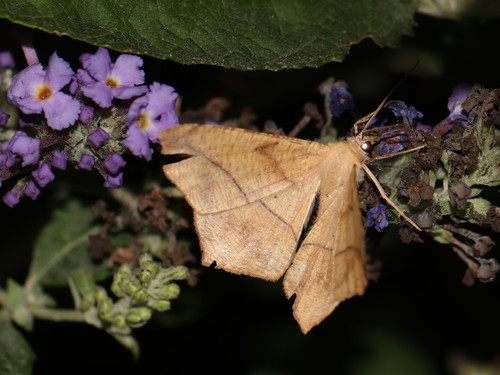
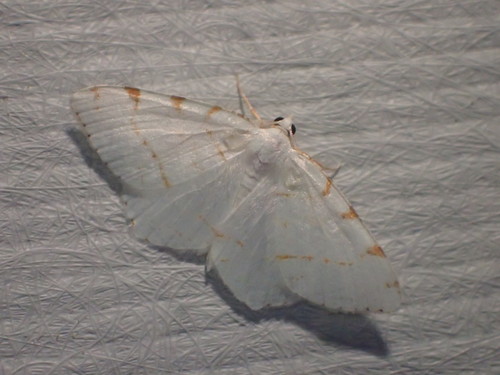
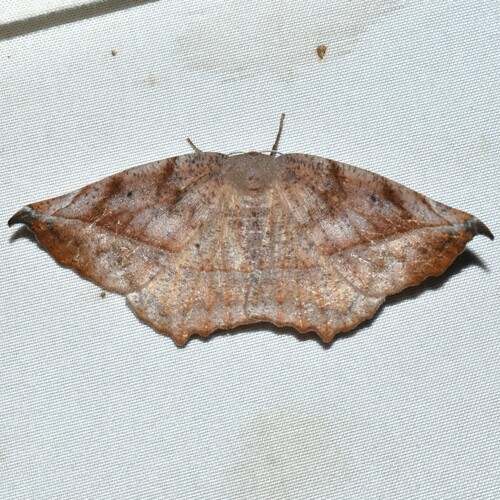
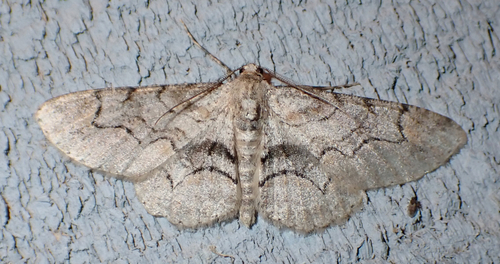
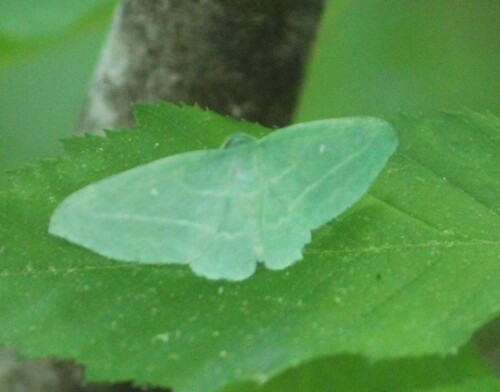
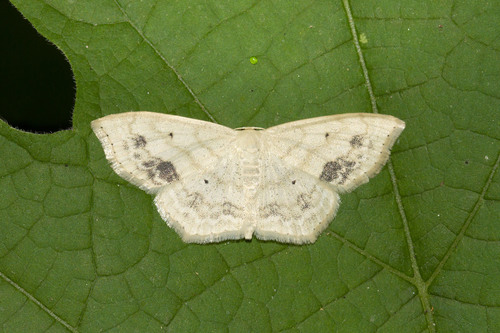
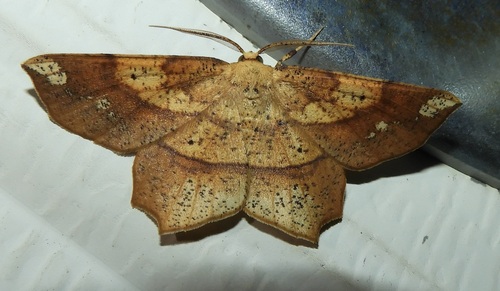
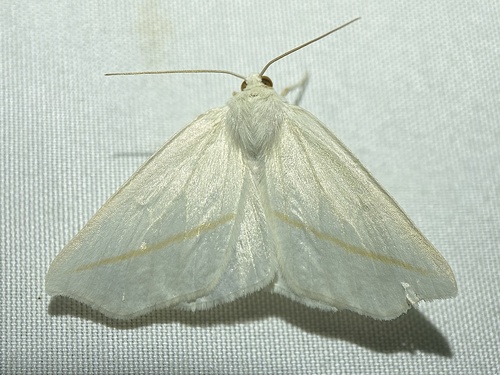
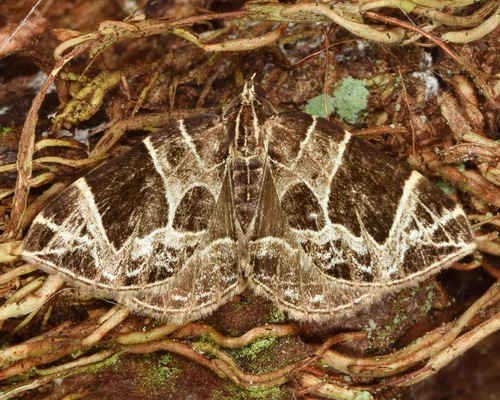
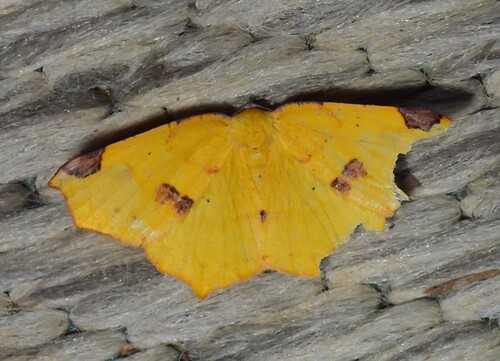
The wingspan is 27–40 mm. Adult seasonally and sexually dimorphic, but the middle of the outer margin of the hindwing and forewing are conspicuously pointed in all forms, and there is usually a dark triangular patch along the costa near the apex of the forewing (although this may be absent in females). The spring brood of both sexes has mottled light brown wings (form "furciferata"). The summer brood male is bright yellow with reddish-brown shading, while the female is all yellow. Adults are on wing from April to May with an occasional mid March and mid June record as well as from July to August with occasional September to mid October records. There is one generation in Canada, and at least two southward.

The larvae have been recorded on Aceraceae, Anacardiaceae, Betulaceae, Ebenaceae and Rosaceae species, including Alnus rugosa, Physocarpus opulifolius and Prunus serotina. Wikipedia →
Global Distribution

Parks Where Found

# Park Country Daily sighting probability
1 Great Smoky Mountains National Park 🇺🇸 United States
~10%

More parks will be added in future updates.

Cities Where Found

# City Country Daily sighting probability
1 New York City 🇺🇸 United States
<5%

Before you go

What are the chances of seeing a Variable Antepione Moth in Great Smoky Mountains National Park?

With luck

About 10% of wildlife watchers report a Variable Antepione Moth sighting in Great Smoky Mountains National Park on a given day, based on 25 verified sightings from GBIF citizen-science data from 2019 to 2026. It is the 250th most-seen of the 822 insects we can rate there. Over three days the chance rises to about 20%, and over a week to about 40%, if each day is a fresh chance.

When is the best time to see a Variable Antepione Moth in Great Smoky Mountains National Park?

March–April and June–August

In those months about 10% of wildlife watchers report a Variable Antepione Moth in Great Smoky Mountains National Park on a given day, against under 5% in May and September–February, the lowest months.

What time of day is best to see a Variable Antepione Moth?

Between midnight and 3 am

Across all the parks we cover, that three-hour window holds the most Variable Antepione Moth sightings with a recorded time, and about 8 in 10 of them come between 6 pm and 6 am: it is mostly seen at night.

Where else can you see a Variable Antepione Moth?

Only Great Smoky Mountains National Park, in our data

Great Smoky Mountains National Park is the only park on Wallace's Line with enough records to rate Variable Antepione Moth sightings: about 10% of wildlife watchers there report one on a given day.

Which relatives of the Variable Antepione Moth live in Great Smoky Mountains National Park?

Same family: Geometridae

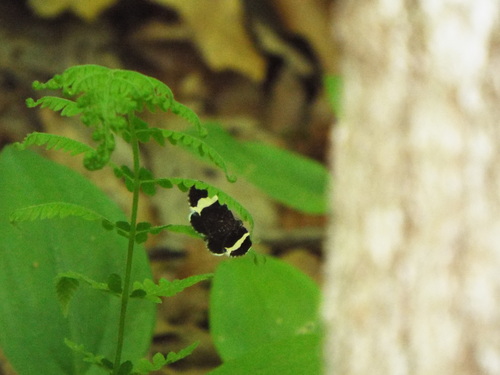
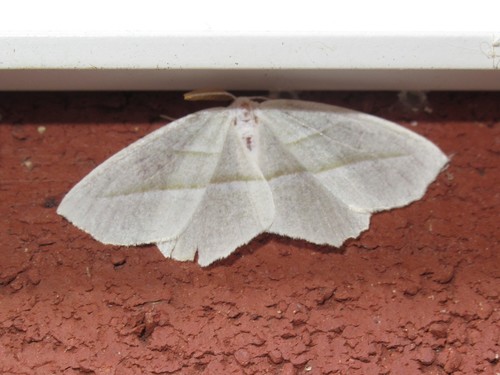
The closest relatives of the Variable Antepione Moth that you can see in Great Smoky Mountains National Park (family Geometridae, Geometer Moths) are Tulip-Tree Beauty (about 30%), White-Striped Black (about 20%) and Pale Beauty (about 20%), with each one's daily chance of a sighting.

Where does the Variable Antepione Moth sighting chance come from?

GBIF citizen-science records

It is estimated from how often the Variable Antepione Moth is recorded against all the insects logged in Great Smoky Mountains National Park (25 verified sightings from 2019 to 2026), calibrated against known sighting rates. Figures are rounded to the nearest 10% because citizen-science data supports honest approximations, not decimals, and months with records from fewer than five people show "—". How it works.

← Back to Great Smoky Mountains National Park