Plains Viscacha

Plains Viscacha

Lagostomus maximus

Silhouette: Daniel Stadtmauer · PhyloPic

LCLeast ConcernNTVUENCR
Daily sighting probability ~40% · Likely
at Iberá National Park

In 3 days ~70% in a week >90%

34 Verified sightings at Iberá National Park From 2019 to 2026
153 In all 2 parks
February Best month
🌅 Crepuscular When it's spotted

About the Plains Viscacha

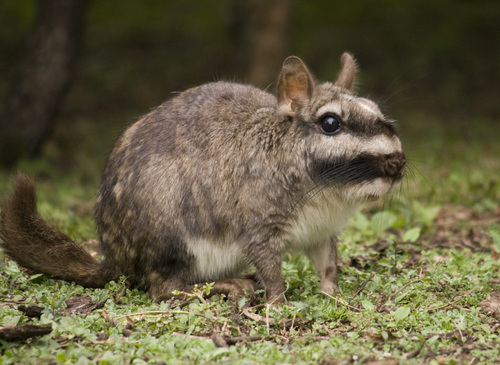
The plains viscacha or plains vizcacha (Lagostomus maximus) is a species of viscacha, a rodent in the family Chinchillidae. It is the only living species within the genus Lagostomus. It is found in Argentina, Bolivia, and Paraguay. The plains viscacha is the largest species in its family. They construct elaborate burrows that house successive colonies for decades.

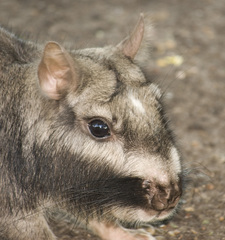
The plains viscacha is a large rodent, weighing up to 9 kg. It has an average head and body length over 500 mm, with the tail usually a little less than 200 mm long. The dorsal pelage ranges from gray to brown, depending upon soil color, and the belly is whitish. Its head is bulky, and the face is black and white; males have distinctive black mustaches and stiff whiskers. Their fore feet have four toes, and the hind feet have three toes. Soft dense fur covers its body, from the tips of its ears to the end of its long, curled tail. The forelimbs are relatively short, while the contrastingly long and muscular hind limbs enable it run and jump with ease. The colour of its fur varies seasonally and with age, but generally the upperparts are grey to brown, with tints of cream and black, while the underparts are... Wikipedia →

Global Distribution

Parks Where Found

# Park Country Daily sighting probability
1 El Palmar National Park 🇦🇷 Argentina
~80%
2 Iberá National Park 🇦🇷 Argentina
~40%

Zoos & Centres Where Found

# Zoo / Centre Country
1 Zürich Zoo 🇨🇭 Switzerland In captivity
2 Liberec Zoo 🇨🇿 Czechia In captivity
3 Berlin Zoological Garden 🇩🇪 Germany In captivity
4 Granja los Pibes 🇦🇷 Argentina In captivity
5 Aquarium Berlin 🇩🇪 Germany In captivity

Before you go

What are the chances of seeing a Plains Viscacha in Iberá National Park?

Likely

About 40% of wildlife watchers report a Plains Viscacha sighting in Iberá National Park on a given day, based on 34 verified sightings from GBIF citizen-science data from 2019 to 2026. It is the 8th most-seen of the 13 mammals we can rate there. Over three days the chance rises to about 70%, and over a week to over 90%, if each day is a fresh chance.

When is the best time to see a Plains Viscacha in Iberá National Park?

February and April

In those months about 50% of wildlife watchers report a Plains Viscacha in Iberá National Park on a given day, against about 20% in August and September, the lowest months.

What time of day is best to see a Plains Viscacha?

Between 5 and 8 pm

Across all the parks we cover, that three-hour window holds the most Plains Viscacha sightings with a recorded time, and about 6 in 10 of them come between 6 pm and 6 am: it is most active around dawn and dusk.

Is Iberá National Park the best place to see a Plains Viscacha?

2nd of 2

Of the 2 parks where we can rate Plains Viscacha sightings, Iberá National Park ranks 2nd at about 40%. The best odds are in El Palmar National Park (Argentina, about 80%).

Which relatives of the Plains Viscacha live in Iberá National Park?

Same order: Rodentia

The closest relatives of the Plains Viscacha that you can see in Iberá National Park (order Rodentia, Rodents) are Capybara (about 80%) and Brazilian Guinea Pig (about 30%), with each one's daily chance of a sighting.

Where does the Plains Viscacha sighting chance come from?

GBIF citizen-science records

It is estimated from how often the Plains Viscacha is recorded against all the mammals logged in Iberá National Park (34 verified sightings from 2019 to 2026), calibrated against known sighting rates. Figures are rounded to the nearest 10% because citizen-science data supports honest approximations, not decimals, and months with records from fewer than five people show "—". How it works.

← Back to Iberá National Park