
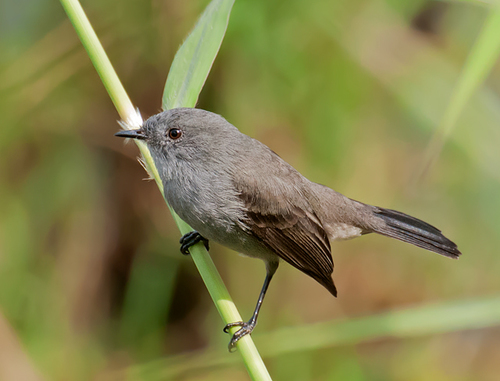
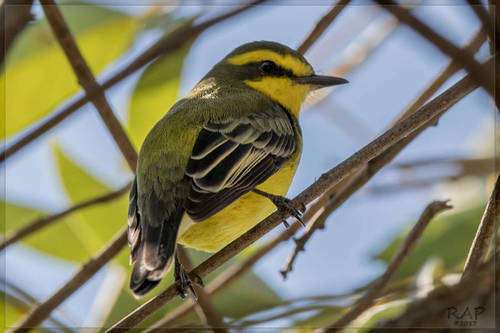
Strange-tailed Tyrant

Strange-tailed Tyrant

Alectrurus risora

Silhouette: Emily Willoughby · PhyloPic

LCNTVUVulnerableENCR
Daily sighting probability ~50% · Likely
at Iberá National Park

In 3 days ~90% in a week >90%

1,148 Verified sightings at Iberá National Park From 2019 to 2026
1,148 In 1 park
October Best month
☀️ Diurnal When it's spotted

About the Strange-tailed Tyrant

The strange-tailed tyrant (Alectrurus risora) is a Vulnerable species of bird in the family Tyrannidae, the tyrant flycatchers. It is found in Argentina and Paraguay and as a vagrant in Brazil and Uruguay. The strange-tailed tyrant was formally described in 1824 by Louis Pierre Vieillot as Muscicapa risora, erroneously placing it in the Old World flycatcher family. Ironically, in 1816 he had erected genus Alectrurus, to which the species was later moved. For a time it was placed in the monotypic genus Yetapa.

The strange-tailed tyrant is monotypic. It shares genus Alectrurus with the cock-tailed tyrant (A. tricolor). The strange-tailed tyrant is about 20 cm (7.9 in) long excluding the male's 10 cm (3.9 in) tail. Adult males in breeding plumage have a mostly black face with white lores and a white supercilium. Their back is mostly black with white scapulars and a gray rump. Their wings are black with white tips on the coverts and white edges on the flight feathers. Their tail is black and very long with a highly modified outer pair of feathers. Those feather shafts are bare at the base and the inner webs of the outer two-thirds are very... Wikipedia →

Sounds

Call0:45

Argentina · 2016

© Marco Cruz · XC389783 · CC BY-NC-SA 4.0

Call0:22

Argentina · 2008

© Bernabe Lopez-Lanus · XC45200 · CC BY-NC-SA 3.0

Global Distribution

Parks Where Found

# Park Country Daily sighting probability
1 Iberá National Park 🇦🇷 Argentina
~50%

More parks will be added in future updates.

Before you go

What are the chances of seeing a Strange-tailed Tyrant in Iberá National Park?

Likely

About 50% of wildlife watchers report a Strange-tailed Tyrant sighting in Iberá National Park on a given day, based on 1,148 verified sightings from GBIF citizen-science data from 2019 to 2026. It is the 28th most-seen of the 284 birds we can rate there. Over three days the chance rises to about 90%, and over a week to over 90%, if each day is a fresh chance.

When is the best time to see a Strange-tailed Tyrant in Iberá National Park?

January and September–October

In those months about 60% of wildlife watchers report a Strange-tailed Tyrant in Iberá National Park on a given day, against about 30% in June, the lowest month.

What time of day is best to see a Strange-tailed Tyrant?

Between 9 am and noon

Across all the parks we cover, that three-hour window holds the most Strange-tailed Tyrant sightings with a recorded time, and about 8 in 10 of them come between 6 am and 6 pm: it is a daytime animal.

Where else can you see a Strange-tailed Tyrant?

Only Iberá National Park, in our data

Iberá National Park is the only park on Wallace's Line with enough records to rate Strange-tailed Tyrant sightings: about 50% of wildlife watchers there report one on a given day.

Which relatives of the Strange-tailed Tyrant live in Iberá National Park?

Same family: Tyrannidae

The closest relatives of the Strange-tailed Tyrant that you can see in Iberá National Park (family Tyrannidae, Tyrant Flycatchers) are Great Kiskadee (about 80%), Cattle Tyrant (about 70%) and Fork-tailed Flycatcher (about 50%), with each one's daily chance of a sighting.

Where does the Strange-tailed Tyrant sighting chance come from?

GBIF citizen-science records

It is estimated from how often the Strange-tailed Tyrant is recorded against all the birds logged in Iberá National Park (1,148 verified sightings from 2019 to 2026), calibrated against known sighting rates. Figures are rounded to the nearest 10% because citizen-science data supports honest approximations, not decimals, and months with records from fewer than five people show "—". How it works.

← Back to Iberá National Park