Wrestler Frog

Wrestler Frog

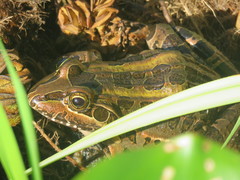
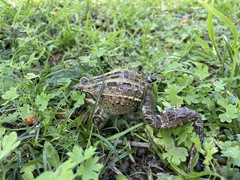
Leptodactylus luctator

Silhouette: Jose Carlos Arenas-Monroy · PhyloPic

LCLeast ConcernNTVUENCR
Daily sighting probability ~20% · Possible
at Iberá National Park

In 3 days ~40% in a week ~70%

7 Verified sightings at Iberá National Park From 2019 to 2026
7 In 1 park
September Best month
☀️🌙 Day & Night When it's spotted

About the Wrestler Frog

Leptodactylus luctator, the wrestler frog, is a species of frog in the family Leptodactylidae. It is native to Brazil, Bolivia, Uruguay, and Argentina. These frogs can survive in many types of habitats. They have been observed in savannahs, other grasslands, dry places, forests, edges of forests, ponds, lakes, and next to rivers. It is tolerant to some anthropogenic change, and people have seen it in gardens. Scientists observed the frog between 0 and 1000 meters above sea level.

Scientists have reported the frog in many protected places. This frog is used for human food. The frog makes a nest out of bubbles for its eggs. The foam nest stays on the top of the water. After the tadpoles hatch, they exhibit schooling behavior. The IUCN classifies this frog as least concern of extinction. In some parts of its range, some frogs might be in danger from habitat loss in from logging, fires, or agriculture. Wikipedia →
Sounds

Recording0:28

Brazil · 2023

© Alan Hentz · iNaturalist · CC BY-NC 4.0

Recording0:12

Argentina · 2025

© Hugo · iNaturalist · CC BY-NC 4.0

Recording0:07

Brazil · 2020

© vinicius_s_domingues · iNaturalist · CC BY-NC 4.0

Global Distribution

Parks Where Found

# Park Country Daily sighting probability
1 Iberá National Park 🇦🇷 Argentina
~20%

More parks will be added in future updates.

Cities Where Found

# City Country Daily sighting probability
1 Rosario 🇦🇷 Argentina
~20%
2 Montevideo 🇺🇾 Uruguay
~10%
3 Buenos Aires 🇦🇷 Argentina
~10%
4 Porto Alegre 🇧🇷 Brazil
~10%

Before you go

What are the chances of seeing a Wrestler Frog in Iberá National Park?

Possible

About 20% of wildlife watchers report a Wrestler Frog sighting in Iberá National Park on a given day, based on 7 verified sightings from GBIF citizen-science data from 2019 to 2026. Over three days the chance rises to about 40%, and over a week to about 70%, if each day is a fresh chance.

When is the best time to see a Wrestler Frog in Iberá National Park?

September and December

In those months about 30% of wildlife watchers report a Wrestler Frog in Iberá National Park on a given day, against under 5% in January, March–July and October, the lowest months.

What time of day is best to see a Wrestler Frog?

Between 8 and 11 pm

Across all the parks we cover, that three-hour window holds the most Wrestler Frog sightings with a recorded time, and about 7 in 10 of them come between 6 pm and 6 am: it is seen both by day and at night.

Where else can you see a Wrestler Frog?

Only Iberá National Park, in our data

Iberá National Park is the only park on Wallace's Line with enough records to rate Wrestler Frog sightings: about 20% of wildlife watchers there report one on a given day.

Which relatives of the Wrestler Frog live in Iberá National Park?

Same order: Anura

The closest relatives of the Wrestler Frog that you can see in Iberá National Park (order Anura, Frogs and Toads) are Cururu Toad (about 40%) and Lesser Snouted Tree Frog (about 20%), with each one's daily chance of a sighting.

Where does the Wrestler Frog sighting chance come from?

GBIF citizen-science records

It is estimated from how often the Wrestler Frog is recorded against all the amphibians logged in Iberá National Park (7 verified sightings from 2019 to 2026), calibrated against known sighting rates. Figures are rounded to the nearest 10% because citizen-science data supports honest approximations, not decimals, and months with records from fewer than five people show "—". How it works.

← Back to Iberá National Park