
Black Fire Beetle

Black Fire Beetle

Melanophila acuminata

Daily sighting probability ~10% · With luck
at Jasper National Park

In 3 days ~20% in a week ~40%

6 Verified sightings at Jasper National Park From 2019 to 2026
6 In 1 park
June Best month
🌅 Crepuscular When it's spotted

About the Black Fire Beetle

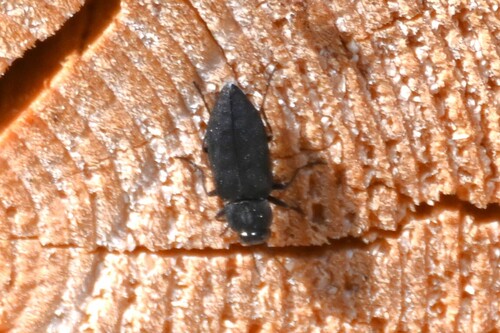
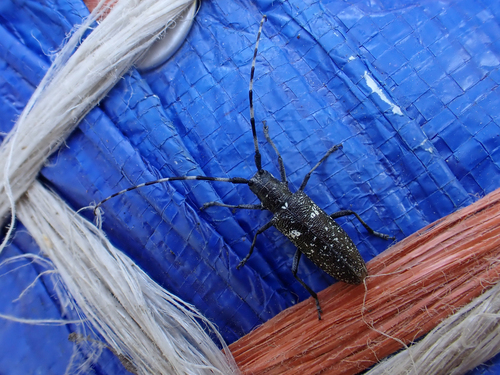
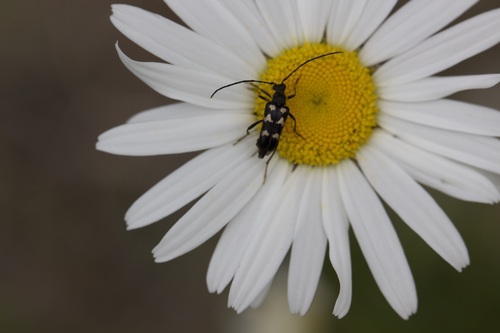
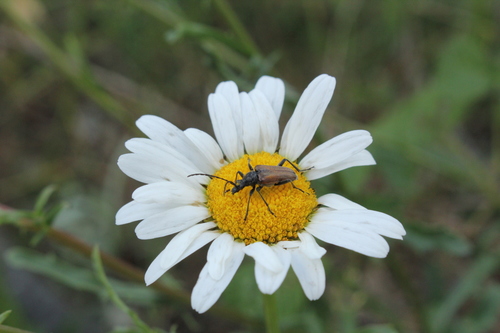
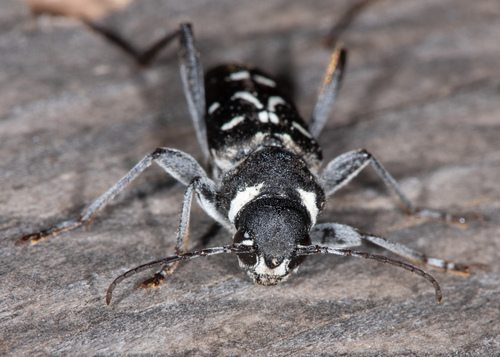
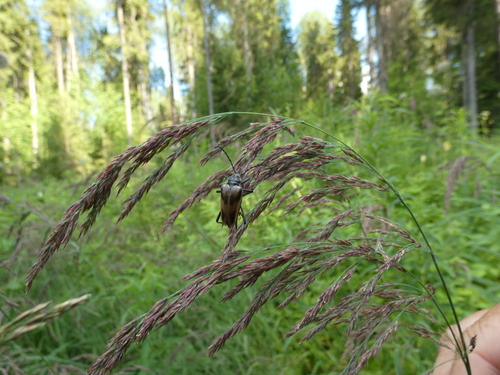
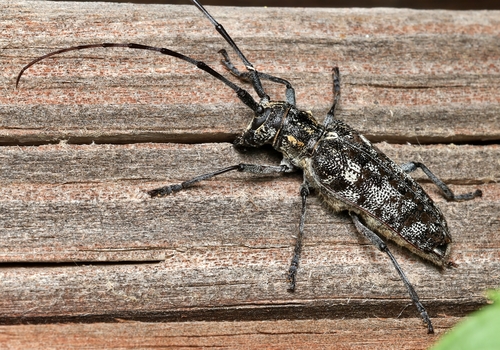
Melanophila acuminata, known generally as the black fire beetle or fire bug, is a species of metallic wood-boring beetle in the family Buprestidae. It is found in the Caribbean, Europe and Northern Asia (excluding China), Central America, North America, and Southern Asia. They get their common name due to the fact that they swarm freshly burned conifer trees, which they find using sensors on their thorax. Adults are black and 7–11 mm in length.

It has been suggested that this species is the pyrotocon, an insect said to be born from fire, of the Natural history by Pliny the Elder. The Melanophila acuminata species of the family is the most geographically distributed, with individuals spanning across the Holarctic region (Australia, Tasmania, New Guinea) to Northern Africa to the Caribbeans where they were likely introduced. While its prevalence and abundance are relatively evenly distributed rather than being concentrated in a certain region, they are more sporadic and face the risk of extirpation in Europe. This is likely due to the high fire control and predominance of commercial softwood forestry native to Europe. In the Nearctic, adults swarm in huge numbers... Wikipedia →

Global Distribution

Parks Where Found

# Park Country Daily sighting probability
1 Jasper National Park 🇨🇦 Canada
~10%

More parks will be added in future updates.

Cities Where Found

# City Country Daily sighting probability
1 Edmonton 🇨🇦 Canada
<5%
2 Vancouver 🇨🇦 Canada
<5%
3 Calgary 🇨🇦 Canada
<5%

Before you go

What are the chances of seeing a Black Fire Beetle in Jasper National Park?

With luck

About 10% of wildlife watchers report a Black Fire Beetle sighting in Jasper National Park on a given day, based on 6 verified sightings from GBIF citizen-science data from 2019 to 2026. It is the 63rd most-seen of the 88 insects we can rate there. Over three days the chance rises to about 20%, and over a week to about 40%, if each day is a fresh chance.

When is the best time to see a Black Fire Beetle in Jasper National Park?

June and July

In those months about 10% of wildlife watchers report a Black Fire Beetle in Jasper National Park on a given day, against under 5% in August to May, the lowest months. Those are among Jasper National Park's wettest months, with about 120 mm of rain a month against 55 mm in April.

What time of day is best to see a Black Fire Beetle?

Between 6 and 9 pm

Across all the parks we cover, that three-hour window holds the most Black Fire Beetle sightings with a recorded time, and about 7 in 10 of them come between 6 pm and 6 am: it is most active around dawn and dusk.

Where else can you see a Black Fire Beetle?

Only Jasper National Park, in our data

Jasper National Park is the only park on Wallace's Line with enough records to rate Black Fire Beetle sightings: about 10% of wildlife watchers there report one on a given day.

Where does the Black Fire Beetle sighting chance come from?

GBIF citizen-science records

It is estimated from how often the Black Fire Beetle is recorded against all the insects logged in Jasper National Park (6 verified sightings from 2019 to 2026), calibrated against known sighting rates. Figures are rounded to the nearest 10% because citizen-science data supports honest approximations, not decimals, and months with records from fewer than five people show "—". How it works.

← Back to Jasper National Park