Gansu Leaf-Warbler

Gansu Leaf-Warbler

Phylloscopus kansuensis

Silhouette: Jiekun He · PhyloPic

LCLeast ConcernNTVUENCR Endemic
Daily sighting probability ~10% · With luck
at Jiuzhaigou National Park

In 3 days ~20% in a week ~40%

8 Verified sightings at Jiuzhaigou National Park From 2019 to 2026
8 In 1 park
May Best month

About the Gansu Leaf-Warbler

The Gansu leaf warbler (Phylloscopus kansuensis) is a small passerine bird known only from China. It belongs to the leaf warbler genus Phylloscopus within the family Phylloscopidae. It was formerly treated as a subspecies of Pallas's warbler (P. proregulus) but is now regarded as a separate species based on differences in voice and cytochrome-b gene sequences.

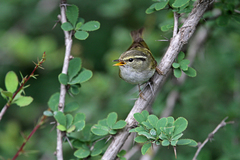
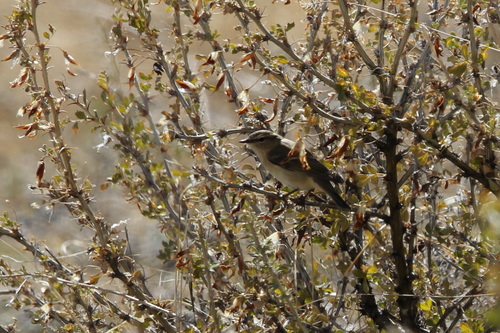
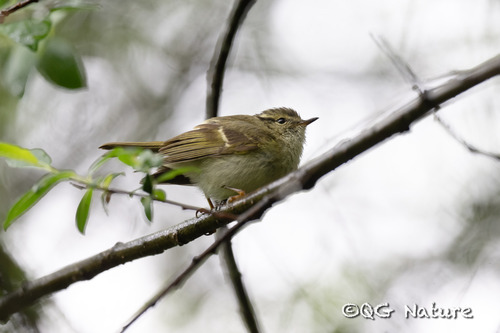
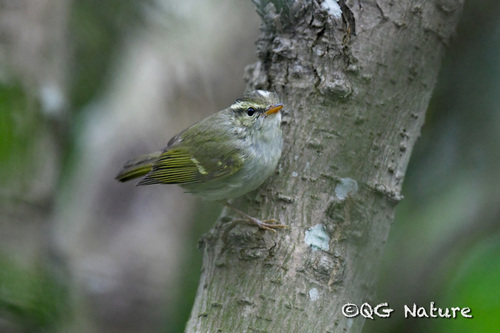
It is 10 cm long, slightly larger than Pallas's warbler. It has greenish upperparts, pale underparts and a pale rump. The head has a long white supercilium and a pale stripe along the centre of the crown. The wings have one conspicuous wingbar, a slight second bar and whitish edges to the tertials.

The song is very different from Pallas's warbler and consists of a thin, high-pitched note followed by a series of accelerating notes and finally a trill. It is known to breed only in Gansu and Qinghai provinces in northern China. Its wintering grounds are uncertain but probably lie in Yunnan province in southern China. It is found up to 3,200 metres above sea-level in deciduous forest with some spruce and juniper. It is not currently known to be threatened with extinction and so is classed as a species of Least Concern by BirdLife International. Wikipedia →

Sounds

Song1:28

China · 2026

© Bo Shunqi 薄顺奇 · XC1174905 · CC BY-NC-SA 4.0

Call0:32

China · 2019

© Peter Boesman · XC491428 · CC BY-NC-ND 4.0

Alarm call0:23

China · 2014

© Mike Nelson · XC191256 · CC BY-NC-SA 4.0

Global Distribution

Parks Where Found

# Park Country Daily sighting probability
1 Jiuzhaigou National Park 🇨🇳 China
~10%

More parks will be added in future updates.

Cities Where Found

# City Country Daily sighting probability
1 Xining 🇨🇳 China
~20%
2 Lanzhou 🇨🇳 China
~10%

Before you go

What are the chances of seeing a Gansu Leaf-Warbler in Jiuzhaigou National Park?

With luck

About 10% of wildlife watchers report a Gansu Leaf-Warbler sighting in Jiuzhaigou National Park on a given day, based on 8 verified sightings from GBIF citizen-science data from 2019 to 2026. It is the 98th most-seen of the 131 birds we can rate there. Over three days the chance rises to about 20%, and over a week to about 40%, if each day is a fresh chance.

When is the best time to see a Gansu Leaf-Warbler in Jiuzhaigou National Park?

May

In that month about 20% of wildlife watchers report a Gansu Leaf-Warbler in Jiuzhaigou National Park on a given day, against under 5% in April and June–December, the lowest months. That is one of Jiuzhaigou National Park's wettest months, with about 150 mm of rain against 15 mm in December. January to March have too few records to rate.

Where else can you see a Gansu Leaf-Warbler?

Only Jiuzhaigou National Park, in our data

Jiuzhaigou National Park is the only park on Wallace's Line with enough records to rate Gansu Leaf-Warbler sightings: about 10% of wildlife watchers there report one on a given day.

Which relatives of the Gansu Leaf-Warbler live in Jiuzhaigou National Park?

Same genus: Phylloscopus

The closest relatives of the Gansu Leaf-Warbler that you can see in Jiuzhaigou National Park (genus Phylloscopus, Leaf Warblers) are Buff-barred Warbler (about 50%), Hume's Warbler (about 50%) and Sichuan Leaf-Warbler (about 50%), with each one's daily chance of a sighting.

Where does the Gansu Leaf-Warbler sighting chance come from?

GBIF citizen-science records

It is estimated from how often the Gansu Leaf-Warbler is recorded against all the birds logged in Jiuzhaigou National Park (8 verified sightings from 2019 to 2026), calibrated against known sighting rates. Figures are rounded to the nearest 10% because citizen-science data supports honest approximations, not decimals, and months with records from fewer than five people show "—". How it works.

← Back to Jiuzhaigou National Park