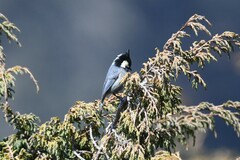
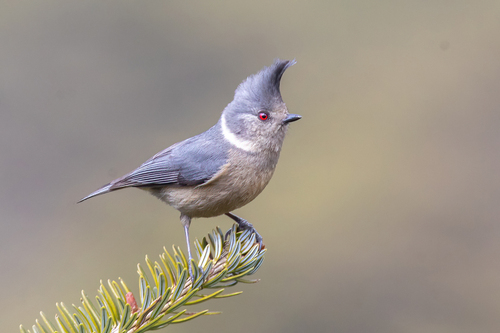
Rufous-vented Tit

Rufous-vented Tit

Periparus rubidiventris

Silhouette: Sheatherius · PhyloPic

LCLeast ConcernNTVUENCR
Daily sighting probability ~50% · Likely
at Jiuzhaigou National Park

In 3 days ~90% in a week >90%

88 Verified sightings at Jiuzhaigou National Park From 2019 to 2026
237 In all 2 parks
June Best month
🌅 Crepuscular When it's spotted

About the Rufous-vented Tit

The rufous-vented tit (Periparus rubidiventris) is an Asian songbird species in the tit and chickadee family (Paridae). Some of its subspecies were formerly assigned to its western relative the rufous-naped tit (P. rufonuchalis), or these two were considered entirely conspecific.

The tit was formerly placed in the genus Parus. The four subspecies are: Periparus rubidiventris rubidiventris – S rim of Himalayas from NW to NE India and N Nepal. Periparus rubidiventris beavani (Jerdon, 1863) – Beavan's rufous-vented tit – S rim of Himalayas in NE India and Bhutan.

Periparus rubidiventris whistleri – SE rim of Himalayas in SW China and adjacent N Myanmar and extreme NE India. Sometimes included in beavani. Periparus rubidiventris saramatii – Very localised in NW Myanmar. This tit is a native of the western Himalayas, but has a very large range, occurring in parts of Bhutan, China, Pakistan, India, Myanmar and Nepal. Its natural habitats are boreal forests and temperate forests. In Bhutan for example, P. r. beavani is a rather common all-year resident in moist Bhutan fir (Abies densa) forests, between approximately 3,000 and 4,000 meters ASL... Wikipedia →

Sounds

Uncertain0:11

China · 2025

© Vincent · XC1001866 · CC BY-NC-SA 4.0

Call0:45

China · 2024

© Peter Boesman · XC916386 · CC BY-NC-ND 4.0

Song0:58

Bhutan · 2019

© Rolf A. de By · XC507801 · CC BY-NC-SA 4.0

Global Distribution

Parks Where Found

# Park Country Daily sighting probability
1 Jiuzhaigou National Park 🇨🇳 China
~50%
2 Langtang National Park 🇳🇵 Nepal
~30%

Before you go

What are the chances of seeing a Rufous-vented Tit in Jiuzhaigou National Park?

Likely

About 50% of wildlife watchers report a Rufous-vented Tit sighting in Jiuzhaigou National Park on a given day, based on 88 verified sightings from GBIF citizen-science data from 2019 to 2026. It is the 5th most-seen of the 131 birds we can rate there. Over three days the chance rises to about 90%, and over a week to over 90%, if each day is a fresh chance.

When is the best time to see a Rufous-vented Tit in Jiuzhaigou National Park?

April–June and September–November

In those months about 50% of wildlife watchers report a Rufous-vented Tit in Jiuzhaigou National Park on a given day, against about 30% in July and December, the lowest months. January to March have too few records to rate.

What time of day is best to see a Rufous-vented Tit?

Between 2 and 5 am

Across all the parks we cover, that three-hour window holds the most Rufous-vented Tit sightings with a recorded time, and about 6 in 10 of them come between 6 pm and 6 am: it is most active around dawn and dusk.

Is Jiuzhaigou National Park the best place to see a Rufous-vented Tit?

Yes

Of the 2 parks where we can rate Rufous-vented Tit sightings, Jiuzhaigou National Park has the highest daily chance: about 50%. Next come Langtang National Park (Nepal, about 30%).

Which relatives of the Rufous-vented Tit live in Jiuzhaigou National Park?

Same genus: Periparus

The closest relatives of the Rufous-vented Tit that you can see in Jiuzhaigou National Park (genus Periparus, Tufted and Yellow-bellied Tits) are Coal Tit (about 30%) and Yellow-bellied Tit (about 20%), with each one's daily chance of a sighting.

Where does the Rufous-vented Tit sighting chance come from?

GBIF citizen-science records

It is estimated from how often the Rufous-vented Tit is recorded against all the birds logged in Jiuzhaigou National Park (88 verified sightings from 2019 to 2026), calibrated against known sighting rates. Figures are rounded to the nearest 10% because citizen-science data supports honest approximations, not decimals, and months with records from fewer than five people show "—". How it works.

← Back to Jiuzhaigou National Park