
Desert Leaf-Cutter Ant

Desert Leaf-Cutter Ant

Acromyrmex versicolor

Daily sighting probability ~10% · With luck
at Joshua Tree National Park

In 3 days ~20% in a week ~50%

20 Verified sightings at Joshua Tree National Park From 2019 to 2026
80 In all 2 parks
February Best month
☀️ Diurnal When it's spotted

About the Desert Leaf-Cutter Ant

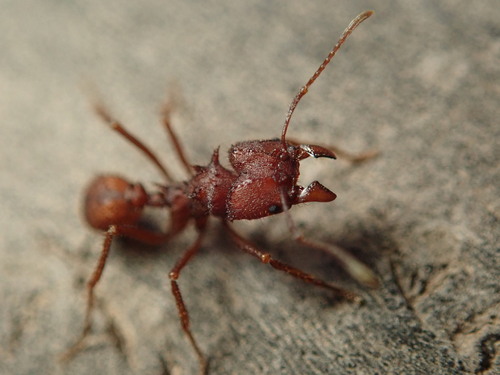
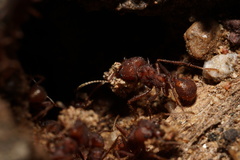
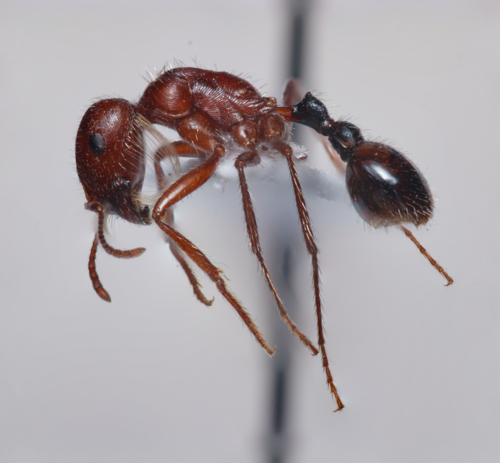
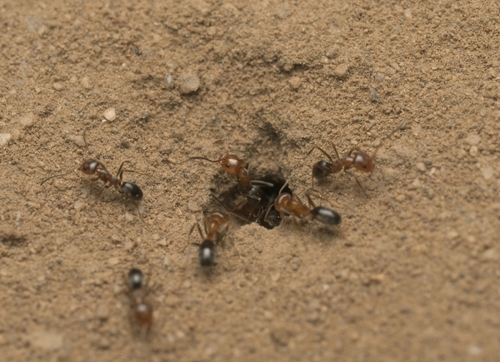
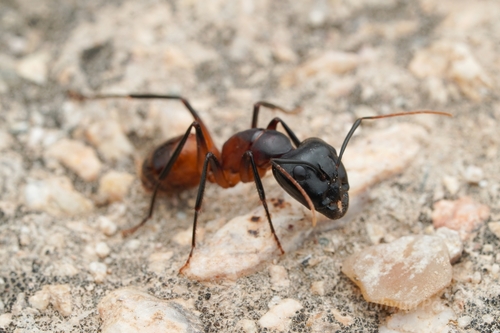
Acromyrmex versicolor is known as the desert leafcutter ant. A. versicolor is found during the summer months in the Colorado and Sonoran deserts when there is precipitation. They form large, distinctive nest craters that are covered with leaf fragments. Living and dead leaves are collected by workers and used to cultivate fungus gardens. Each colony can have multiple queens, if they do this is a practice called polygyny, and each queen has her own batch of “starter” fungus. This species does not sting.

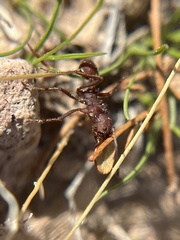
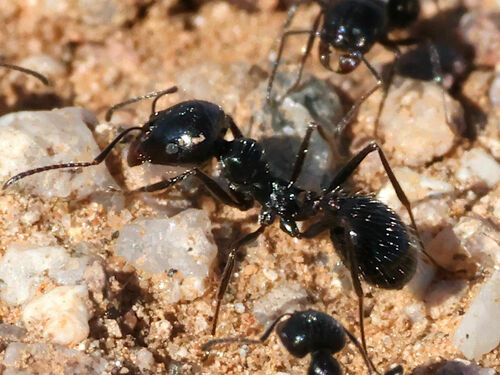
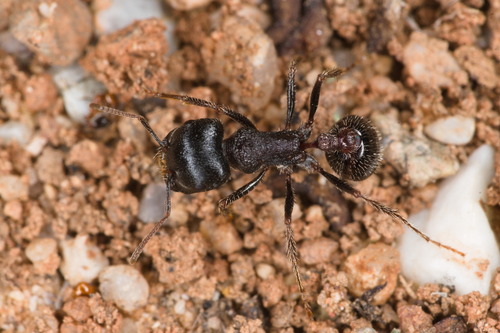
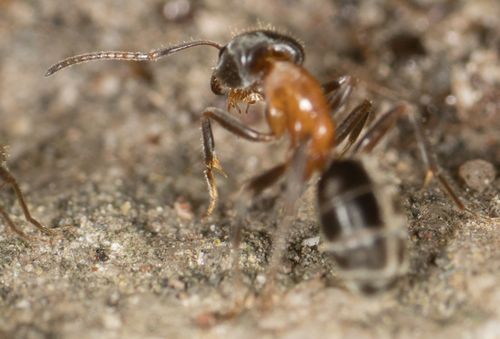
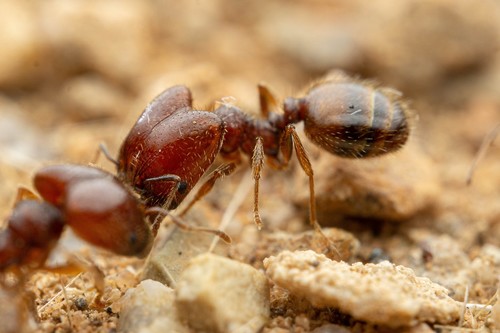
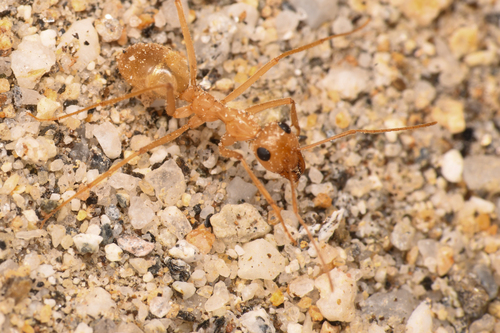
The average worker is 2–6 mm long. Individuals of A. versicolor are a variety of sizes due to the division of labour seen within their colony. They are reddish brown and have a narrow waist. They are also covered in spines; at least 4 spines on the rear of their thorax, distinct spines on the rear corners of their head, and small bumps on their abdomen.

Acromyrmex versicolor mate from late July through October. All major mating flights are preceded by a day of rain. Mating flights begin in the early morning when individuals of both sexes emerge from the colony. Males will leave for the mating sites first, followed by the females who likely follow male... Wikipedia →

Global Distribution

Parks Where Found

# Park Country Daily sighting probability
1 Saguaro National Park 🇺🇸 United States
~10%
2 Joshua Tree National Park 🇺🇸 United States
~10%

Before you go

What are the chances of seeing a Desert Leaf-Cutter Ant in Joshua Tree National Park?

With luck

About 10% of wildlife watchers report a Desert Leaf-Cutter Ant sighting in Joshua Tree National Park on a given day, based on 20 verified sightings from GBIF citizen-science data from 2019 to 2026. It is the 72nd most-seen of the 190 insects we can rate there. Over three days the chance rises to about 20%, and over a week to about 50%, if each day is a fresh chance.

When is the best time to see a Desert Leaf-Cutter Ant in Joshua Tree National Park?

February and December

In those months about 20% of wildlife watchers report a Desert Leaf-Cutter Ant in Joshua Tree National Park on a given day, against under 5% in April–July and September, the lowest months.

What time of day is best to see a Desert Leaf-Cutter Ant?

Between 6 and 9 am

Across all the parks we cover, that three-hour window holds the most Desert Leaf-Cutter Ant sightings with a recorded time, and about 9 in 10 of them come between 6 am and 6 pm: it is a daytime animal.

Is Joshua Tree National Park the best place to see a Desert Leaf-Cutter Ant?

Among the best

Of the 2 parks where we can rate Desert Leaf-Cutter Ant sightings, Joshua Tree National Park ranks 2nd at about 10%, level with the leaders once rounded. The best odds are in Saguaro National Park (United States, about 10%).

Which relatives of the Desert Leaf-Cutter Ant live in Joshua Tree National Park?

Same family: Formicidae

The closest relatives of the Desert Leaf-Cutter Ant that you can see in Joshua Tree National Park (family Formicidae, Ants) are Messor pergandei (about 30%), California Harvester Ant (about 30%) and Rough Harvester Ant (about 20%), with each one's daily chance of a sighting.

Where does the Desert Leaf-Cutter Ant sighting chance come from?

GBIF citizen-science records

It is estimated from how often the Desert Leaf-Cutter Ant is recorded against all the insects logged in Joshua Tree National Park (20 verified sightings from 2019 to 2026), calibrated against known sighting rates. Figures are rounded to the nearest 10% because citizen-science data supports honest approximations, not decimals, and months with records from fewer than five people show "—". How it works.

← Back to Joshua Tree National Park