Desert Orangetip

Desert Orangetip

Anthocharis cethura

Daily sighting probability ~10% · With luck
at Joshua Tree National Park

In 3 days ~20% in a week ~40%

17 Verified sightings at Joshua Tree National Park From 2019 to 2026
39 In all 2 parks
February Best month
☀️ Diurnal When it's spotted

About the Desert Orangetip

Anthocharis cethura, the desert orangetip or Felder's orangetip, is a species of butterfly in the subfamily Pierinae. It is native to the southwestern United States and northern Mexico, where it lives on hills and ridges in rocky desert habitat.

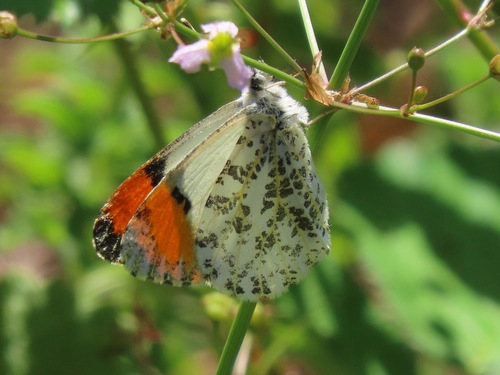
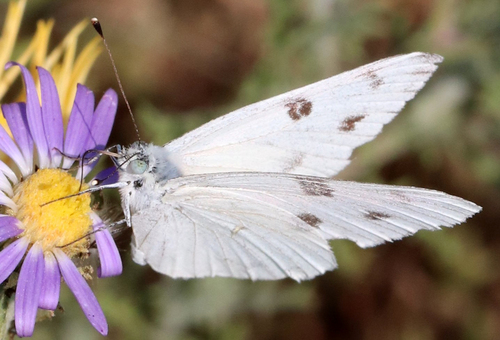
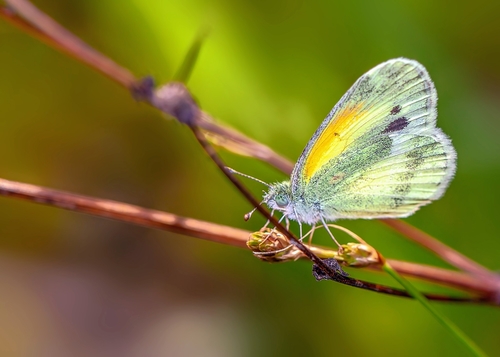
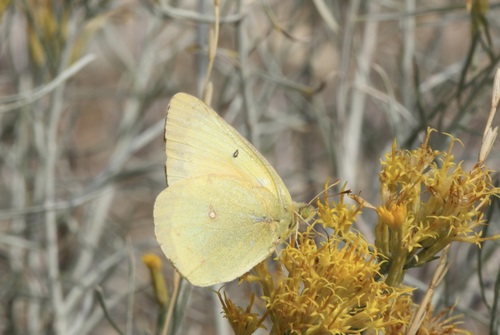
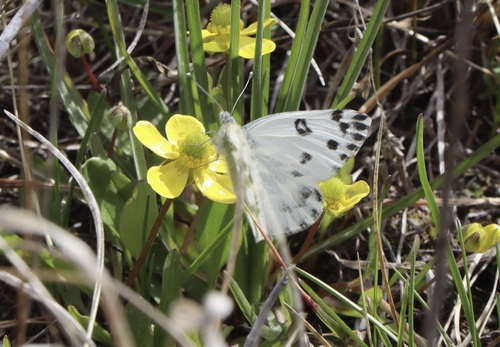
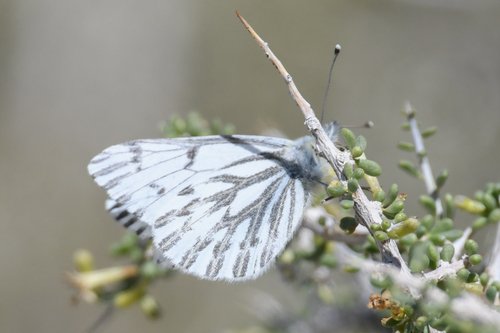
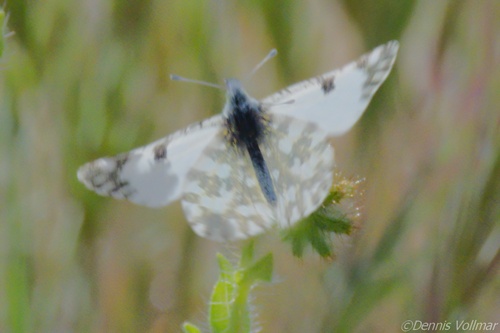
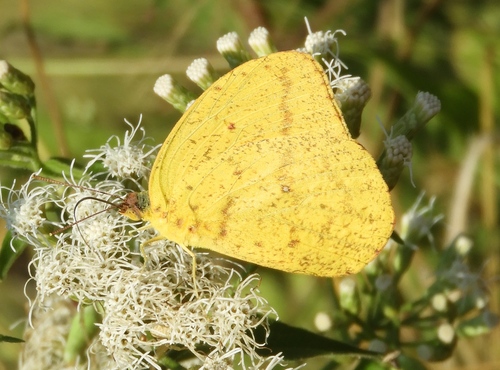
The male and female look similar. The wingspan is between 2.6 and 4 centimetres (1 and 1+1⁄2 in). The wings are yellow with an orange patch toward the front of the forewing outlined in black and white. The edges of the wings are spotted with black. The underside of the hindwing has greenish bands.

The adults appear early in the spring. Males congregate in the midday sun to wait for females to emerge, and are more easily observed than females, which are active later in the day. The flight pattern is quick and erratic.

The female lays eggs singly on host plants. The conical eggs are blue green when fresh, then turn orange. During early stages the caterpillar is green with a purple stripe outlined in white. In its last instar it is white with mottled markings. The larvae feed mostly on plants of the mustard family. They have been noted on lyreleaf jewelflower (Streptanthus carinatus), London rocket (Sisymbrium irio), western tansymustard (Descurainia pinnata), sand fringepod (Thysanocarpus curvipes), and California mustard (Streptanthus lasiophyllus).

There are many subspecies. The subspecies A. c. catalina is endemic to Santa Catalina Island, California. Wikipedia →

Global Distribution

Parks Where Found

# Park Country Daily sighting probability
1 Joshua Tree National Park 🇺🇸 United States
~10%
2 Saguaro National Park 🇺🇸 United States
~10%

Before you go

What are the chances of seeing a Desert Orangetip in Joshua Tree National Park?

With luck

About 10% of wildlife watchers report a Desert Orangetip sighting in Joshua Tree National Park on a given day, based on 17 verified sightings from GBIF citizen-science data from 2019 to 2026. It is the 82nd most-seen of the 190 insects we can rate there. Over three days the chance rises to about 20%, and over a week to about 40%, if each day is a fresh chance.

When is the best time to see a Desert Orangetip in Joshua Tree National Park?

February

In that month about 20% of wildlife watchers report a Desert Orangetip in Joshua Tree National Park on a given day, against under 5% in May to January, the lowest months.

What time of day is best to see a Desert Orangetip?

Between noon and 3 pm

Across all the parks we cover, that three-hour window holds the most Desert Orangetip sightings with a recorded time, and nearly all of them come between 6 am and 6 pm: it is a daytime animal.

Is Joshua Tree National Park the best place to see a Desert Orangetip?

Yes

Of the 2 parks where we can rate Desert Orangetip sightings, Joshua Tree National Park has the highest daily chance: about 10%. Next come Saguaro National Park (United States, about 10%).

Where does the Desert Orangetip sighting chance come from?

GBIF citizen-science records

It is estimated from how often the Desert Orangetip is recorded against all the insects logged in Joshua Tree National Park (17 verified sightings from 2019 to 2026), calibrated against known sighting rates. Figures are rounded to the nearest 10% because citizen-science data supports honest approximations, not decimals, and months with records from fewer than five people show "—". How it works.

← Back to Joshua Tree National Park