
Tessmann's Flycatcher

Tessmann's Flycatcher

Fraseria tessmanni

Silhouette: Martin Bulla, based on François Desbordes' illustration · PhyloPic

LCLeast ConcernNTVUENCR
Daily sighting probability <5% · Rare
at Kakum National Park

In 3 days <5% in a week ~10%

7 Verified sightings at Kakum National Park From 2019 to 2026
7 In 1 park
September Best month
☀️ Diurnal When it's spotted

About the Tessmann's Flycatcher

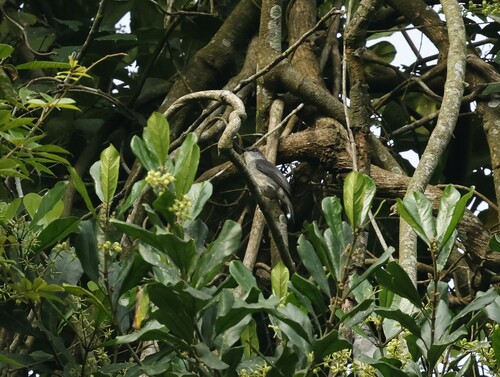
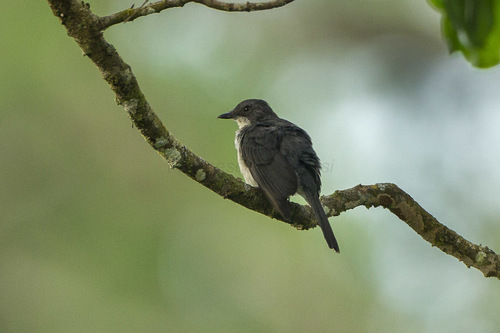
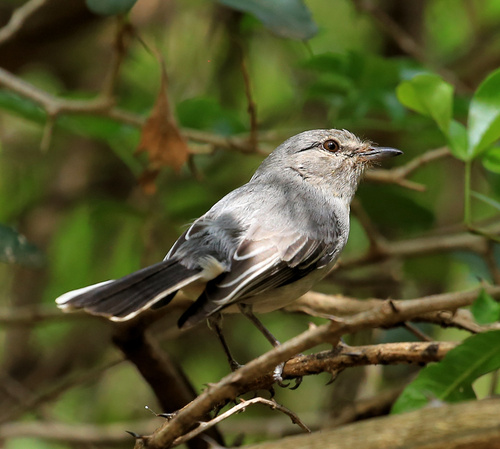
Tessmann's flycatcher (Fraseria tessmanni) is a species of bird in the family Muscicapidae. It is sparsely distributed across the African tropical rainforest from Sierra Leone to the Democratic Republic of the Congo. Its natural habitat is subtropical or tropical moist shrubland.

Tessmann's flycatcher was formally described in 1907 by the German ornithologist Anton Reichenow under given the binomial name Psalidoprocne tessmanni. The specific epithet was chosen to honour the German anthropologist and collector Günter Tessmann (1889–1971). Tessmann's flycatcher is now one of eight species placed in the genus Fraseria that was introduced in 1854 by the French naturalist Charles Lucien Bonaparte. The species is monotypic: no subspecies are recognised.

Wikipedia →

Sounds

Recording0:18

Ghana · 2024

© dbeadle · iNaturalist · CC BY-NC 4.0

Global Distribution

Parks Where Found

# Park Country Daily sighting probability
1 Kakum National Park 🇬🇭 Ghana
<5%

More parks will be added in future updates.

Before you go

What are the chances of seeing a Tessmann's Flycatcher in Kakum National Park?

Rare

Under 5% of wildlife watchers report a Tessmann's Flycatcher sighting in Kakum National Park on a given day, based on 7 verified sightings from GBIF citizen-science data from 2019 to 2026. It is the 242nd most-seen of the 250 birds we can rate there. Over three days the chance rises to under 5%, and over a week to about 10%, if each day is a fresh chance.

When is the best time to see a Tessmann's Flycatcher in Kakum National Park?

September

In that month about 10% of wildlife watchers report a Tessmann's Flycatcher in Kakum National Park on a given day, against under 5% in October to August, the lowest months. That is one of Kakum National Park's wettest months, with about 210 mm of rain against 35 mm in January.

What time of day is best to see a Tessmann's Flycatcher?

Between 7 and 10 am

Across all the parks we cover, that three-hour window holds the most Tessmann's Flycatcher sightings with a recorded time, and about 8 in 10 of them come between 6 am and 6 pm: it is a daytime animal.

Where else can you see a Tessmann's Flycatcher?

Only Kakum National Park, in our data

Kakum National Park is the only park on Wallace's Line with enough records to rate Tessmann's Flycatcher sightings: under 5% of wildlife watchers there report one on a given day.

Where does the Tessmann's Flycatcher sighting chance come from?

GBIF citizen-science records

It is estimated from how often the Tessmann's Flycatcher is recorded against all the birds logged in Kakum National Park (7 verified sightings from 2019 to 2026), calibrated against known sighting rates. Figures are rounded to the nearest 10% because citizen-science data supports honest approximations, not decimals, and months with records from fewer than five people show "—". How it works.

← Back to Kakum National Park