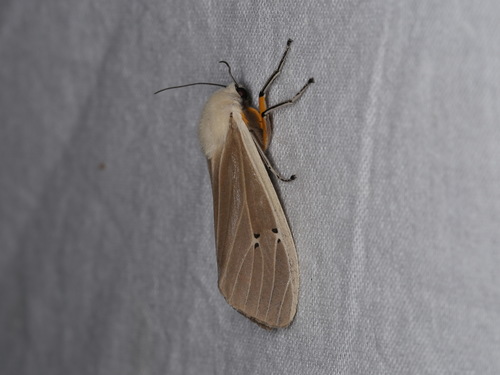
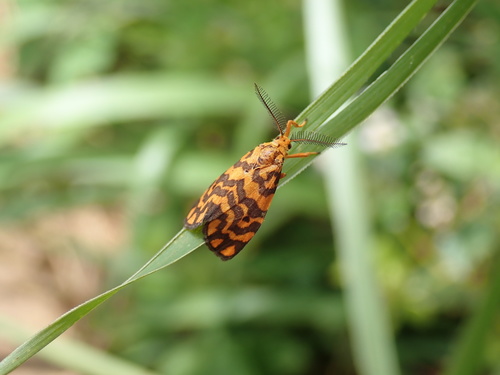
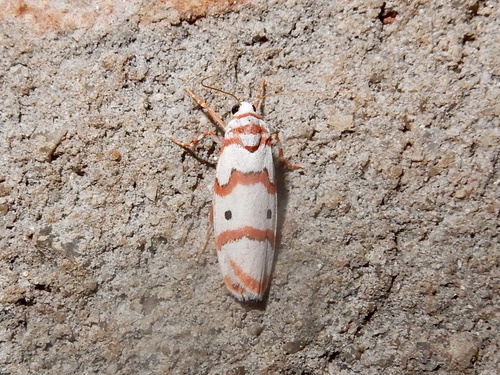
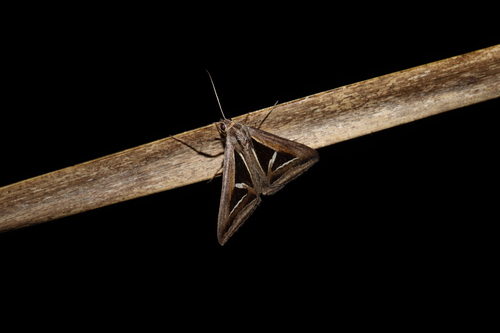
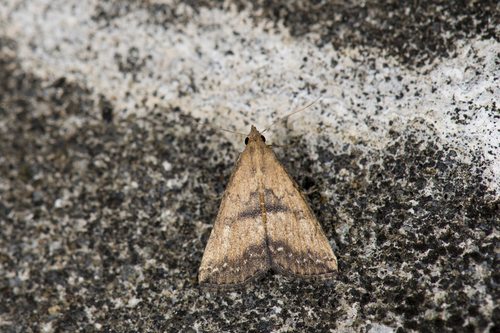
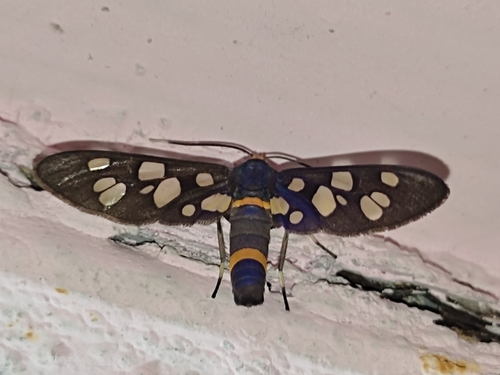
Banyan Tussock Moth

Banyan Tussock Moth

Perina nuda

Daily sighting probability ~40% · Likely
at Kanha National Park

In 3 days ~80% in a week >90%

35 Verified sightings at Kanha National Park From 2019 to 2026
77 In all 2 parks
December Best month
☀️🌙 Day & Night When it's spotted

About the Banyan Tussock Moth

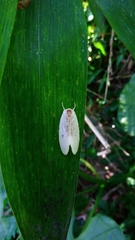
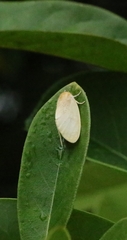
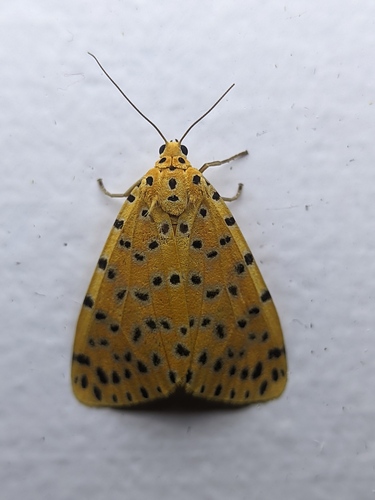
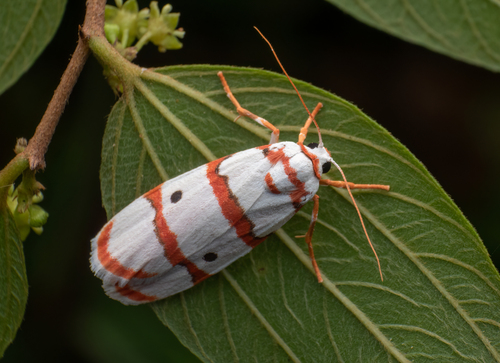
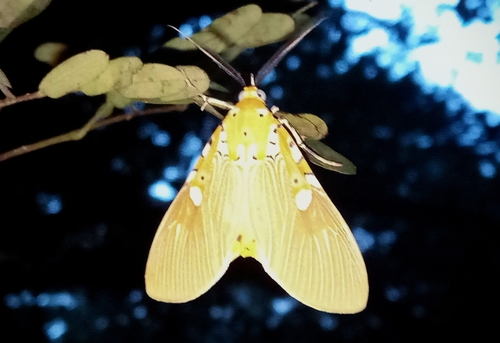
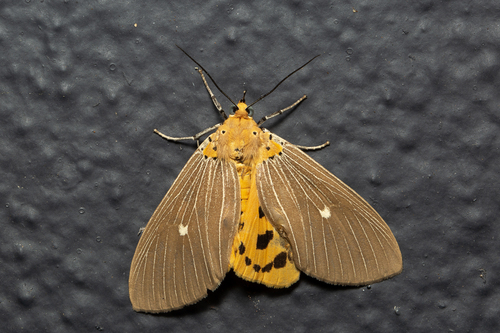
Perina nuda, the clearwing tussock moth or banyan tussock moth, is a moth of the family Erebidae. The species was first described by Johan Christian Fabricius in 1787. It is found in the Indian subregion, Sri Lanka, southern China, Hong Kong, Thailand and Sundaland.

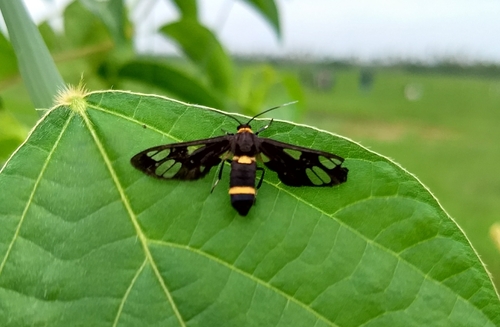
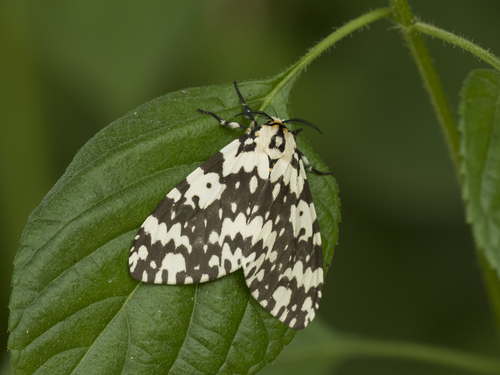
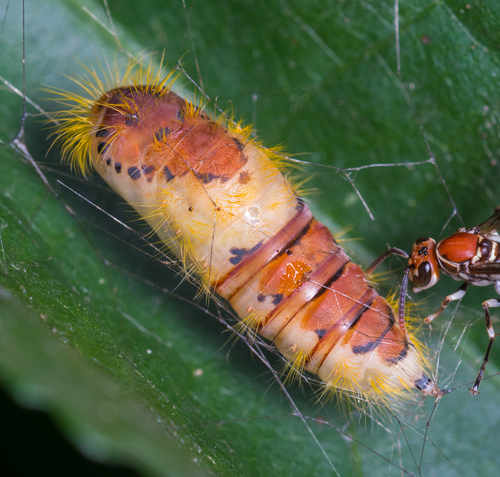
Adults show striking sexual dimorphism. The caterpillar has a greyish head and flanks, with the broad black dorsum. Its setae are white. The pupa is bristly, piebald in dark grey and cream. The setae on each pupa is orange. The caterpillar is a minor pest on several banyan species such as Ficus benjamina, Ficus benghalensis, Ficus racemosa, Ficus pumila and Ficus religiosa, and also many crop plants like Artocarpus and Mangifera.

The species is associated with an RNA virus called Perina nuda virus. Semiochemicals of Perina nuda, the Clearwing tussock moth. The Pherobase. The complete genome sequence of Perina nuda picorna-like virus, an insect-infecting RNA virus with a genome organization similar to that of the mammalian picornaviruses.

Perina nuda virus Life history of the Perina nuda (Fabricius) and virus production of the infected... Wikipedia →
Global Distribution

Parks Where Found

# Park Country Daily sighting probability
1 Kanha National Park 🇮🇳 India
~40%
2 Taroko National Park 🇹🇼 Taiwan
~20%

Cities Where Found

# City Country Daily sighting probability
1 Taipei 🇹🇼 Taiwan
~20%
2 Hong Kong 🇨🇳 China
~20%
3 Tuen Mun 🇨🇳 China
~10%
4 Bengaluru 🇮🇳 India
~10%
5 Xiamen City 🇨🇳 China
~10%
6 Dehradun 🇮🇳 India
~10%
7 Naha 🇯🇵 Japan
~10%
8 Kolkata 🇮🇳 India
~10%
9 Mumbai 🇮🇳 India
~10%
10 Fuzhou 🇨🇳 China
~10%

Before you go

What are the chances of seeing a Banyan Tussock Moth in Kanha National Park?

Likely

About 40% of wildlife watchers report a Banyan Tussock Moth sighting in Kanha National Park on a given day, based on 35 verified sightings from GBIF citizen-science data from 2019 to 2026. It is the 5th most-seen of the 106 insects we can rate there. Over three days the chance rises to about 80%, and over a week to over 90%, if each day is a fresh chance.

When is the best time to see a Banyan Tussock Moth in Kanha National Park?

December

In that month about 60% of wildlife watchers report a Banyan Tussock Moth in Kanha National Park on a given day, against under 5% in April–June and August–October, the lowest months. That is one of Kanha National Park's driest months, with about 15 mm of rain against 430 mm in July.

What time of day is best to see a Banyan Tussock Moth?

Between 1 and 4 pm

Across all the parks we cover, that three-hour window holds the most Banyan Tussock Moth sightings with a recorded time, and about 6 in 10 of them come between 6 am and 6 pm: it is seen both by day and at night.

Is Kanha National Park the best place to see a Banyan Tussock Moth?

Yes

Of the 2 parks where we can rate Banyan Tussock Moth sightings, Kanha National Park has the highest daily chance: about 40%. Next come Taroko National Park (Taiwan, about 20%).

Which relatives of the Banyan Tussock Moth live in Kanha National Park?

Same family: Erebidae

The closest relatives of the Banyan Tussock Moth that you can see in Kanha National Park (family Erebidae, Underwing, Tiger, Tussock, and Allied Moths) are Handmaiden Moth (about 50%), Lymantria marginata (about 40%) and Crotalaria Pod Borer (about 40%), with each one's daily chance of a sighting.

Where does the Banyan Tussock Moth sighting chance come from?

GBIF citizen-science records

It is estimated from how often the Banyan Tussock Moth is recorded against all the insects logged in Kanha National Park (35 verified sightings from 2019 to 2026), calibrated against known sighting rates. Figures are rounded to the nearest 10% because citizen-science data supports honest approximations, not decimals, and months with records from fewer than five people show "—". How it works.

← Back to Kanha National Park