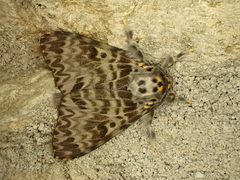
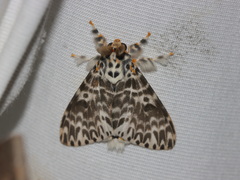
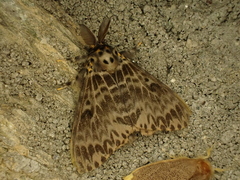
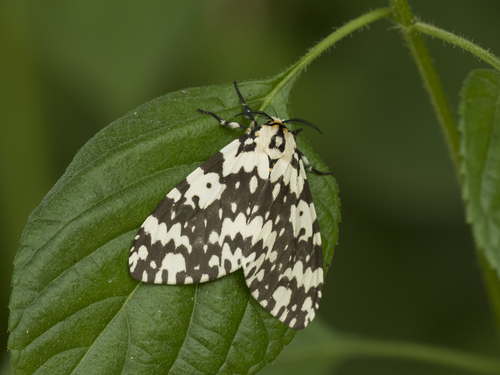
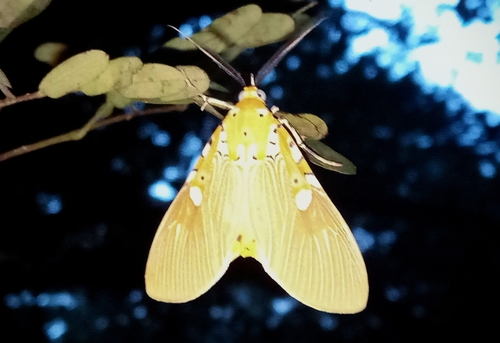
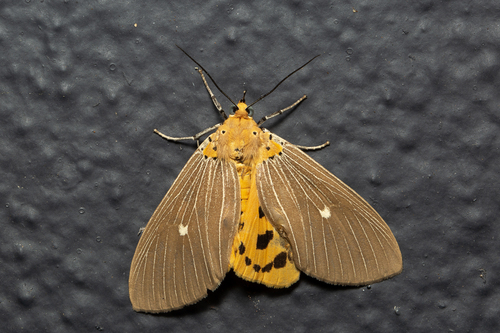
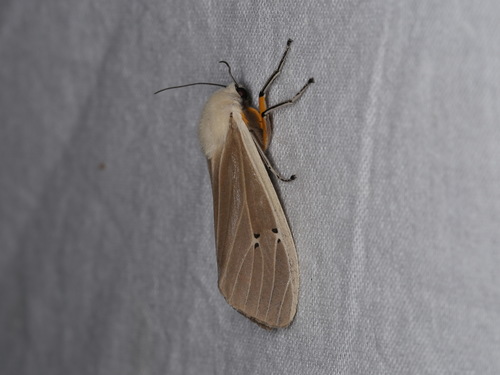
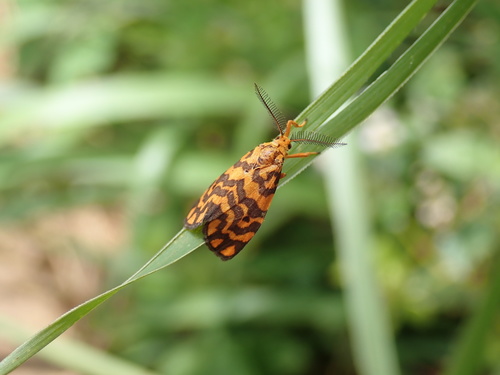
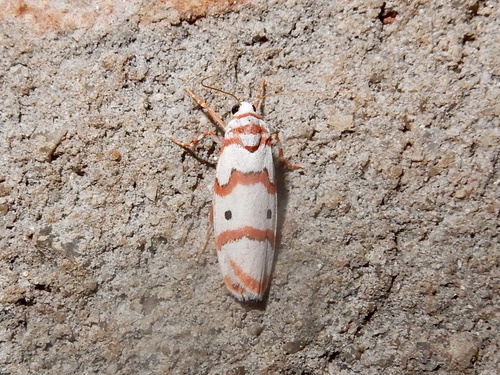
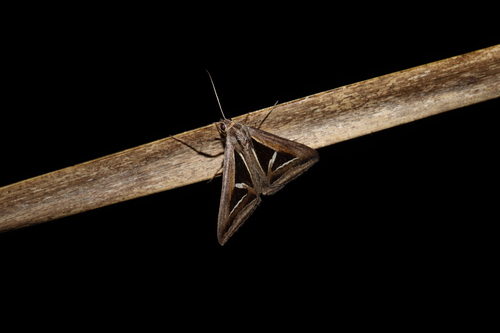
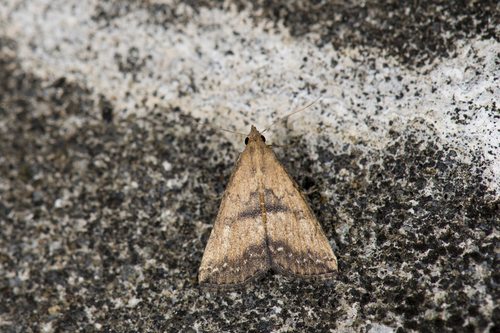
Pink Lymantria Moth

Pink Lymantria Moth

Lymantria mathura

Daily sighting probability ~20% · Possible
at Kanha National Park

In 3 days ~50% in a week ~80%

8 Verified sightings at Kanha National Park From 2019 to 2026
21 In all 2 parks
March Best month
☀️🌙 Day & Night When it's spotted

About the Pink Lymantria Moth

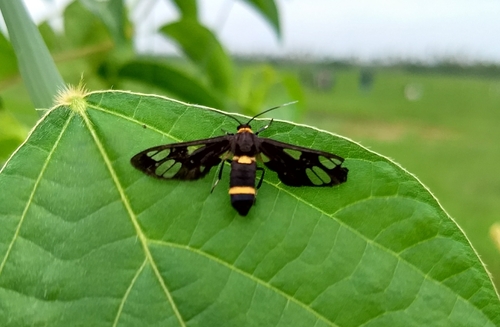
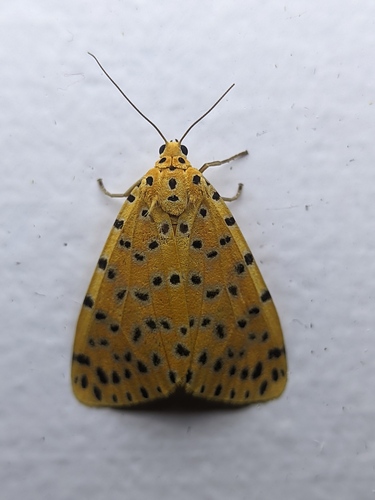
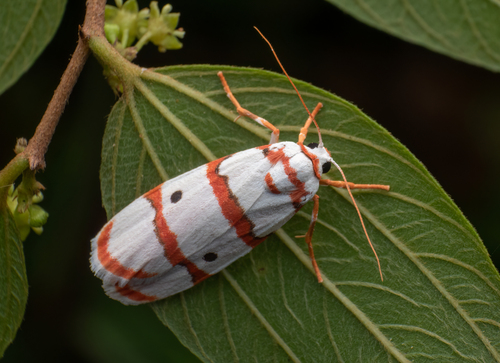
Lymantria mathura, the rosy gypsy moth, is a species of moth of the family Erebidae found in the Russian Far East, Nepal, Japan (Hokkaido, Honshu, Kyushu), the Korean Peninsula, northern India and China (at least Hebei, Heilongjiang, Jilin also in the west). The species was first described by Frederic Moore in 1866.

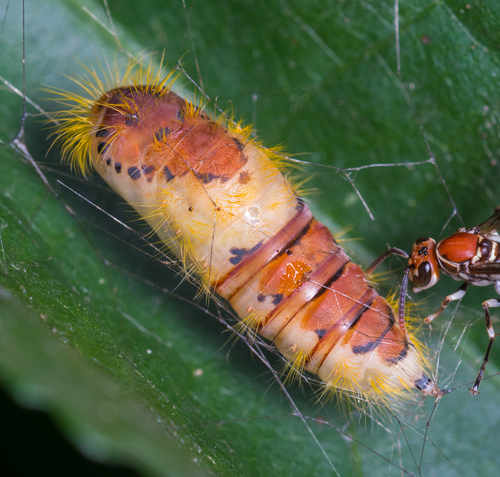
The wingspan is 40–50mm for males and 70–90mm for females. Larvae disperse through ballooning, covering greater distances compared to the Lymantria dispar and exhibiting high rates of settling. Larvae have also been recorded feeding on Terminalia, Shorea, Quercus, Mangifera, Eugenia and Mitragyna. It is considered a pest, since it is a major defoliator of deciduous trees. Their larvae exhibit intraspecific variation to polyphenol metabolism depending on their host plant, allowing them to be polyphagous across multiple broadleaf species.

Descriptions of New Indian Lepidopterous Insects: From the Collection... Wikipedia →
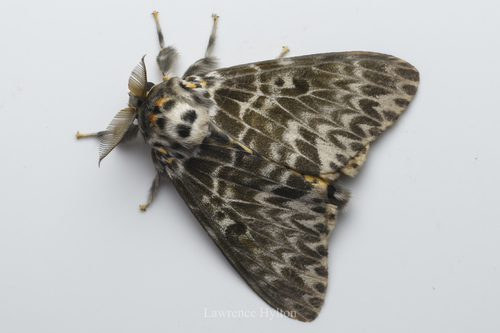
Global Distribution

Parks Where Found

# Park Country Daily sighting probability
1 Kanha National Park 🇮🇳 India
~20%
2 Taroko National Park 🇹🇼 Taiwan
~10%

Cities Where Found

# City Country Daily sighting probability
1 Sapporo 🇯🇵 Japan
~20%
2 Dehradun 🇮🇳 India
~10%
3 Taipei 🇹🇼 Taiwan
~10%
4 Taichung 🇹🇼 Taiwan
~10%
5 Guangzhou 🇨🇳 China
<5%
6 Hong Kong 🇨🇳 China
<5%
7 Tokyo 🇯🇵 Japan
<5%

Before you go

What are the chances of seeing a Pink Lymantria Moth in Kanha National Park?

Possible

About 20% of wildlife watchers report a Pink Lymantria Moth sighting in Kanha National Park on a given day, based on 8 verified sightings from GBIF citizen-science data from 2019 to 2026. It is the 58th most-seen of the 106 insects we can rate there. Over three days the chance rises to about 50%, and over a week to about 80%, if each day is a fresh chance.

When is the best time to see a Pink Lymantria Moth in Kanha National Park?

March

In that month about 50% of wildlife watchers report a Pink Lymantria Moth in Kanha National Park on a given day, against under 5% in April–July and September–February, the lowest months. That is one of Kanha National Park's driest months, with about 30 mm of rain against 430 mm in July.

What time of day is best to see a Pink Lymantria Moth?

Between 7 and 10 am

Across all the parks we cover, that three-hour window holds the most Pink Lymantria Moth sightings with a recorded time, and about half of them come between 6 pm and 6 am: it is seen both by day and at night.

Is Kanha National Park the best place to see a Pink Lymantria Moth?

Yes

Of the 2 parks where we can rate Pink Lymantria Moth sightings, Kanha National Park has the highest daily chance: about 20%. Next come Taroko National Park (Taiwan, about 10%).

Where does the Pink Lymantria Moth sighting chance come from?

GBIF citizen-science records

It is estimated from how often the Pink Lymantria Moth is recorded against all the insects logged in Kanha National Park (8 verified sightings from 2019 to 2026), calibrated against known sighting rates. Figures are rounded to the nearest 10% because citizen-science data supports honest approximations, not decimals, and months with records from fewer than five people show "—". How it works.

← Back to Kanha National Park