
Sumatran Surili

Sumatran Surili

Presbytis melalophos

Silhouette: PhyloPic

LCNTVUENEndangeredCR
Daily sighting probability ~80% · Very likely
at Kerinci Seblat National Park

In 3 days >90%

78 Verified sightings at Kerinci Seblat National Park From 2019 to 2026
78 In 1 park
June Best month
🌅 Crepuscular When it's spotted

About the Sumatran Surili

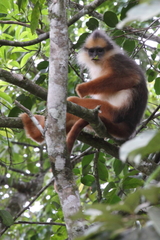
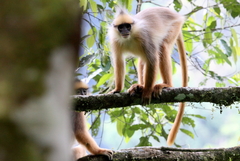
The black-crested Sumatran langur (Presbytis melalophos) is a species of primate in the family Cercopithecidae. It is endemic to Sumatra in Indonesia. Its natural habitat is subtropical or tropical dry forests. It is threatened by habitat loss.

The black Sumatran langur, black-and-white langur, Sarawak surili, Raffles' banded langur and mitered langur were formerly considered subspecies of P. melalophos. The black-crested Sumatran langur is a forest dwelling animal. It is native to Sumatra and several neighboring islands. From 2000 to 2012, it lost an estimated 62% of its forest habitat. The black-crested Sumatran langur is frugivorous and folivorous. With fruit making up 50 to 60 percent of its diet, the rest consists of leaves and occasionally seeds and flowers. Its foregut is enlarged and has the capacity for microbial fermentation. The black-crested Sumatran langur feeds from about 200 different species of trees. It prefers new leaves to mature leaves.

The main predators of black-crested Sumatran langurs include snakes in the genus Python and birds of prey, including crested serpent eagles. ARKive - images... Wikipedia →

Sounds

Call0:32

Indonesia · 2016

© Frank Lambert · XC1031374 · CC BY-NC-ND 4.0

Global Distribution

Parks Where Found

# Park Country Daily sighting probability
1 Kerinci Seblat National Park 🇮🇩 Indonesia
~80%

More parks will be added in future updates.

Zoos & Centres Where Found

# Zoo / Centre Country
1 Taman Margasatwa dan Budaya Kinantan 🇮🇩 Indonesia In captivity

Before you go

What are the chances of seeing a Sumatran Surili in Kerinci Seblat National Park?

Very likely

About 80% of wildlife watchers report a Sumatran Surili sighting in Kerinci Seblat National Park on a given day, based on 78 verified sightings from GBIF citizen-science data from 2019 to 2026. It is the most-seen of the 11 mammals we can rate there. Over three days the chance rises to over 90%, if each day is a fresh chance.

When is the best time to see a Sumatran Surili in Kerinci Seblat National Park?

June

In that month about 90% of wildlife watchers report a Sumatran Surili in Kerinci Seblat National Park on a given day, against about 50% in November and December, the lowest months.

What time of day is best to see a Sumatran Surili?

Between 3 and 6 am

Across all the parks we cover, that three-hour window holds the most Sumatran Surili sightings with a recorded time, and about 6 in 10 of them come between 6 am and 6 pm: it is most active around dawn and dusk.

Where else can you see a Sumatran Surili?

Only Kerinci Seblat National Park, in our data

Kerinci Seblat National Park is the only park on Wallace's Line with enough records to rate Sumatran Surili sightings: about 80% of wildlife watchers there report one on a given day.

Which relatives of the Sumatran Surili live in Kerinci Seblat National Park?

Same family: Cercopithecidae

The closest relatives of the Sumatran Surili that you can see in Kerinci Seblat National Park (family Cercopithecidae, Old World Monkeys) are Southern Pig-tailed Macaque (about 40%) and Crab-eating Macaque (about 20%), with each one's daily chance of a sighting.

Where does the Sumatran Surili sighting chance come from?

GBIF citizen-science records

It is estimated from how often the Sumatran Surili is recorded against all the mammals logged in Kerinci Seblat National Park (78 verified sightings from 2019 to 2026), calibrated against known sighting rates. Figures are rounded to the nearest 10% because citizen-science data supports honest approximations, not decimals, and months with records from fewer than five people show "—". How it works.

← Back to Kerinci Seblat National Park