Yellow-headed Temple Turtle

Yellow-headed Temple Turtle

Heosemys annandalii

Silhouette: SeismicShrimp · PhyloPic

LCNTVUENCRCritically Endangered
Daily sighting probability ~40% · Likely
at Khao Yai National Park

In 3 days ~70% in a week >90%

65 Verified sightings at Khao Yai National Park From 2019 to 2026
65 In 1 park
October Best month
☀️ Diurnal When it's spotted

About the Yellow-headed Temple Turtle

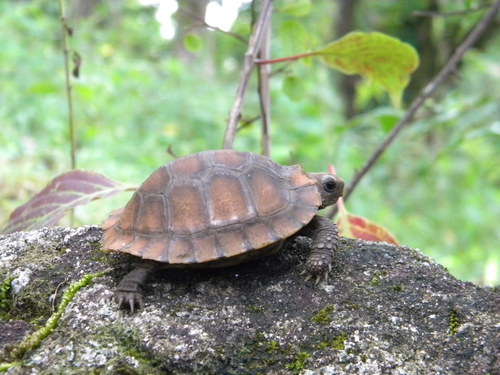
The yellow-headed temple turtle (Heosemys annandalii) is a large species of turtle in the family Geoemydidae. The species is native to South Asia and Southeast Asia. The common name, "yellow-headed temple turtle", is derived from the fact that it is often found near Buddhist temples within its range.

The specific name, annandalii, is in honor of Scottish herpetologist Nelson Annandale. H. annandalii may grow to over 20 in (51 cm) in straight carapace length. H. annandalii is aquatic, and is generally herbivorous. The Convention on International Trade in Endangered Species of Wild Fauna and Flora (CITES) suspended trade of yellow-headed temple turtles in July 2012.

H. annandalii is found in Cambodia, Laos, Malaysia, Thailand, Vietnam, and possibly Myanmar. The preferred natural habitats of H. annandalii are wet forests and freshwater wetlands. H. annandalii may live in captivity for up to 35 years.

Two turtles were hatched in November 2019 at the Columbus Zoo and Aquarium. Heosemys annadali has been breed in captivity. The leech Placobdelloides... Wikipedia →

Global Distribution

Parks Where Found

# Park Country Daily sighting probability
1 Khao Yai National Park 🇹🇭 Thailand
~40%

More parks will be added in future updates.

Zoos & Centres Where Found

# Zoo / Centre Country
1 Beijing Wildlife Park 🇨🇳 China In captivity
2 Toronto Zoo 🇨🇦 Canada In captivity
3 Columbus Zoo and Aquarium 🇺🇸 United States In captivity
4 Kadoorie Farm and Botanic Garden 🇭🇰 Hong Kong SAR China In captivity
5 Shenzhen Safari Park 🇨🇳 China In captivity
6 Saigon Zoo and Botanical Gardens 🇻🇳 Vietnam In captivity
7 Maelao Wildlife Breeding Centre 🇹🇭 Thailand In captivity
8 Snake Farm of Queen Saovabha Memorial Institute 🇹🇭 Thailand In captivity
9 Bangkok Aquarium 🇹🇭 Thailand In captivity
10 Pata Zoo 🇹🇭 Thailand In captivity
11 Sea Life Bangkok Ocean World 🇹🇭 Thailand In captivity

Before you go

What are the chances of seeing a Yellow-headed Temple Turtle in Khao Yai National Park?

Likely

About 40% of wildlife watchers report a Yellow-headed Temple Turtle sighting in Khao Yai National Park on a given day, based on 65 verified sightings from GBIF citizen-science data from 2019 to 2026. It is the 8th most-seen of the 46 reptiles we can rate there. Over three days the chance rises to about 70%, and over a week to over 90%, if each day is a fresh chance.

When is the best time to see a Yellow-headed Temple Turtle in Khao Yai National Park?

October

In that month about 50% of wildlife watchers report a Yellow-headed Temple Turtle in Khao Yai National Park on a given day, against about 20% in April and July, the lowest months.

What time of day is best to see a Yellow-headed Temple Turtle?

Between 10 am and 1 pm

Across all the parks we cover, that three-hour window holds the most Yellow-headed Temple Turtle sightings with a recorded time, and about 7 in 10 of them come between 6 am and 6 pm: it is a daytime animal.

Where else can you see a Yellow-headed Temple Turtle?

Only Khao Yai National Park, in our data

Khao Yai National Park is the only park on Wallace's Line with enough records to rate Yellow-headed Temple Turtle sightings: about 40% of wildlife watchers there report one on a given day.

Where does the Yellow-headed Temple Turtle sighting chance come from?

GBIF citizen-science records

It is estimated from how often the Yellow-headed Temple Turtle is recorded against all the reptiles logged in Khao Yai National Park (65 verified sightings from 2019 to 2026), calibrated against known sighting rates. Figures are rounded to the nearest 10% because citizen-science data supports honest approximations, not decimals, and months with records from fewer than five people show "—". How it works.

← Back to Khao Yai National Park