Laysan Albatross

Laysan Albatross

Phoebastria immutabilis

Silhouette: Juan Carlos Jerí · PhyloPic

LCNTNear ThreatenedVUENCR
Daily sighting probability ~70% · Very likely
at Kilauea Point National Wildlife Refuge

In 3 days >90%

879 Verified sightings at Kilauea Point National Wildlife Refuge From 2019 to 2026
879 In 1 park
February Best month
☀️ Diurnal When it's spotted

About the Laysan Albatross

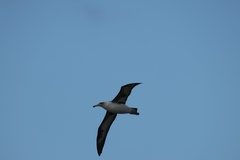
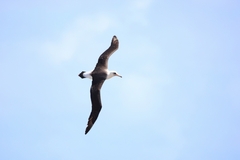
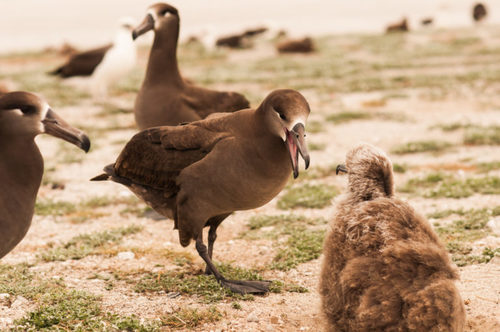
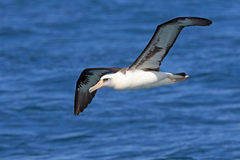
The Laysan albatross (Phoebastria immutabilis) is a large seabird that ranges across the North Pacific. The Northwestern Hawaiian Islands are home to 99.7% of the population. This small (for its family) gull-like albatross is the second-most common seabird in the Hawaiian Islands, with an estimated population of 1.18 million birds, and is currently expanding (or possibly re-expanding) its range to new islands. The Laysan albatross was first described as Diomedea immutabilis by Lionel Walter Rothschild, in 1893, on the basis of a specimen from Laysan Island.

It is named for Laysan, one of its breeding colonies in the Northwestern Hawaiian Islands and the island where the type specimen was collected. The genus name, Phoebastria, comes from Greek phoibastria, meaning a prophetess. The species name, immutabilis, is Latin for "unchanging" and refers to the similarity of immature birds' plumage to that of adults.

The Laysan albatross averages 81 cm (32 in) in length and has a wingspan of 195 to 203 cm (77–80 in). Males, which weigh 2.4 to 4.1 kg (5.3–9.0 lb), are larger than females, which weigh 1.9 to 3.6 kg (4.2–7.9 lb). This albatross has blackish-gray...

Wikipedia →

Sounds

Call0:32

Mexico · 2022

© Alán Palacios · XC730154 · CC BY-NC-SA 4.0

Alarm call0:07

United States · 2015

© Ross Gallardy · XC209430 · CC BY-NC-SA 4.0

Display1:00

United States · 2012

© david m · XC180040 · CC BY-NC-ND 4.0

Global Distribution

Parks Where Found

# Park Country Daily sighting probability
1 Kilauea Point National Wildlife Refuge 🇺🇸 United States
~70%

More parks will be added in future updates.

Cities Where Found

# City Country Daily sighting probability
1 Tokyo 🇯🇵 Japan
<5%

Zoos & Centres Where Found

# Zoo / Centre Country
1 Monterey Bay Aquarium 🇺🇸 United States In captivity

Before you go

What are the chances of seeing a Laysan Albatross in Kilauea Point National Wildlife Refuge?

Very likely

About 70% of wildlife watchers report a Laysan Albatross sighting in Kilauea Point National Wildlife Refuge on a given day, based on 879 verified sightings from GBIF citizen-science data from 2019 to 2026. It is the 6th most-seen of the 44 birds we can rate there. Over three days the chance rises to over 90%, if each day is a fresh chance.

When is the best time to see a Laysan Albatross in Kilauea Point National Wildlife Refuge?

December to April

In those months about 90% of wildlife watchers report a Laysan Albatross in Kilauea Point National Wildlife Refuge on a given day, against about 10% in October, the lowest month.

What time of day is best to see a Laysan Albatross?

Between 8 and 11 am

Across all the parks we cover, that three-hour window holds the most Laysan Albatross sightings with a recorded time, and about 8 in 10 of them come between 6 am and 6 pm: it is a daytime animal.

Where else can you see a Laysan Albatross?

Only Kilauea Point National Wildlife Refuge, in our data

Kilauea Point National Wildlife Refuge is the only park on Wallace's Line with enough records to rate Laysan Albatross sightings: about 70% of wildlife watchers there report one on a given day.

Where does the Laysan Albatross sighting chance come from?

GBIF citizen-science records

It is estimated from how often the Laysan Albatross is recorded against all the birds logged in Kilauea Point National Wildlife Refuge (879 verified sightings from 2019 to 2026), calibrated against known sighting rates. Figures are rounded to the nearest 10% because citizen-science data supports honest approximations, not decimals, and months with records from fewer than five people show "—". How it works.

← Back to Kilauea Point National Wildlife Refuge