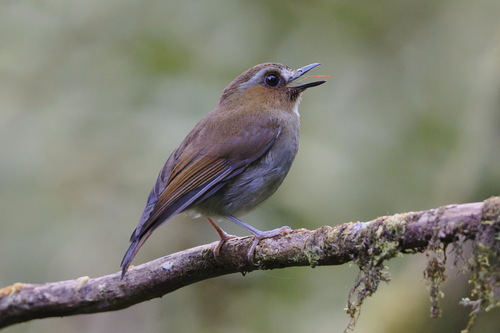
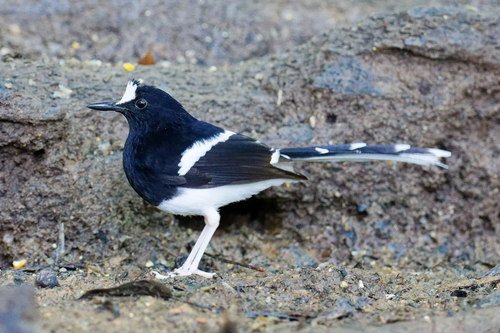
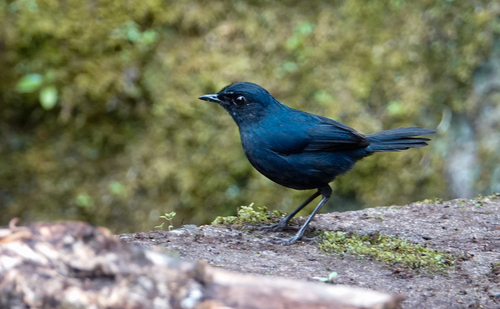
Philippine jungle flycatcher

Philippine jungle flycatcher

Rhinomyias ruficauda

Silhouette: Martin Bulla, based on François Desbordes' illustration · PhyloPic

Daily sighting probability <5% · Rare
at Kinabalu Park

In 3 days <5%

7 Verified sightings at Kinabalu Park From 2019 to 2026
7 In 1 park
January Best month
☀️ Diurnal When it's spotted

About the Philippine jungle flycatcher

The Philippine jungle flycatcher (Cyornis ruficauda) is a species of passerine bird in the Old World flycatcher family Muscicapidae. It is endemic to the Philippines. Its natural habitat is tropical moist lowland forests up to 1,000 meters above sea level.

This species was previously placed in the genus Rhinomyias but was moved to Cyornis based on the results of a 2010 molecular phylogenetic study. The Sulu jungle flycatcher (C. ocularis), which is endemic to the Sulu Archipelago, and the Crocker jungle flycatcher (C. ruficrissa), which is endemic to Borneo, were split as distinct species by the IOC in 2021. With the split, this species was renamed from rufous-tailed jungle flycatcher to Philippine jungle flycatcher.

Four subspecies are recognized: C.r. ruficauda – Found on Basilan C.r. zamboanga – Found on Zamboanga Peninsula C.r. montanus – Found on Bohol, C.r. samarensis – Found on Mindanao (excluding Zamboanga), Leyte Biliran and Samar;

Diet is not well known but pressumed to consist of insects. Usually solitary but also observed in mixed-species flocks. Typically forages close to the forest floor and understorey. Wikipedia →


Global Distribution

Parks Where Found

# Park Country Daily sighting probability
1 Kinabalu Park 🇲🇾 Malaysia
<5%

More parks will be added in future updates.

Before you go

What are the chances of seeing a Philippine jungle flycatcher in Kinabalu Park?

Rare

Under 5% of wildlife watchers report a Philippine jungle flycatcher sighting in Kinabalu Park on a given day, based on 7 verified sightings from GBIF citizen-science data from 2019 to 2026. It is the 233rd most-seen of the 247 birds we can rate there. Over three days the chance rises to under 5%, if each day is a fresh chance.

When is the best time to see a Philippine jungle flycatcher in Kinabalu Park?

Any time of year

In every month with enough records, under 5% of wildlife watchers report a Philippine jungle flycatcher in Kinabalu Park on a given day, so our monthly data shows no clear season.

What time of day is best to see a Philippine jungle flycatcher?

Between 6 and 9 am

Across all the parks we cover, that three-hour window holds the most Philippine jungle flycatcher sightings with a recorded time, and about 7 in 10 of them come between 6 am and 6 pm: it is a daytime animal.

Where else can you see a Philippine jungle flycatcher?

Only Kinabalu Park, in our data

Kinabalu Park is the only park on Wallace's Line with enough records to rate Philippine jungle flycatcher sightings: under 5% of wildlife watchers there report one on a given day.

Where does the Philippine jungle flycatcher sighting chance come from?

GBIF citizen-science records

It is estimated from how often the Philippine jungle flycatcher is recorded against all the birds logged in Kinabalu Park (7 verified sightings from 2019 to 2026), calibrated against known sighting rates. Figures are rounded to the nearest 10% because citizen-science data supports honest approximations, not decimals, and months with records from fewer than five people show "—". How it works.

← Back to Kinabalu Park