



















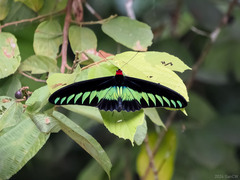

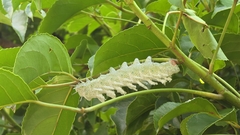
All 3 in 3 days here: ~30%
Kinabalu Park
🇲🇾 Malaysia
Southeast Asia, Malaysia 1181 spp. recorded
Kinabalu Park is a protected mountain sanctuary in Sabah, Malaysia, dominated by high-altitude grassland and steep montane vegetation. Visitors walk rugged trails through chilly slopes and misty ridges where ancient rock formations meet dense cloud forests. This dramatic elevation gradient creates distinct ecological zones that set the area apart from lowland rainforests.
6.183° N 116.679° E
🦜 Nature

587 Species sighted
78,978 Verified sightings From 2019 to 2026
Jul Best month
⭐ Iconic Species
📊 Most Spotted
⭐ Iconic Species
📊 Most Spotted
📊 Most Spotted
⭐ Iconic Species
📊 Most Spotted
⭐ Iconic Species
📊 Most Spotted
📊 Most Spotted
⭐ Iconic Species
🌙 Most active after dark
+ 829 more species with insufficient data
Challenges you can complete here


All 3 in 3 days here: ~20%
Recent sightings in Kinabalu Park
LIVEiNaturalistSounds of Kinabalu Park
Morning soundscape0:22
Malaysia · 2013
© Mike Nelson · XC151599 · CC BY-NC-SA 3.0
Sighting Calendar
How many species you'd see in a day
80Jan
79Feb
66Mar
83Apr
87May
75Jun
105Jul
80Aug
69Sep
81Oct
81Nov
74Dec
Sighting Zones
Warmer areas are where all species together are recorded most often.
-
Sayap Substation
Daily sight. prob.vs avg Horned Toad~90%+40%
 Sabah Bamboo Pitviper~80%+40%
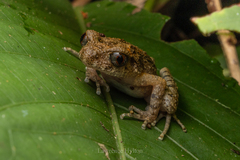 Kinabalu Slender Litter Frog~70%+40%
 Chestnut-crested Yuhina~70%+10%
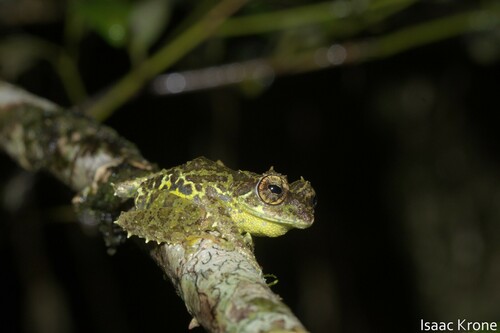
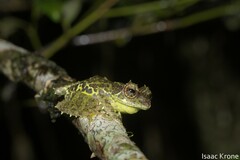 Mossy Bush Frog~60%+10%
 Borneo Forest Dragon~60%+10%
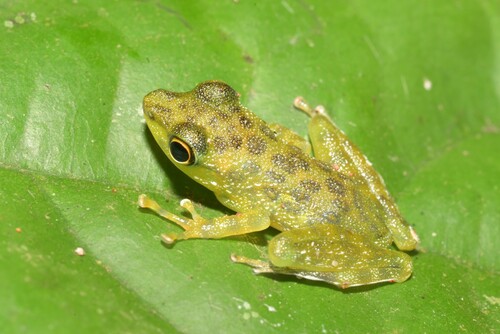
 Green-spotted Foot-flagging Frog~60%+20%
 Kinabalu Slender Toad~60%+30%
 Green Bush Frog~60%+30%
 Yellow-spotted Narrow-mouthed Frog~50%+10%
 Balu Bow-fingered Gecko~50%+10%
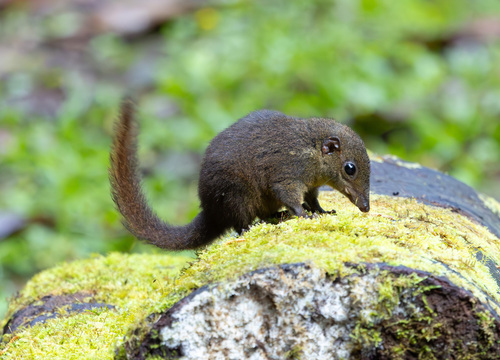
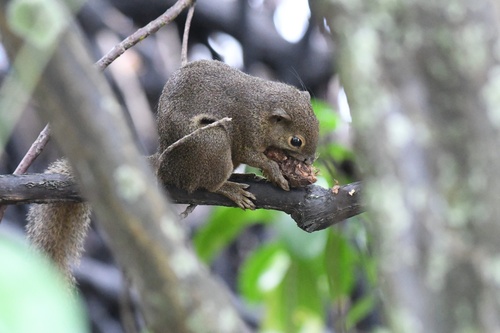
 Tufted Pygmy Squirrel~40%≈
-
Poring Hot Springs
Daily sight. prob.vs avg- Borneo Forest Dragon~80%+30%
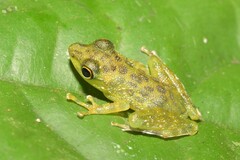 Black-spotted Rock Skipper~70%+30%
 North Philippine Temple Pitviper~70%+20%
 File-eared Tree Frog~70%+30%
- Horned Toad~60%+10%
 Green Crested Lizard~60%+20%
 Malayan Crested Lizard~60%+20%
 Peter's Tree Frog~60%+20%
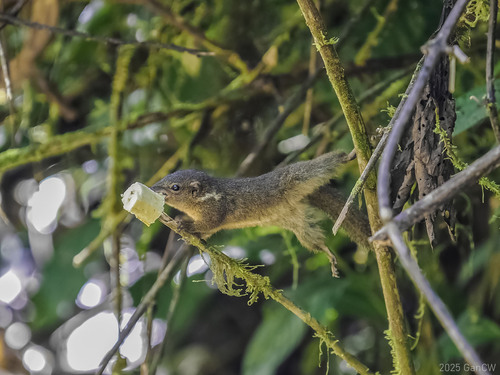
 Least Pygmy Squirrel~50%+20%
 Borneo Skink~50%+20%
 Flat-tailed House Gecko~50%+20%
 Blunthead Slug Snake~50%+20%
-
Park headquarters
Daily sight. prob.vs avg- Mossy Bush Frog~70%+20%
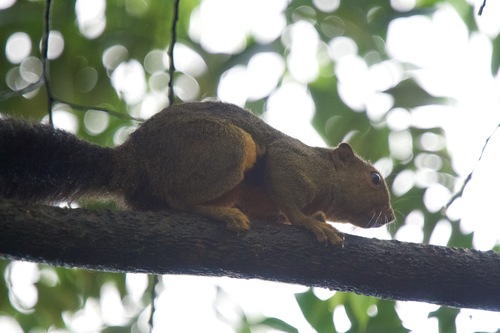
 Borneo Black-banded Squirrel~70%+20%
 Jentink's Squirrel~70%+20%
- Tufted Pygmy Squirrel~60%+20%
 Bornean Mountain Ground Squirrel~60%+10%
 Montane Large-eyed Litter Frog~60%+20%
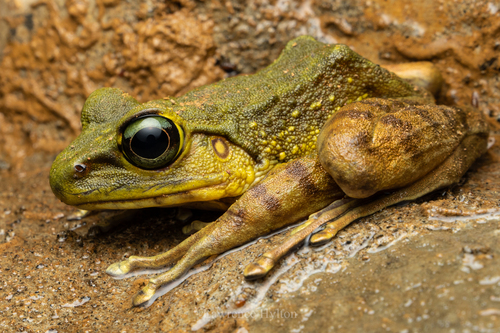
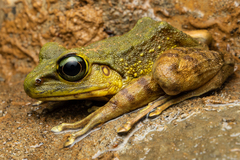 Kiau Borneo Frog~60%+20%
 Kinabalu Sticky Frog~60%+20%
 Schmidt's Reed Snake~50%+20%
- Balu Bow-fingered Gecko~50%+10%
- Kinabalu Slender Toad~50%+10%
-
6.208° N, 116.642° E
Daily sight. prob.vs avg- Mossy Bush Frog~80%+30%
- Bornean Mountain Ground Squirrel~70%+20%
- Flat-tailed House Gecko~50%+20%
- Sabah Bamboo Pitviper~50%+10%
- North Philippine Temple Pitviper~50%+10%
- Tufted Pygmy Squirrel~50%+10%
- Kinabalu Sticky Frog~50%+20%
- Malayan Crested Lizard~40%≈
- Borneo Black-banded Squirrel~40%-10%
- Balu Bow-fingered Gecko~40%≈
- Kinabalu Slender Toad~40%≈
- Green Bush Frog~40%≈
-
Laban Rata
Daily sight. prob.vs avg- Bornean Mountain Ground Squirrel~70%+20%
 Malcolm’s Pitviper~60%+20%
- Mossy Bush Frog~50%≈
- Sabah Bamboo Pitviper~50%+10%
- Kinabalu Slender Litter Frog~50%+10%
- Borneo Black-banded Squirrel~40%≈
- Jentink's Squirrel~40%≈
- Kinabalu Slender Toad~40%≈
- Green Bush Frog~40%≈
- Montane Large-eyed Litter Frog~40%≈
- Schmidt's Reed Snake~40%≈
- Kinabalu Sticky Frog~40%≈
🏕️ Experience
Essentials
Climate
Temp °C Rain mm
JanFebMarAprMayJunJulAugSepOctNovDec
0.0 Excellent
Wallace's Line Score
How good is this park for seeing wildlife? 🦜
Biodiversity
ExcellentHow rich is the wildlife?
5.0
Species by taxon
🦅 Birds 623
🐒 Mammals 199
🦎 Reptiles 218
🐸 Amphibians 141
1181 Total Species
828 Global average across 316 parks
108 Threatened 3 Endemic
🔭
Sighting
Very goodHow likely to see animals?
3.3
🎯
Top-12 Avg Probability
64% 📊
Coverage (278 species at ≥5% of 1181 in the inventory)
24% 🔀
Taxon variety in top 12 (12 bird)
0% 🔭
Species per 10 outings (distinct species a visitor would meet over 10 outings — effort held equal across parks)
101 🌟
Iconic-group species (≥15%) (every species from the 19 iconic groups — monkeys, cats, toucans, macaws, sloths, crocodilians… — not just the 4 highlighted above)
6 ⭐
High-prob species (>40%)
42 🏕️
Experience
GoodHow easy and pleasant is the visit?
3.1
Climate Harsh Low
Entrance Paid Low
Tourism Medium Medium
Trails Hard Low
World Heritage Yes Bonus
What visitors say
We got our first glimpse of the Bornean Treepie (Dendrocitta cinerascens), showing off its long tail and making quite a racket with its raucous calls.
Doing some more research, I found what looked to be a totally decent package: 7 days, including time on Borneo’s west coast, the unique Turtle Islands Marine Park, Sepilok Forest Reserve, and the Kinabatangan River, all for a (more) reasonable price.
We stopped at a restaurant near the mountain, where I thought I might have heard the Whitehead’s Spiderhunter, but it did not come back to playback.
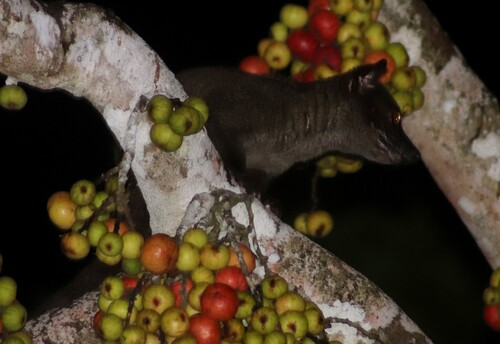
One of the first species we observed was not a bird, but this Small-toothed Palm Civet trotting along the utility wire alongside the road.
Before you go
What animals can you see in Kinabalu Park?
1,181 species
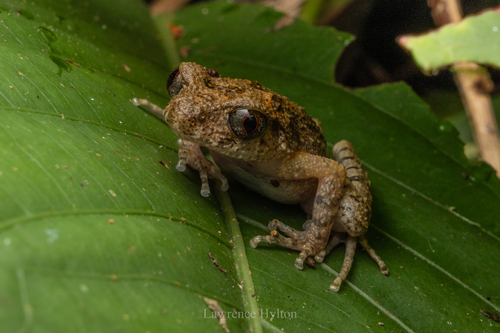
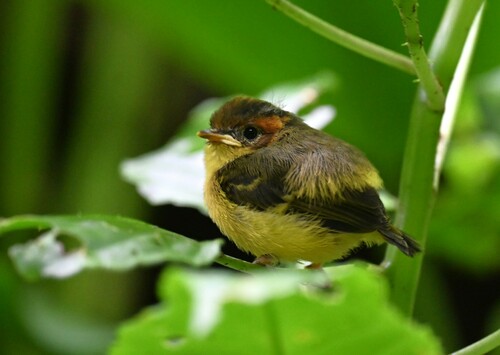
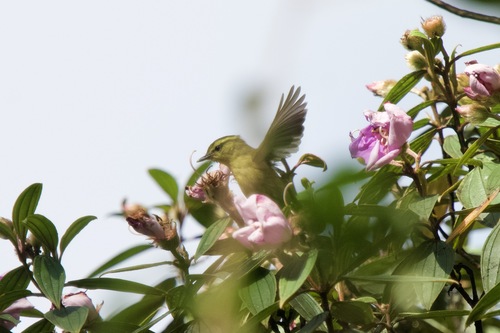
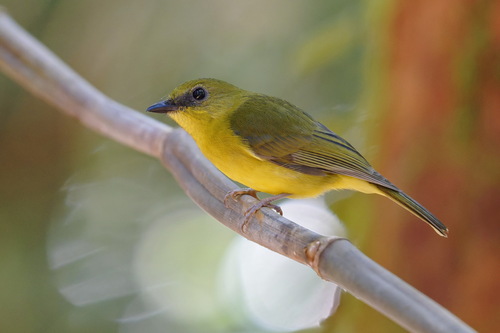
Kinabalu Park has 1,181 recorded vertebrate species. The ones wildlife watchers report most often on a given day are Chestnut-hooded Laughingthrush (about 80%), Bornean Treepie (about 70%), Indigo Flycatcher (about 70%), Yellow-breasted Warbler (about 70%) and Black-capped White-eye (about 60%). Among mammals, the most-seen is Bornean Mountain Ground Squirrel (about 50%); among reptiles, Borneo Forest Dragon (about 50%); among amphibians, Mossy Bush Frog (about 50%).
When is the best time to visit Kinabalu Park for wildlife?
February–March and July–August
In those months the park's 12 most-seen species average about 70% on a given day, against about 50% in January.
Can you see a Malcolm’s Pitviper in Kinabalu Park?
Yes
About 30% of wildlife watchers report a Malcolm’s Pitviper sighting in Kinabalu Park on a given day, based on 78 verified sightings from GBIF citizen-science data from 2019 to 2026. The best time is December and January (about 50%).
Can you see a Kinabalu Slender Litter Frog in Kinabalu Park?
Yes
About 30% of wildlife watchers report a Kinabalu Slender Litter Frog sighting in Kinabalu Park on a given day, based on 76 verified sightings from GBIF citizen-science data from 2019 to 2026. The best time is September (about 60%).
Can you see a Bornean Mountain Ground Squirrel in Kinabalu Park?
Yes
About 50% of wildlife watchers report a Bornean Mountain Ground Squirrel sighting in Kinabalu Park on a given day, based on 96 verified sightings from GBIF citizen-science data from 2019 to 2026. The best time is September and October (about 70%).
Where in Kinabalu Park is wildlife easiest to see?
Around Sayap Substation
The richest sighting zone is around Sayap Substation, followed by Poring Hot Springs and Park headquarters, ranked by how many of the park's headline animals visitors can expect to see in each. See the zones on the map.
Is Kinabalu Park good for wildlife watching?
3.8 out of 5
On the Wallace's Line Score, Kinabalu Park rates 3.8/5: 138th of 316 parks worldwide and 12th in Southeast Asia. 57 of its species are reported by about 40% or more of wildlife watchers on a given day.


