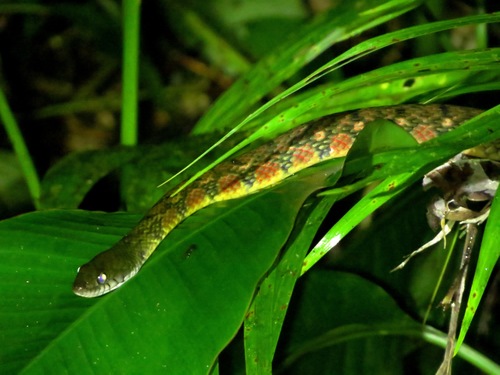

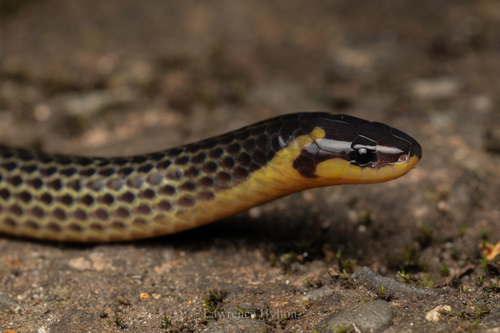
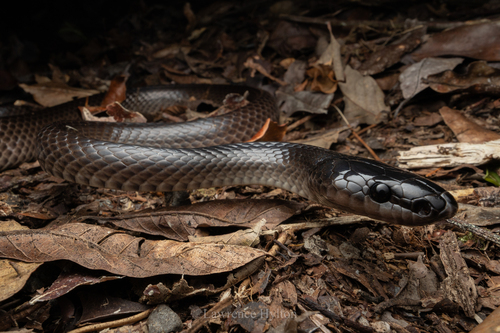
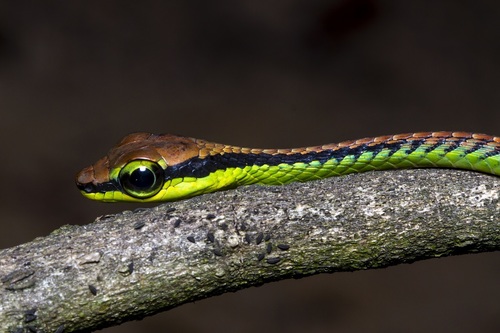
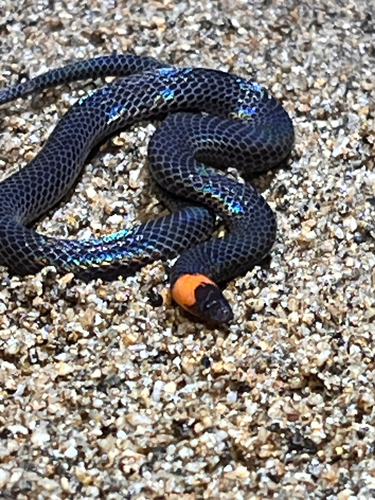
Triangle Keelback

Triangle Keelback

Xenochrophis trianguligerus

Silhouette: Alex Slavenko · PhyloPic

LCLeast ConcernNTVUENCR
Daily sighting probability ~10% · With luck
at Kinabalu Park

In 3 days ~30% in a week ~60%

9 Verified sightings at Kinabalu Park From 2019 to 2026
68 In all 6 parks
October Best month
☀️ Diurnal When it's spotted

About the Triangle Keelback

The triangle keelback (Xenochrophis trianguligerus) is a species of snake found in Brunei Darussalam, Burma (Myanmar), Cambodia, India (Nicobar Islands; Arunachal Pradesh (Deban - Changlang district)), Indonesia (Nias, Mentawai, Sumatra, Laos, Malaysia (Malaya and East Malaysia), Singapore, Thailand, and Vietnam.

The type locality is Java. Friedrich Boie 1827 Bemerkungen über Merrem's Versuch eines Systems der Amphibien, 1. Lieferung: Ophidier. Isis van Oken, Jena, 20: 508–566. Wikipedia →

Global Distribution

Parks Where Found

# Park Country Daily sighting probability
1 Danum Valley Conservation Area 🇲🇾 Malaysia
~30%
2 Khao Luang National Park 🇹🇭 Thailand
~30%
3 Bako National Park 🇲🇾 Malaysia
~30%
4 Khao Sok National Park 🇹🇭 Thailand
~20%
5 Gunung Leuser National Park 🇮🇩 Indonesia
~20%
6 Kinabalu Park 🇲🇾 Malaysia
~10%

Cities Where Found

# City Country Daily sighting probability
1 Jakarta 🇮🇩 Indonesia
~20%
2 Bandung 🇮🇩 Indonesia
~10%
3 Kuala Lumpur 🇲🇾 Malaysia
~10%

Before you go

What are the chances of seeing a Triangle Keelback in Kinabalu Park?

With luck

About 10% of wildlife watchers report a Triangle Keelback sighting in Kinabalu Park on a given day, based on 9 verified sightings from GBIF citizen-science data from 2019 to 2026. It is the 47th most-seen of the 69 reptiles we can rate there. Over three days the chance rises to about 30%, and over a week to about 60%, if each day is a fresh chance.

When is the best time to see a Triangle Keelback in Kinabalu Park?

October

In that month about 30% of wildlife watchers report a Triangle Keelback in Kinabalu Park on a given day, against under 5% in July–September and November–December, the lowest months.

What time of day is best to see a Triangle Keelback?

Between 2 and 5 pm

Across all the parks we cover, that three-hour window holds the most Triangle Keelback sightings with a recorded time, and about 7 in 10 of them come between 6 am and 6 pm: it is a daytime animal.

Which relatives of the Triangle Keelback live in Kinabalu Park?

Same family: Colubridae

The closest relatives of the Triangle Keelback that you can see in Kinabalu Park (family Colubridae, Colubrid Snakes) are Schmidt's Reed Snake (about 40%), Lined Reed Snake (about 30%) and Sarawak Keelback (about 30%), with each one's daily chance of a sighting.

Where does the Triangle Keelback sighting chance come from?

GBIF citizen-science records

It is estimated from how often the Triangle Keelback is recorded against all the reptiles logged in Kinabalu Park (9 verified sightings from 2019 to 2026), calibrated against known sighting rates. Figures are rounded to the nearest 10% because citizen-science data supports honest approximations, not decimals, and months with records from fewer than five people show "—". How it works.

← Back to Kinabalu Park