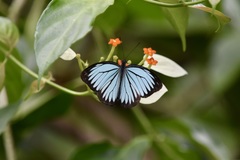
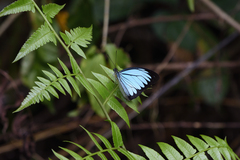
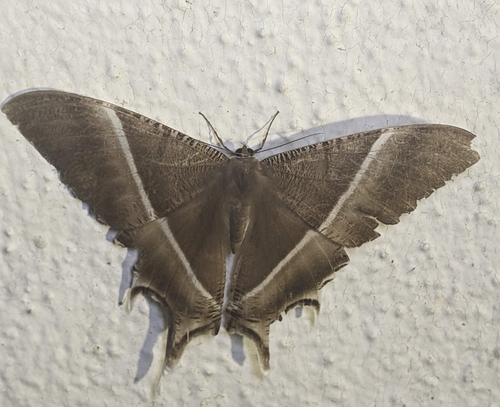
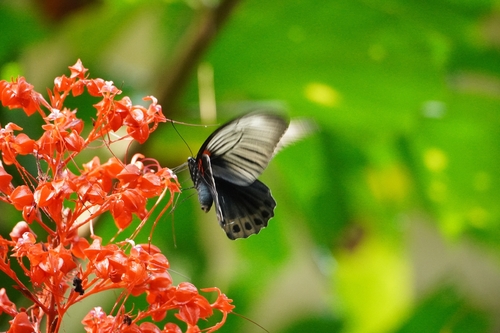
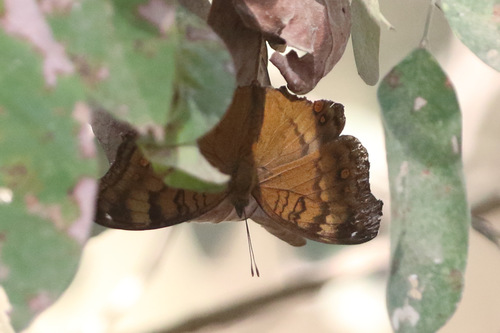
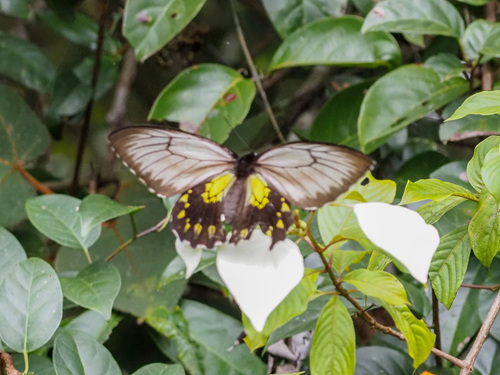
Wanderer
Daily sighting probability ~10% · With luck
at Kinabalu Park

In 3 days ~30% in a week ~60%

10 Verified sightings at Kinabalu Park From 2019 to 2026
10 In 1 park
January Best month
☀️ Diurnal When it's spotted

About the Wanderer

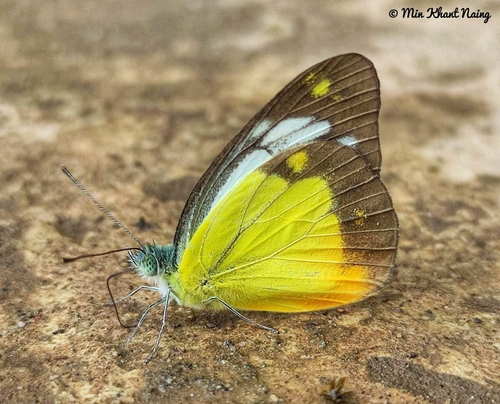
Pareronia valeria, the common wanderer or Malayan wanderer, is a medium-sized butterfly of the family Pieridae, that is, the yellows and whites, and is found in India and Southeast Asia. The butterfly found in India is sometimes considered as a separate species, Pareronia hippia.

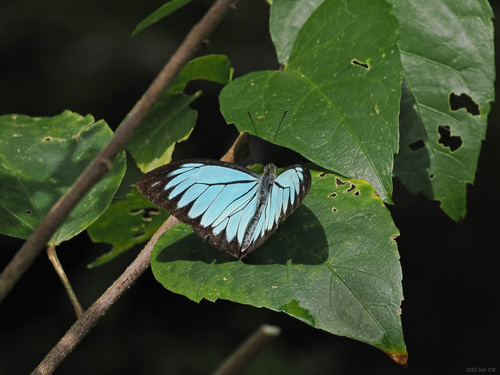
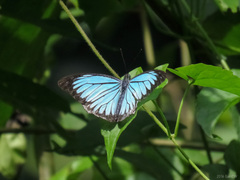
Male upperside: ground colour a clear pale blue of a much deeper tint than in P. avatar, Moore; all the veins defined with black. Forewing: costa broadly, apex and terminal margin very broadly black, this black on the termen narrowed towards the tornus, and traversed by a transverse subterminal series of bluish-white spots that are variable in number; the spot in interspace 3 shifted inwards; sometimes the posterior two spots of the series are all but joined onto the streaks of the ground colour between the veins. Hindwing: dorsal and costal margins broadly whitish: terminal margin broadly black, especially at apex, the black area covered, except at the tornus, with specialised opaque-looking scales. Underside: paler blue, the terminal margins of the wings obscurely fuscous, traversed by a subterminal, very indistinct, transverse series of whitish lunulated spots. Forewing: the veins more... Wikipedia →
Global Distribution

Parks Where Found

# Park Country Daily sighting probability
1 Kinabalu Park 🇲🇾 Malaysia
~10%

More parks will be added in future updates.

Before you go

What are the chances of seeing a Wanderer in Kinabalu Park?

With luck

About 10% of wildlife watchers report a Wanderer sighting in Kinabalu Park on a given day, based on 10 verified sightings from GBIF citizen-science data from 2019 to 2026. It is the 108th most-seen of the 297 insects we can rate there. Over three days the chance rises to about 30%, and over a week to about 60%, if each day is a fresh chance.

When is the best time to see a Wanderer in Kinabalu Park?

January

In that month about 30% of wildlife watchers report a Wanderer in Kinabalu Park on a given day, against under 5% in March–June, August–September and November–December, the lowest months.

What time of day is best to see a Wanderer?

Between 10 am and 1 pm

Across all the parks we cover, that three-hour window holds the most Wanderer sightings with a recorded time, and about 9 in 10 of them come between 6 am and 6 pm: it is a daytime animal.

Where else can you see a Wanderer?

Only Kinabalu Park, in our data

Kinabalu Park is the only park on Wallace's Line with enough records to rate Wanderer sightings: about 10% of wildlife watchers there report one on a given day.

Which relatives of the Wanderer live in Kinabalu Park?

Same family: Pieridae

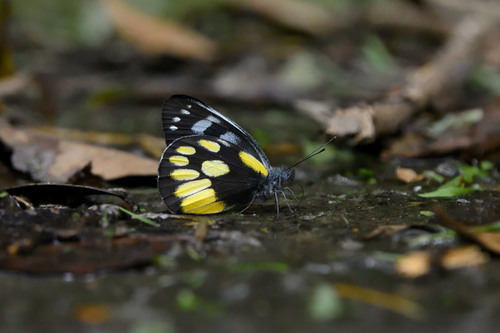
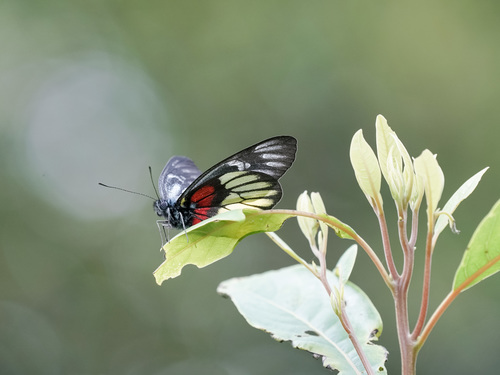
The closest relatives of the Wanderer that you can see in Kinabalu Park (family Pieridae, Whites, Yellows, and Sulphurs) are Kinabalu Jezebel (about 10%), Malayan Jezebel (about 10%) and Orange Gull (about 10%), with each one's daily chance of a sighting.

Where does the Wanderer sighting chance come from?

GBIF citizen-science records

It is estimated from how often the Wanderer is recorded against all the insects logged in Kinabalu Park (10 verified sightings from 2019 to 2026), calibrated against known sighting rates. Figures are rounded to the nearest 10% because citizen-science data supports honest approximations, not decimals, and months with records from fewer than five people show "—". How it works.

← Back to Kinabalu Park