Blue Bush Dart

Blue Bush Dart

Copera vittata

Daily sighting probability ~10% · With luck
at Kinabatangan Wildlife Sanctuary

In 3 days ~30% in a week ~60%

10 Verified sightings at Kinabatangan Wildlife Sanctuary From 2019 to 2026
71 In all 6 parks
January Best month
☀️ Diurnal When it's spotted

About the Blue Bush Dart

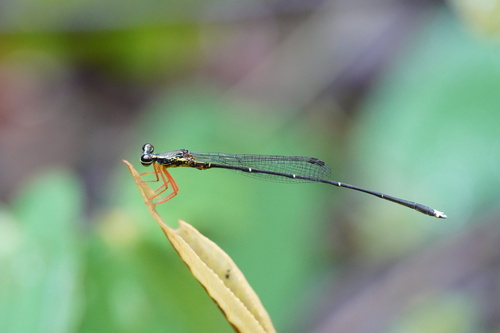
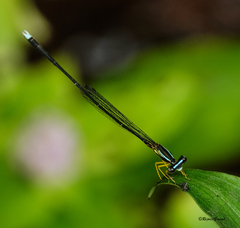
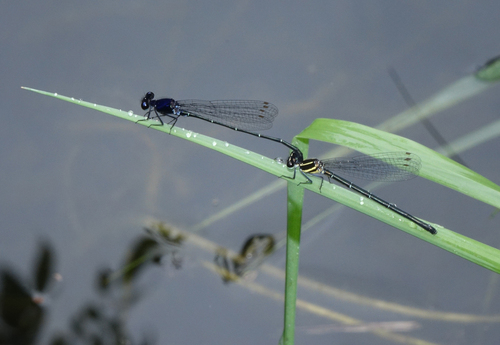
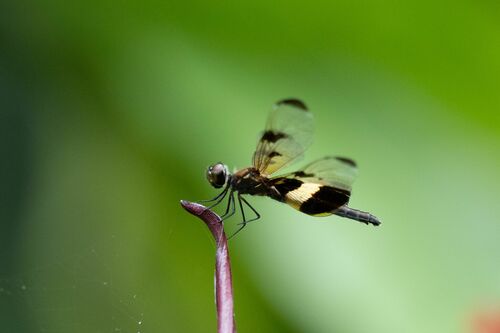
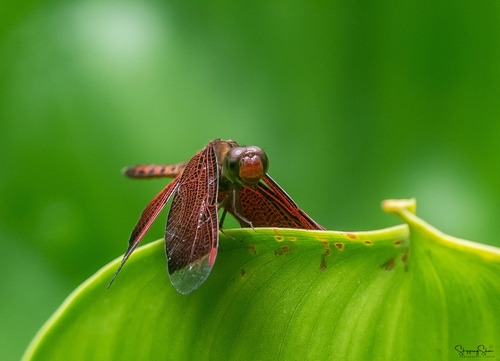
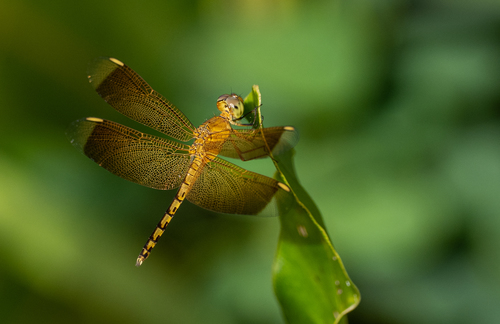
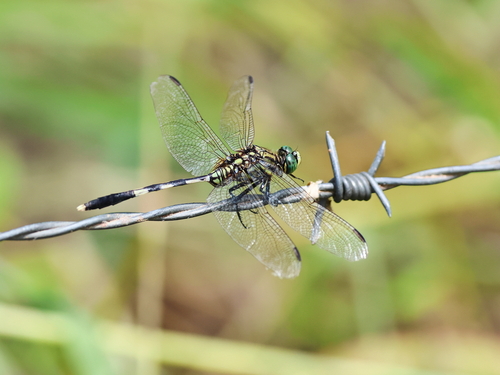
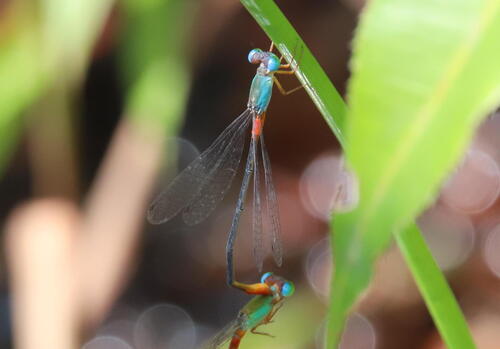
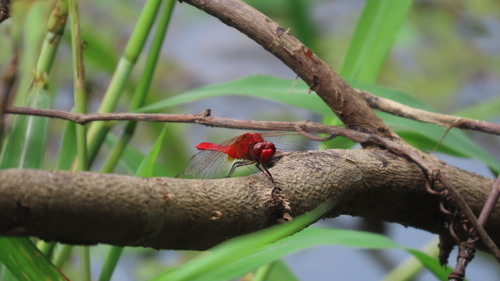
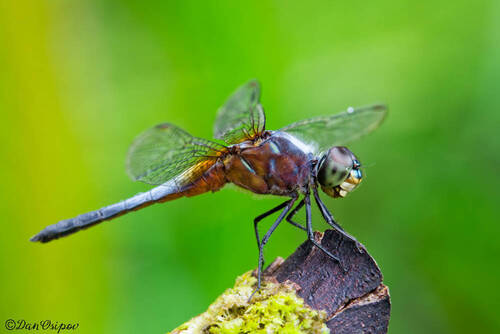
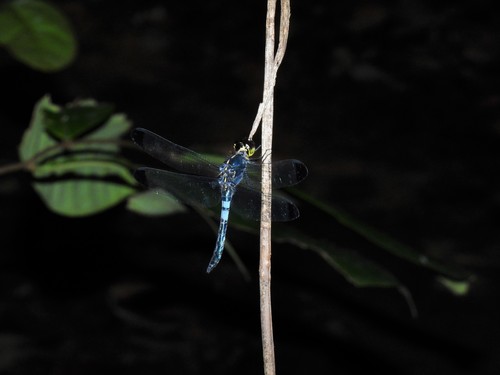
Copera vittata is a species of damselfly in the family Platycnemididae. It is native to Asia, where it is widely distributed from India to Indonesia. It is known commonly as the blue bush dart. There are several subspecies and it may represent a species complex.

It is a medium-sized damselfly with brown-capped yellow eyes with a narrow equatorial black band encircling them. Its thorax is black on dorsum with a narrow bluish-yellow humeral stripe, split in two and overlap each other. This stripe is followed by a broad black fascia, on the middle of the lateral side of the thorax, peppered with small pale yellow spots. The lateral sides beyond this is yellow, marked with an irregular black stripe on the anterior border of postero-lateral suture, and another one on the middle portion of metepimeron. Abdomen is black on dorsal half up to segment 8; paler on ventral half and with bluish-white basal annules. Segment 9 is black on basal half and bluish-white on apical half. Segment 10 is bluish-white.

Anal appendages are pale blue or creamy white. The superiors are as long as segment 10, conical, and tapered at apices. The inferiors nearly twice the length of... Wikipedia →

Global Distribution

Parks Where Found

# Park Country Daily sighting probability
1 Khao Yai National Park 🇹🇭 Thailand
~20%
2 Danum Valley Conservation Area 🇲🇾 Malaysia
~10%
3 Khao Sok National Park 🇹🇭 Thailand
~10%
4 Kinabatangan Wildlife Sanctuary 🇲🇾 Malaysia
~10%
5 Sepilok 🇲🇾 Malaysia
~10%
6 Kaeng Krachan National Park 🇹🇭 Thailand
~10%

Cities Where Found

# City Country Daily sighting probability
1 Kozhikode 🇮🇳 India
~10%
2 Singapore 🇸🇬 Singapore
<5%

Before you go

What are the chances of seeing a Blue Bush Dart in Kinabatangan Wildlife Sanctuary?

With luck

About 10% of wildlife watchers report a Blue Bush Dart sighting in Kinabatangan Wildlife Sanctuary on a given day, based on 10 verified sightings from GBIF citizen-science data from 2019 to 2026. It is the 36th most-seen of the 57 insects we can rate there. Over three days the chance rises to about 30%, and over a week to about 60%, if each day is a fresh chance.

When is the best time to see a Blue Bush Dart in Kinabatangan Wildlife Sanctuary?

January

In that month about 30% of wildlife watchers report a Blue Bush Dart in Kinabatangan Wildlife Sanctuary on a given day, against under 5% in April, July and September–December, the lowest months.

What time of day is best to see a Blue Bush Dart?

Between 9 am and noon

Across all the parks we cover, that three-hour window holds the most Blue Bush Dart sightings with a recorded time, and about 9 in 10 of them come between 6 am and 6 pm: it is a daytime animal.

Where does the Blue Bush Dart sighting chance come from?

GBIF citizen-science records

It is estimated from how often the Blue Bush Dart is recorded against all the insects logged in Kinabatangan Wildlife Sanctuary (10 verified sightings from 2019 to 2026), calibrated against known sighting rates. Figures are rounded to the nearest 10% because citizen-science data supports honest approximations, not decimals, and months with records from fewer than five people show "—". How it works.

← Back to Kinabatangan Wildlife Sanctuary