














All 4 in 3 days here: ~30%
Southeast Asia, Malaysia 957 spp. recorded
Sepilok is a protected rainforest reserve situated in Sabah, Malaysian Borneo, renowned globally for its lowland dipterocarp jungle and dense canopies. Visitors walk along elevated wooden boardwalks and damp earth trails winding through towering trees and thick tropical vegetation.
5.851° N 117.929° E
🦜 Nature

466 Species sighted
84,693 Verified sightings From 2019 to 2026
Oct Best month
⭐ Iconic Species
📊 Most Spotted
⭐ Iconic Species
📊 Most Spotted
⭐ Iconic Species
📊 Most Spotted
📊 Most Spotted
📊 Most Spotted
📊 Most Spotted
⭐ Iconic Species
🌙 Most active after dark
+ 688 more species with insufficient data
Challenges you can complete here



All 4 in 3 days here: ~30%
Recent sightings in Sepilok
LIVEiNaturalistSighting Calendar
How many species you'd see in a day
61Jan
54Feb
58Mar
56Apr
49May
59Jun
61Jul
56Aug
54Sep
64Oct
51Nov
52Dec
Sighting Zones
Warmer areas are where all species together are recorded most often.
-
Rainforest Discovery Center
Daily sight. prob.vs avg North Philippine Temple Pitviper~80%≈
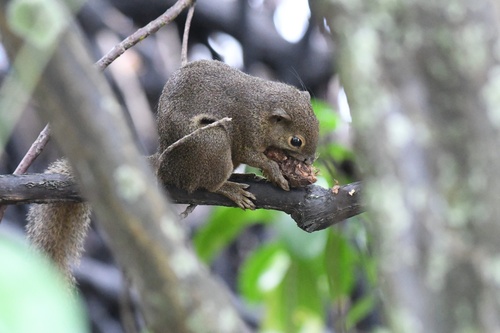
 Prevost's Squirrel~80%+10%
 Red Giant Flying Squirrel~70%+10%
 Borneo Skink~50%+10%
 Common Water Monitor~50%+10%
 Bartlett’s Flying Dragon~50%+10%
 Rough Mabuya~50%+10%
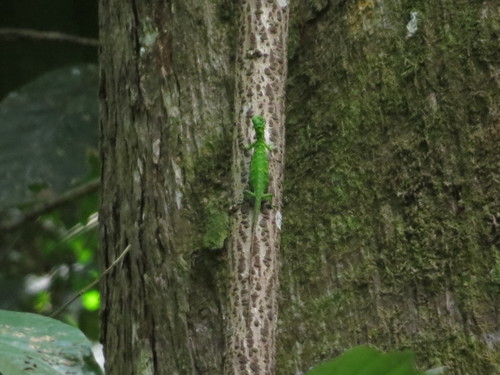
 Green Crested Lizard~40%≈
 Ashy Tailorbird~40%-20%
 Black Hornbill~40%-20%
 Flat-tailed House Gecko~40%≈
 Borneo Forest Dragon~40%+10%
🏕️ Experience
Essentials
Entrance
Paid
Tourism
Low
Typical stay
2–3
daysTrails
Easy
World Heritage
No
Climate
Temp °C Rain mm
JanFebMarAprMayJunJulAugSepOctNovDec
0.0 Good
Wallace's Line Score
How good is this park for seeing wildlife? 🦜
Biodiversity
Very goodHow rich is the wildlife?
4.3
Species by taxon
🦅 Birds 527
🐒 Mammals 202
🦎 Reptiles 189
🐸 Amphibians 39
957 Total Species
828 Global average across 316 parks
106 Threatened 52 Endemic
🔭
Sighting
GoodHow likely to see animals?
3.1
🎯
Top-12 Avg Probability
57% 📊
Coverage (242 species at ≥5% of 957 in the inventory)
25% 🔀
Taxon variety in top 12 (9 bird, 2 mammal, 1 reptile)
54% 🔭
Species per 10 outings (distinct species a visitor would meet over 10 outings — effort held equal across parks)
128 🌟
Iconic-group species (≥15%) (every species from the 19 iconic groups — monkeys, cats, toucans, macaws, sloths, crocodilians… — not just the 4 highlighted above)
15 ⭐
High-prob species (>40%)
29 🏕️
Experience
Very goodHow easy and pleasant is the visit?
4.0
Climate Mixed Medium
Entrance Paid Low
Tourism Medium Medium
Trails Easy High
World Heritage No —
What visitors say
There are many varieties of squirrel in Borneo, we saw a small selection, none of whom were anywhere near as lovely as our red squirrels, but it was still a delight to see them.
While it initially felt somewhat touristy—we sat in an air-conditioned room with a glass wall, watching orangutans come for food laid out by rangers—it was still magical to see these creatures up close, especially two mother-baby pairs.
Here’s the lodge and restaurant: And this was our villa: Right out front we saw our first unusual bird, an Oriental Pied Hornbill.
During my Malaysia trip research, I knew that catching a glimpse of those endangered Borneo located orangutans had to be done!
Before you go
What animals can you see in Sepilok?
957 species
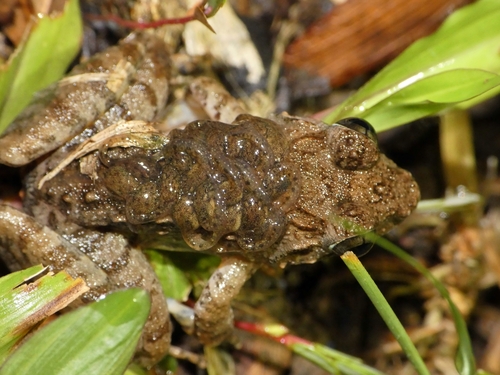
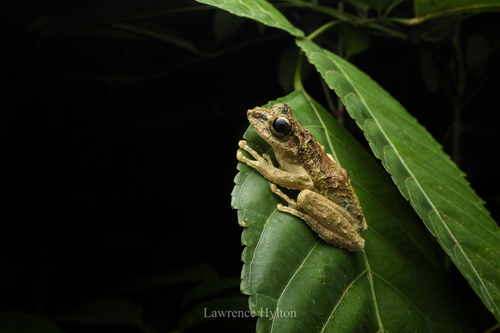
Sepilok has 957 recorded vertebrate species. The ones wildlife watchers report most often on a given day are North Philippine Temple Pitviper (about 80%), Prevost's Squirrel (about 70%), Black Hornbill (about 60%), Ashy Tailorbird (about 60%) and Red Giant Flying Squirrel (about 60%). Among amphibians, the most-seen is Common Indian Toad (about 40%).
When is the best time to visit Sepilok for wildlife?
February–March, June–August, October and December
In those months the park's 12 most-seen species average about 60% on a given day, against about 50% in January, April–May, September and November.
Can you see a Bornean Orangutan in Sepilok?
Yes
About 50% of wildlife watchers report a Bornean Orangutan sighting in Sepilok on a given day, based on 392 verified sightings from GBIF citizen-science data from 2019 to 2026. The best time is November (about 60%).
Can you see a Proboscis Monkey in Sepilok?
Yes
About 40% of wildlife watchers report a Proboscis Monkey sighting in Sepilok on a given day, based on 97 verified sightings from GBIF citizen-science data from 2019 to 2026. The best time is April–October and December–January (about 40%).
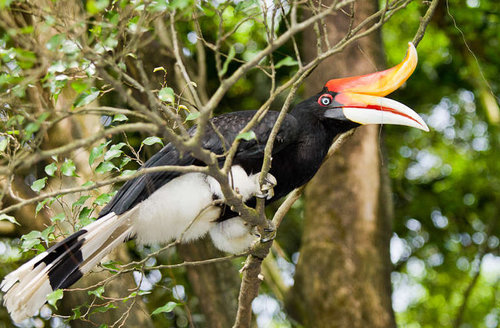
Can you see a Rhinoceros Hornbill in Sepilok?
Yes
About 40% of wildlife watchers report a Rhinoceros Hornbill sighting in Sepilok on a given day, based on 1,241 verified sightings from GBIF citizen-science data from 2019 to 2026. The best time is July–August and December (about 60%).
Can you see a Wallace's Hawk-Eagle in Sepilok?
Yes
About 50% of wildlife watchers report a Wallace's Hawk-Eagle sighting in Sepilok on a given day, based on 1,339 verified sightings from GBIF citizen-science data from 2019 to 2026. The best time is July (about 60%).
Is Sepilok good for wildlife watching?
3.5 out of 5
On the Wallace's Line Score, Sepilok rates 3.5/5: 200th of 316 parks worldwide and 18th in Southeast Asia. 38 of its species are reported by about 40% or more of wildlife watchers on a given day.


