




Completed

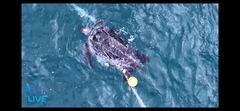


Leatherback Sea Turtle
Dermochelys coriacea
Silhouette: Neil Kelley · PhyloPic
- KingdomAnimalia (Animals)
- PhylumChordata (Chordates)
- ClassTestudines
- FamilyDermochelyidae (Leatherback Sea Turtles)
- GenusDermochelys (Leatherback Sea Turtles)
- SpeciesDermochelys coriacea (Leatherback Sea Turtle)
In 3 days ~10% in a week ~30%
13 Verified sightings at La Amistad International Park (Panama) From 2019 to 2026
65 In all 3 parks
May Best month
☀️🌙 Day & Night When it's spotted
About the Leatherback Sea Turtle
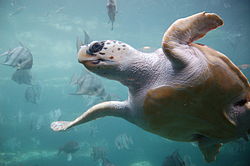
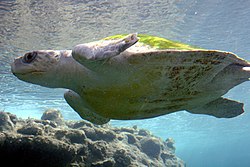
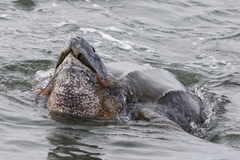
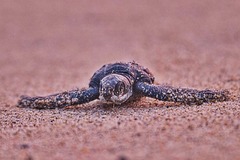
The leatherback sea turtle (Dermochelys coriacea), sometimes called the lute turtle, leathery turtle or simply the luth, is a large species of sea turtle. The largest of all living turtles and the heaviest non-crocodilian reptile, it reaches lengths of up to 2.7 metres (8 ft 10 in) and weights of 500 kilograms (1,100 lb). It is the only living species in the genus Dermochelys and family Dermochelyidae. It can easily be differentiated from other modern sea turtles by its lack of a bony shell; instead, its carapace is covered by oily flesh and flexible, leather-like skin, for which it is named. Leatherback turtles have a global range, although there are multiple distinct subpopulations. The species as a whole is considered vulnerable, and some of its subpopulations are critically endangered.
Dermochelys coriacea is the only species in genus Dermochelys. The genus, in turn, contains the only extant member of the family Dermochelyidae. Domenico Agostino Vandelli named the species first in 1761 as Testudo coriacea after an animal captured at Ostia and donated to the University of Padua by Pope Clement XIII. In 1816, French zoologist Henri Blainville... Wikipedia →
Sounds
Recording0:22
Trinidad & Tobago · 2025
© Peter Bregler · iNaturalist · CC BY-NC 4.0
Recent sightings of Leatherback Sea Turtle in La Amistad International Park (Panama)
LIVEiNaturalistGlobal Distribution
Parks Where Found
| # | Park | Country | Daily sighting probability |
|---|---|---|---|
| 1 | Ostional Wildlife Refuge | 🇨🇷 Costa Rica | |
| 2 | Tortuguero National Park | 🇨🇷 Costa Rica | |
| 3 | La Amistad International Park (Panama) | 🇵🇦 Panama |
Zoos & Centres Where Found
| # | Zoo / Centre | Country | |
|---|---|---|---|
| 1 | Garden Route Safari Camp | 🇿🇦 South Africa | |
| 2 | Taipei Zoo | 🇹🇼 Taiwan | |
| 3 | A.Y. Reyes Zoological and Botanical Garden | 🇵🇭 Philippines | |
| 4 | SEA LIFE Orlando Aquarium | 🇺🇸 United States | |
| 5 | Aquário de Ubatuba | 🇧🇷 Brazil |
Closest Relatives at La Amistad International Park (Panama)
No species of the same family or order lives in La Amistad International Park (Panama), so these are its closest relatives here: other reptiles.




Before you go
What are the chances of seeing a Leatherback Sea Turtle in La Amistad International Park (Panama)?
Rare
Under 5% of wildlife watchers report a Leatherback Sea Turtle sighting in La Amistad International Park (Panama) on a given day, based on 13 verified sightings from GBIF citizen-science data from 2019 to 2026. It is the 57th most-seen of the 63 reptiles we can rate there. Over three days the chance rises to about 10%, and over a week to about 30%, if each day is a fresh chance.
When is the best time to see a Leatherback Sea Turtle in La Amistad International Park (Panama)?
April–July and November
In those months about 10% of wildlife watchers report a Leatherback Sea Turtle in La Amistad International Park (Panama) on a given day, against under 5% in August–October and December–March, the lowest months.
What time of day is best to see a Leatherback Sea Turtle?
Between 2 and 5 pm
Across all the parks we cover, that three-hour window holds the most Leatherback Sea Turtle sightings with a recorded time, and about 6 in 10 of them come between 6 am and 6 pm: it is seen both by day and at night.
Is La Amistad International Park (Panama) the best place to see a Leatherback Sea Turtle?
3rd of 3
Of the 3 parks where we can rate Leatherback Sea Turtle sightings, La Amistad International Park (Panama) ranks 3rd at under 5%. The best odds are in Ostional Wildlife Refuge (Costa Rica, about 20%) and Tortuguero National Park (Costa Rica, about 20%).
Where does the Leatherback Sea Turtle sighting chance come from?
GBIF citizen-science records
It is estimated from how often the Leatherback Sea Turtle is recorded against all the reptiles logged in La Amistad International Park (Panama) (13 verified sightings from 2019 to 2026), calibrated against known sighting rates. Figures are rounded to the nearest 10% because citizen-science data supports honest approximations, not decimals, and months with records from fewer than five people show "—". How it works.
