


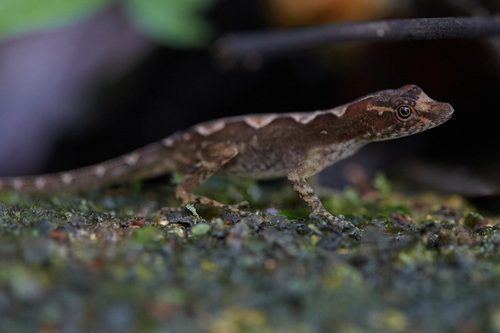


All 2 in 3 days here: ~80%
Tortuguero National Park
🇨🇷 Costa Rica
Caribbean Coast, Costa Rica 1144 spp. recorded
Tortuguero is the most important sea turtle nesting site in the Western Hemisphere, protecting 35 km of Caribbean beach where green, hawksbill, leatherback, and loggerhead turtles nest annually. The park's labyrinth of natural canals and lagoons — often called the "Amazon of Costa Rica" — shelters an extraordinary diversity of waterbirds, caimans, river otters, manatees, and three monkey species.
10.490° N 83.370° W
🦜 Nature

573 Species sighted
133,273 Verified sightings From 2019 to 2026
Feb Best month
⭐ Iconic Species
📊 Most Spotted
⭐ Iconic Species
📊 Most Spotted
⭐ Iconic Species
📊 Most Spotted
⭐ Iconic Species
📊 Most Spotted
📊 Most Spotted
📊 Most Spotted
🌙 Most active after dark
+ 585 more species with insufficient data
Challenges you can complete here


All 3 in 3 days here: ~70%


All 2 in 3 days here: ~20%


All 4 in 3 days here: ~20%
Recent sightings in Tortuguero National Park
LIVEiNaturalistSighting Calendar
How many species you'd see in a day
69Jan
71Feb
66Mar
66Apr
58May
64Jun
58Jul
57Aug
61Sep
64Oct
60Nov
60Dec
Sighting Zones
Warmer areas are where all species together are recorded most often.
-
Alrededores 4 Esquinas
Daily sight. prob.vs avg Green Iguana~90%≈
 Common Caiman~80%≈
 Basiisk Verde~80%≈
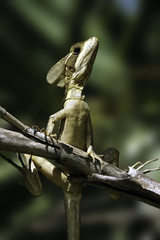 Brown Basilisk~80%+10%
 Strawberry Poison-dart Frog~70%≈
 Red-eyed Treefrog~70%+10%
 Mantled Howler Monkey~70%≈
 Border Anole~70%+10%
 Central American White-faced Capuchin~60%+10%
 Hoffmann's Two-toed Sloth~60%+10%
 Brown-throated Sloth~60%+10%
 Middle American Ameiva~60%+10%
-
Tortuguero Canal
Daily sight. prob.vs avg -
Río La Suerte
Daily sight. prob.vs avg -
Caño Palma
Daily sight. prob.vs avg -
La Pavona (Tortuguero boat dock on Rio Suerte)
Daily sight. prob.vs avg- Green Iguana~90%+10%
 Central American Spider Monkey~90%+10%
- Basiisk Verde~70%-10%
- Common Caiman~60%-20%
 Proboscis Bat~50%+10%
 Green Sea Turtle~50%+20%
 American Crocodile~50%-10%
 Black River Turtle~50%+10%
 Black Vulture~50%-30%
- Central American White-faced Capuchin~40%-10%
 Turkey Vulture~40%-20%
 Tropical Kingbird~40%-20%


🏕️ Experience
Essentials
Entrance
Paid
Tourism
High
Typical stay
1–2
daysTrails
Easy
World Heritage
No
Climate
Temp °C Rain mm
JanFebMarAprMayJunJulAugSepOctNovDec
0.0 World-class
Wallace's Line Score
How good is this park for seeing wildlife? 🦜
Biodiversity
Very goodHow rich is the wildlife?
4.3
Species by taxon
🦅 Birds 732
🐒 Mammals 219
🦎 Reptiles 129
🐸 Amphibians 64
1144 Total Species
828 Global average across 316 parks
47 Threatened 69 Endemic
🔭
Sighting
ExcellentHow likely to see animals?
4.7
🎯
Top-12 Avg Probability
73% 📊
Coverage (251 species at ≥5% of 1144 in the inventory)
22% 🔀
Taxon variety in top 12 (5 bird, 4 reptile, 2 mammal, 1 amphibian)
91% 🔭
Species per 10 outings (distinct species a visitor would meet over 10 outings — effort held equal across parks)
150 🌟
Iconic-group species (≥15%) (every species from the 19 iconic groups — monkeys, cats, toucans, macaws, sloths, crocodilians… — not just the 4 highlighted above)
23 ⭐
High-prob species (>40%)
42 🏕️
Experience
Very goodHow easy and pleasant is the visit?
3.6
Climate Mixed Medium
Entrance Paid Low
Tourism High Low
Trails Easy High
World Heritage No —
What visitors say
Our tour took in the main sites of the town including a walk down the beach to spot monkeys, a variety of birds, although despite searching, no sloths!
We can more perceive than see or photograph the various species of monkeys and sloths in the high tree regions, but the boat ride through the tropical forest's water labyrinth has its own vibe, and we do see quite a number of birds and reptiles.
Among the White Throated Capuchin Monkeys we saw Kites flying – apparently they are in a semi-symbiotic relationship with the Capuchins, feeding on the insects that flee from the monkeys.
We saw all sorts of herons (tiger, green backed boat-billed, little blue), one two- and one three-toed sloths, more plumed basilisks, frigate birds, ospreys, black river turtles, white-faced capuchin monkeys, poison dart frogs (below), and spectacle caimans (above), a smaller cousin of the crocodile.
Before you go
What animals can you see in Tortuguero National Park?
1,144 species
Tortuguero National Park has 1,144 recorded vertebrate species. The ones wildlife watchers report most often on a given day are Green Iguana (about 80%), Common Caiman (about 80%), Basiisk Verde (about 80%), Montezuma Oropendola (about 80%) and Strawberry Poison-dart Frog (about 80%). Among mammals, the most-seen is Central American Spider Monkey (about 70%).
When is the best time to visit Tortuguero National Park for wildlife?
March
In that month the park's 12 most-seen species average about 80% on a given day, against about 70% in April to February. That is one of Tortuguero National Park's driest months, with about 160 mm of rain against 540 mm in July.
Can you see a Green Sea Turtle in Tortuguero National Park?
Yes
About 30% of wildlife watchers report a Green Sea Turtle sighting in Tortuguero National Park on a given day, based on 65 verified sightings from GBIF citizen-science data from 2019 to 2026. The best time is October (about 70%).
Can you see a Central American Spider Monkey in Tortuguero National Park?
Yes
About 70% of wildlife watchers report a Central American Spider Monkey sighting in Tortuguero National Park on a given day, based on 476 verified sightings from GBIF citizen-science data from 2019 to 2026. The best time is February–April, July, September and November–December (about 80%).
Can you see a Common Caiman in Tortuguero National Park?
Yes
About 80% of wildlife watchers report a Common Caiman sighting in Tortuguero National Park on a given day, based on 496 verified sightings from GBIF citizen-science data from 2019 to 2026. The best time is August (about 90%).
Can you see a Great Green Macaw in Tortuguero National Park?
Yes
About 60% of wildlife watchers report a Great Green Macaw sighting in Tortuguero National Park on a given day, based on 247 verified sightings from GBIF citizen-science data from 2019 to 2026. The best time is April and July (about 70%).
Where in Tortuguero National Park is wildlife easiest to see?
Around Alrededores 4 Esquinas
The richest sighting zone is around Alrededores 4 Esquinas, followed by Tortuguero Canal and Río La Suerte, ranked by how many of the park's headline animals visitors can expect to see in each. See the zones on the map.
Is Tortuguero National Park good for wildlife watching?
4.5 out of 5
On the Wallace's Line Score, Tortuguero National Park rates 4.5/5: 49th of 316 parks worldwide and 2nd in Central America. 56 of its species are reported by about 40% or more of wildlife watchers on a given day.


