


Completed

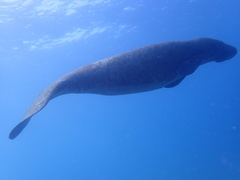
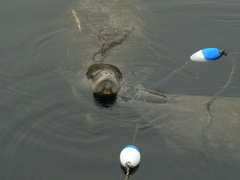
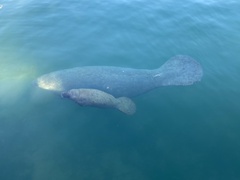


West Indian Manatee
Trichechus manatus
Silhouette: Zimices (Julián Bayona) · PhyloPic
- KingdomAnimalia (Animals)
- PhylumChordata (Chordates)
- ClassMammalia (Mammals)
- OrderSirenia (Sirenians)
- FamilyTrichechidae (Manatees)
- GenusTrichechus (Manatees)
- SpeciesTrichechus manatus (West Indian Manatee)
In 3 days ~20% in a week ~40%
13 Verified sightings at La Amistad International Park (Panama) From 2019 to 2026
2,110 In all 5 parks
February Best month
☀️ Diurnal When it's spotted
About the West Indian Manatee
The West Indian manatee (Trichechus manatus), also known as the North American manatee, is a large, aquatic mammal native to warm coastal areas of the Caribbean, from the Eastern United States to northern Brazil. Living alone or in herds, it feeds on underwater plants and uses its whiskers to navigate. The West Indian manatee is the largest living member of the sirenians (order Sirenia), a group of large aquatic mammals that includes the dugong, other manatees, and the extinct Steller's sea cow.
Manatees are herbivores, have developed vocal communication abilities, and are covered in highly sensitive whiskers (called vibrissae) that are used for feeding and navigation. In breeding season, several males form mating herds around an individual female; on average, one calf is born to a female manatee every two to three years.
In the 1970s, the West Indian manatee was listed as endangered in the United States under the Endangered Species Act, when there were only several hundred left. The decades since have witnessed significant efforts to protect this species from natural and human threats, particularly collisions with watercraft. In 2017, the United States changed the classification to threatened, citing a substantial increase in the total population.
In 2025, a petition began by the U.S. Fish and Wildlife Service to reinstate them as endangered. Wikipedia →
Recent sightings of West Indian Manatee in La Amistad International Park (Panama)
LIVEiNaturalistGlobal Distribution
Parks Where Found
| # | Park | Country | Daily sighting probability |
|---|---|---|---|
| 1 | Everglades National Park | 🇺🇸 United States | |
| 2 | Merritt Island National Wildlife Refuge | 🇺🇸 United States | |
| 3 | Sian Ka'an Biosphere Reserve | 🇲🇽 Mexico | |
| 4 | Big Cypress National Preserve | 🇺🇸 United States | |
| 5 | La Amistad International Park (Panama) | 🇵🇦 Panama |
Zoos & Centres Where Found
Closest Relatives at La Amistad International Park (Panama)
No species of the same family or order lives in La Amistad International Park (Panama), so these are its closest relatives here: other mammals.


Before you go
What are the chances of seeing a West Indian Manatee in La Amistad International Park (Panama)?
With luck
About 10% of wildlife watchers report a West Indian Manatee sighting in La Amistad International Park (Panama) on a given day, based on 13 verified sightings from GBIF citizen-science data from 2019 to 2026. It is the 18th most-seen of the 28 mammals we can rate there. Over three days the chance rises to about 20%, and over a week to about 40%, if each day is a fresh chance.
When is the best time to see a West Indian Manatee in La Amistad International Park (Panama)?
February–May, August–September and November
In those months about 10% of wildlife watchers report a West Indian Manatee in La Amistad International Park (Panama) on a given day, against under 5% in June–July, October and December–January, the lowest months.
What time of day is best to see a West Indian Manatee?
Between 10 am and 1 pm
Across all the parks we cover, that three-hour window holds the most West Indian Manatee sightings with a recorded time, and about 9 in 10 of them come between 6 am and 6 pm: it is a daytime animal.
Is La Amistad International Park (Panama) the best place to see a West Indian Manatee?
5th of 5
Of the 5 parks where we can rate West Indian Manatee sightings, La Amistad International Park (Panama) ranks 5th at about 10%. The best odds are in Everglades National Park (United States, about 60%), Merritt Island National Wildlife Refuge (United States, about 40%) and Sian Ka'an Biosphere Reserve (Mexico, about 30%). All parks ranked.
Where does the West Indian Manatee sighting chance come from?
GBIF citizen-science records
It is estimated from how often the West Indian Manatee is recorded against all the mammals logged in La Amistad International Park (Panama) (13 verified sightings from 2019 to 2026), calibrated against known sighting rates. Figures are rounded to the nearest 10% because citizen-science data supports honest approximations, not decimals, and months with records from fewer than five people show "—". How it works.
