Rufous-collared Robin

Rufous-collared Robin

Turdus rufitorques

Silhouette: Sharon Wegner-Larsen · PhyloPic

LCLeast ConcernNTVUENCR
Daily sighting probability <5% · Rare
at La Tigra National Park

In 3 days <5% in a week ~10%

8 Verified sightings at La Tigra National Park From 2019 to 2026
34 In all 2 parks
December Best month
☀️ Diurnal When it's spotted

About the Rufous-collared Robin

The rufous-collared thrush (Turdus rufitorques) is a species of bird in the family Turdidae, the thrushes and allies. It is found in El Salvador, Guatemala, Honduras, and Mexico. Some taxonomic systems call it the rufous-collared robin.

The rufous-collared thrush was originally described in 1844 as Turdus (Merula) rufitorques. The rufous-collared thrush is monotypic. Its closest relative appears to be the American robin (T. migratorius); a 2026 genetic study has suggested it may even be genetically embedded within American robin populations.

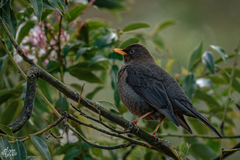
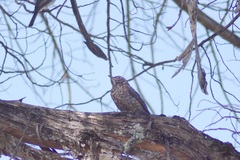
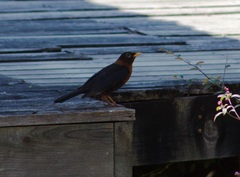
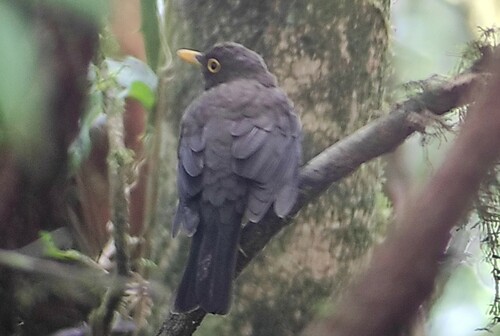
The rufous-collared thrush is 23 to 25.5 cm (9.1 to 10 in) long; three individuals weighed 70 to 74 g (2.5 to 2.6 oz). The species is sexually dimorphic. Adult males have a mostly black head with a whitish chin and a throat streaked with black and cinnamon-rufous. They have a wide collar of cinnamon-rufous or chestnut-rufous on the nape and sides of the neck that in front extends to include the breast. Their flanks, belly, and undertail coverts are black. Adult females have a pattern similar to the male's but with lighter and duller colors. Their crown is brownish with darker streaks. The rest of... Wikipedia →

Sounds

Call0:21

Guatemala · 2024

© Peter Boesman · XC880361 · CC BY-NC-ND 4.0

Song1:03

Guatemala · 2013

© Pablo Bolaños Sittler · XC134128 · CC BY-NC-SA 3.0

Call0:44

Honduras · 2014

© Mayron McKewy Mejía · XC207206 · CC BY-NC-SA 4.0

Global Distribution

Parks Where Found

# Park Country Daily sighting probability
1 Celaque National Park 🇭🇳 Honduras
~10%
2 La Tigra National Park 🇭🇳 Honduras
<5%

Cities Where Found

# City Country Daily sighting probability
1 Guatemala City 🇬🇹 Guatemala
~10%

Before you go

What are the chances of seeing a Rufous-collared Robin in La Tigra National Park?

Rare

Under 5% of wildlife watchers report a Rufous-collared Robin sighting in La Tigra National Park on a given day, based on 8 verified sightings from GBIF citizen-science data from 2019 to 2026. It is the 165th most-seen of the 176 birds we can rate there. Over three days the chance rises to under 5%, and over a week to about 10%, if each day is a fresh chance.

When is the best time to see a Rufous-collared Robin in La Tigra National Park?

April and December

In those months about 10% of wildlife watchers report a Rufous-collared Robin in La Tigra National Park on a given day, against under 5% in January–March and May–November, the lowest months. Those are among La Tigra National Park's driest months, with about 75 mm of rain a month against 260 mm in June.

What time of day is best to see a Rufous-collared Robin?

Between 7 and 10 am

Across all the parks we cover, that three-hour window holds the most Rufous-collared Robin sightings with a recorded time, and about 9 in 10 of them come between 6 am and 6 pm: it is a daytime animal.

Is La Tigra National Park the best place to see a Rufous-collared Robin?

2nd of 2

Of the 2 parks where we can rate Rufous-collared Robin sightings, La Tigra National Park ranks 2nd at under 5%. The best odds are in Celaque National Park (Honduras, about 10%).

Where does the Rufous-collared Robin sighting chance come from?

GBIF citizen-science records

It is estimated from how often the Rufous-collared Robin is recorded against all the birds logged in La Tigra National Park (8 verified sightings from 2019 to 2026), calibrated against known sighting rates. Figures are rounded to the nearest 10% because citizen-science data supports honest approximations, not decimals, and months with records from fewer than five people show "—". How it works.

← Back to La Tigra National Park