Brownish Cracker

Brownish Cracker

Hamadryas iphthime

Daily sighting probability ~10% · With luck
at Lago de Yojoa

In 3 days ~40% in a week ~60%

8 Verified sightings at Lago de Yojoa From 2019 to 2026
8 In 1 park
January Best month
☀️ Diurnal When it's spotted

About the Brownish Cracker

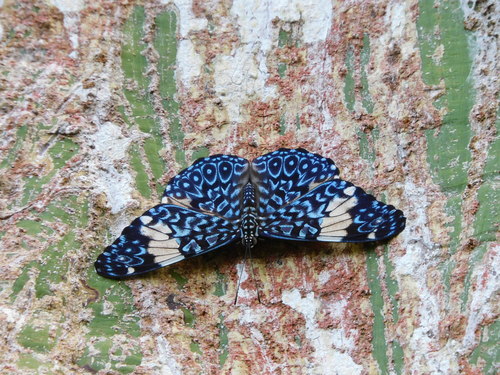
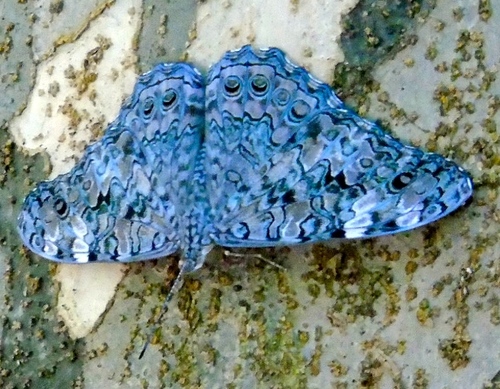
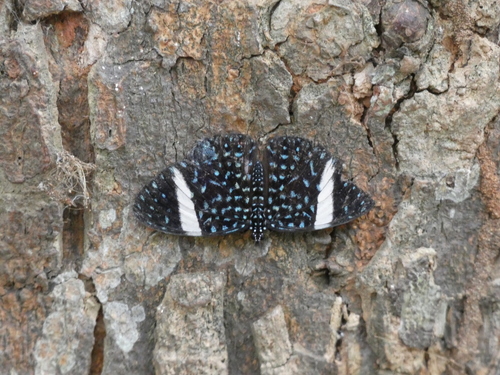
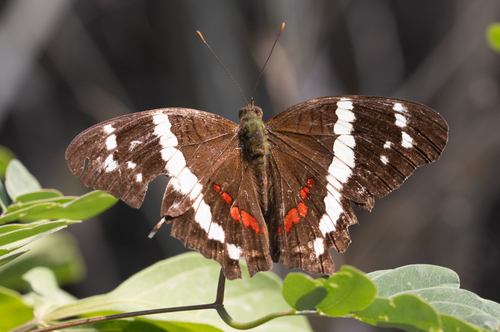
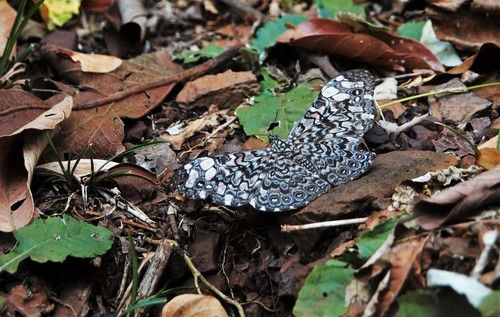
Hamadryas iphthime, the ringless blue cracker or brownish cracker, is a species of cracker butterfly in the family Nymphalidae. It was first described by Henry Walter Bates in 1864. It is found in Mexico, Central America and parts of northern South America.

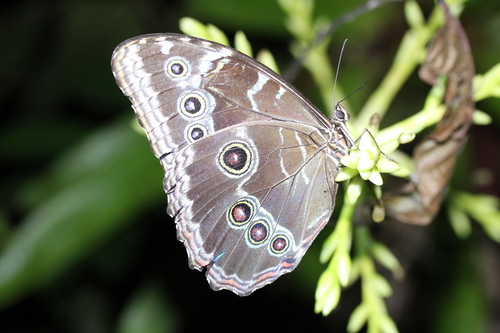
The wingspan of the ringless blue cracker is approximately 7.5 cm (3 in). The upper surface of the wings is mottled grey, brown and white. There is no red bar on the forewing and the hindwing has submarginal black spots, surrounded by blue, brown and blue rings, and with a central white crescent or oval. The under surface of the wings is whitish, with black rings near the hind margin that resemble those of Hamadryas feronia.

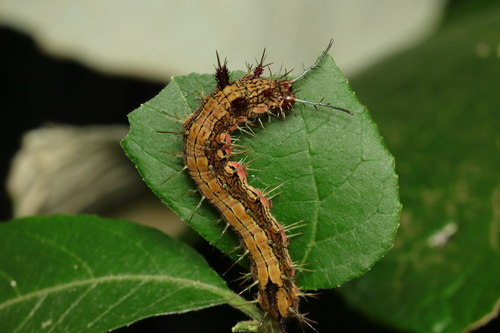
The larvae are black with fine longitudinal yellow lines, which may be indistinct, pale spines and two horns on the head. The pupae are bright green with some bands of white and a silvery rim to the yellowish-green wings. The heads of the pupae have a pair of elongated "rabbit ears", green with a white seam, forming a V-shape.

The range of the ringless blue cracker extends from Mexico, through Costa Rica and Panama, to Guyana, Colombia, Peru, Bolivia and southern... Wikipedia →
Global Distribution

Parks Where Found

# Park Country Daily sighting probability
1 Lago de Yojoa 🇭🇳 Honduras
~10%

More parks will be added in future updates.

Before you go

What are the chances of seeing a Brownish Cracker in Lago de Yojoa?

With luck

About 10% of wildlife watchers report a Brownish Cracker sighting in Lago de Yojoa on a given day, based on 8 verified sightings from GBIF citizen-science data from 2019 to 2026. It is the 61st most-seen of the 152 insects we can rate there. Over three days the chance rises to about 40%, and over a week to about 60%, if each day is a fresh chance.

When is the best time to see a Brownish Cracker in Lago de Yojoa?

January and August

In those months about 30% of wildlife watchers report a Brownish Cracker in Lago de Yojoa on a given day, against under 5% in February–July and September–November, the lowest months.

What time of day is best to see a Brownish Cracker?

Between 10 am and 1 pm

Across all the parks we cover, that three-hour window holds the most Brownish Cracker sightings with a recorded time, and about 7 in 10 of them come between 6 am and 6 pm: it is a daytime animal.

Where else can you see a Brownish Cracker?

Only Lago de Yojoa, in our data

Lago de Yojoa is the only park on Wallace's Line with enough records to rate Brownish Cracker sightings: about 10% of wildlife watchers there report one on a given day.

Which relatives of the Brownish Cracker live in Lago de Yojoa?

Same genus: Hamadryas

The closest relatives of the Brownish Cracker that you can see in Lago de Yojoa (genus Hamadryas, Cracker Butterflies) are Red Cracker (about 20%), Gray Cracker (about 20%) and Starry Night Cracker (about 10%), with each one's daily chance of a sighting.

Where does the Brownish Cracker sighting chance come from?

GBIF citizen-science records

It is estimated from how often the Brownish Cracker is recorded against all the insects logged in Lago de Yojoa (8 verified sightings from 2019 to 2026), calibrated against known sighting rates. Figures are rounded to the nearest 10% because citizen-science data supports honest approximations, not decimals, and months with records from fewer than five people show "—". How it works.

← Back to Lago de Yojoa