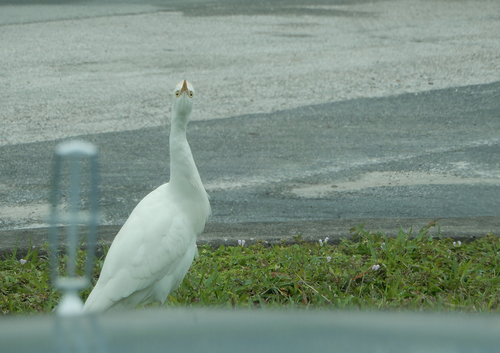
Rufous-bellied Heron

Rufous-bellied Heron

Ardeola rufiventris

Silhouette: Andy Wilson · PhyloPic

LCLeast ConcernNTVUENCR
Daily sighting probability <5% · Rare
at Lake Mburo National Park

In 3 days ~10% in a week ~20%

33 Verified sightings at Lake Mburo National Park From 2019 to 2026
1,260 In all 12 parks
February Best month
☀️ Diurnal When it's spotted

About the Rufous-bellied Heron

The rufous-bellied heron (Ardeola rufiventris) is a species of heron in the genus Ardeola, the pond herons, of the family Ardeidae. It is found in southern Africa. The rufous-bellied heron was formally described in 1850 by the Swedish zoologist Carl Jakob Sundevall from specimens collected along the Mooi River near Potchefstroom in South Africa. Sundevall coined the binomial name Ardea rufiventris. The specific epithet rufiventris combines Latin rufus meaning "ruddy" or "rufous" with venter, ventris meaning "belly". The rufous-bellied heron is now placed in the genus Ardeola that was introduced in 1822 by the German naturalist Friedrich Boie. The species is monotypic: no subspecies are recognised.

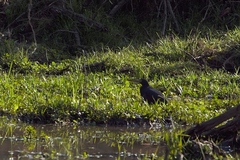
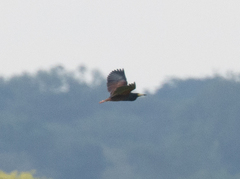
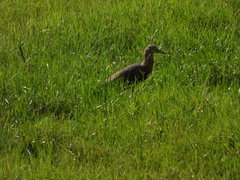
This is a small dark species of heron with a dark grey head, back and breast contrasting with a rufous belly, wings and tail. When seen in flight the bright yellow legs and feet contrast with the dark feathers of the underside of the body. Juveniles are paler and browner, darkening as they mature.

It is found in eastern, central and southern sub-Saharan Africa widespread although absent from the arid south-west and is found... Wikipedia →

Sounds

Flight call0:07

Zambia · 2023

© Dries Van de Loock · XC791517 · CC BY-NC-ND 4.0

Global Distribution

Parks Where Found

# Park Country Daily sighting probability
1 Akagera National Park 🇷🇼 Rwanda
~30%
2 Lower Zambezi National Park 🇿🇲 Zambia
~20%
3 Moremi Game Reserve 🇧🇼 Botswana
~20%
4 Mana Pools National Park 🇿🇼 Zimbabwe
~10%
5 iSimangaliso Wetland Park 🇿🇦 South Africa
~10%
6 Masai Mara National Reserve 🇰🇪 Kenya
~10%
7 Kafue National Park 🇿🇲 Zambia
~10%
8 Tarangire National Park 🇹🇿 Tanzania
<5%
9 Chobe National Park 🇧🇼 Botswana
<5%
10 Lake Mburo National Park 🇺🇬 Uganda
<5%
11 Serengeti National Park 🇹🇿 Tanzania
<5%
12 Ngorongoro Conservation Area 🇹🇿 Tanzania
<5%

Cities Where Found

# City Country Daily sighting probability
1 Kigali 🇷🇼 Rwanda
<5%
2 Kampala 🇺🇬 Uganda
<5%

Before you go

What are the chances of seeing a Rufous-bellied Heron in Lake Mburo National Park?

Rare

Under 5% of wildlife watchers report a Rufous-bellied Heron sighting in Lake Mburo National Park on a given day, based on 33 verified sightings from GBIF citizen-science data from 2019 to 2026. It is the 238th most-seen of the 362 birds we can rate there. Over three days the chance rises to about 10%, and over a week to about 20%, if each day is a fresh chance.

When is the best time to see a Rufous-bellied Heron in Lake Mburo National Park?

January–February and July

In those months about 10% of wildlife watchers report a Rufous-bellied Heron in Lake Mburo National Park on a given day, against under 5% in March–June and August–December, the lowest months. Those are among Lake Mburo National Park's driest months, with about 25 mm of rain a month against 110 mm in November.

What time of day is best to see a Rufous-bellied Heron?

Between 7 and 10 am

Across all the parks we cover, that three-hour window holds the most Rufous-bellied Heron sightings with a recorded time, and about 9 in 10 of them come between 6 am and 6 pm: it is a daytime animal.

Is Lake Mburo National Park the best place to see a Rufous-bellied Heron?

10th of 12

Of the 12 parks where we can rate Rufous-bellied Heron sightings, Lake Mburo National Park ranks 10th at under 5%. The best odds are in Akagera National Park (Rwanda, about 30%), Lower Zambezi National Park (Zambia, about 20%) and Moremi Game Reserve (Botswana, about 20%).

Where does the Rufous-bellied Heron sighting chance come from?

GBIF citizen-science records

It is estimated from how often the Rufous-bellied Heron is recorded against all the birds logged in Lake Mburo National Park (33 verified sightings from 2019 to 2026), calibrated against known sighting rates. Figures are rounded to the nearest 10% because citizen-science data supports honest approximations, not decimals, and months with records from fewer than five people show "—". How it works.

← Back to Lake Mburo National Park